
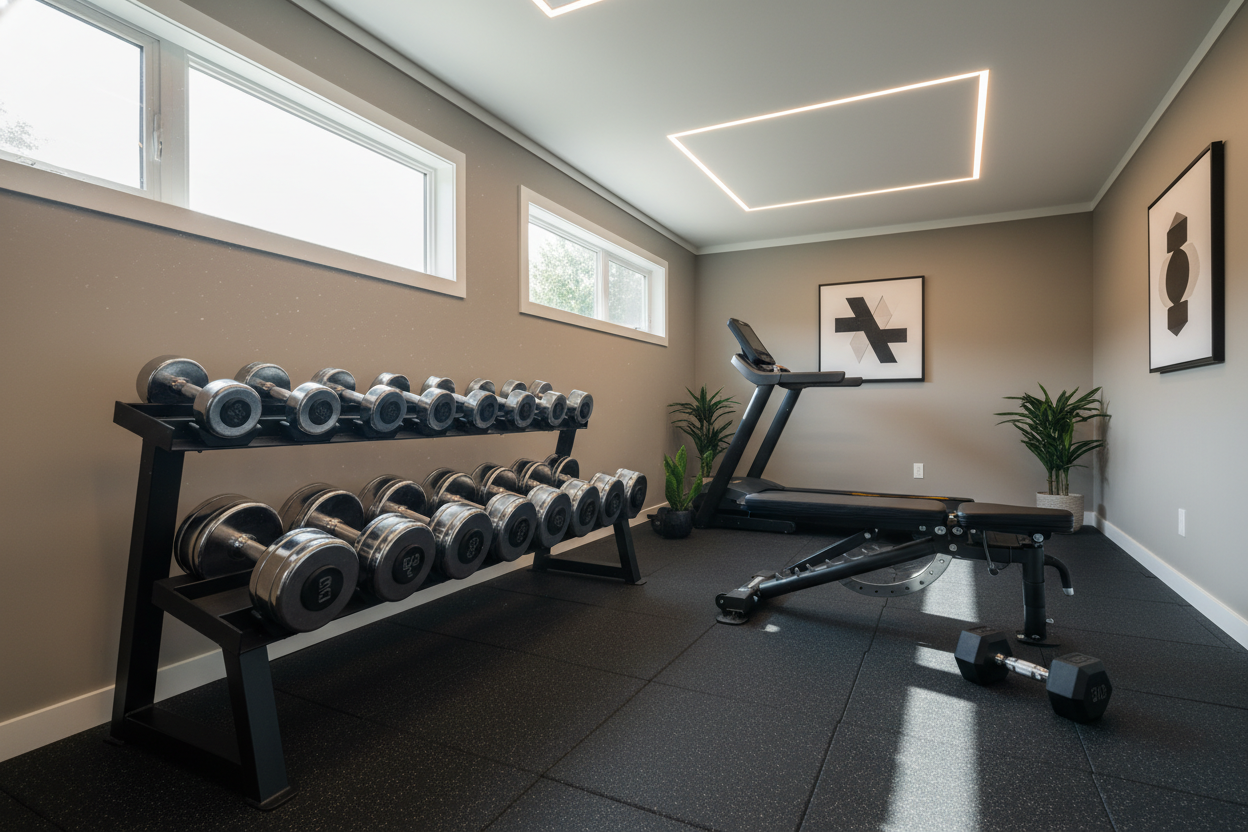
I remember the day my first budget weight set arrived. I had spent weeks scouring marketplaces for the best deal, eventually settling on a generic set that looked fine in the low-res photos. Three weeks later, the rubber coating was peeling like a bad sunburn, and the handles felt like they had been greased with lard. If you are tired of gear that feels like a toy and smells like a tire fire, it is time to talk about what actually goes into pro dumbbells.
- Construction: Pro gear uses friction welding or solid casting instead of cheap bolts.
- Tolerance: Expect a weight accuracy within 1-2%, not the 5-10% swing found in budget iron.
- Grip: Straight handles with consistent knurling provide a secure, predictable hold for heavy lifts.
- Longevity: Urethane coatings outlast rubber by a decade and do not leave scuff marks on your floor.
The Brutal Truth About the 'Commercial' Label
Walk into any big-box sporting goods store and you will see 'commercial grade' slapped on every piece of equipment in the aisle. It is a marketing gimmick. In reality, a true professional dumbbell is built to survive sixteen hours of daily abuse in a high-traffic club. Most consumer brands consider 'durable' to mean it won't break if you drop it once on a carpeted floor. A real dumbbell company that supplies pro-level gear focuses on weight calibration above all else.
When you start to browse standard dumbbells, you will notice that the cheaper the weight, the wider the weight variance. I have seen '50-lb' cheap hex dumbbells weigh as little as 46 pounds and as much as 54 pounds. That might not sound like much until you are trying to hit a new PR and one arm is lifting eight pounds more than the other. Professional gear is usually calibrated to within 1% of the stated weight. You are paying for the peace of mind that a 50 is actually a 50.
Welded Heads vs. Screwed-On Junk
The biggest failure point in any weight is where the head meets the handle. Cheap dumbbells usually feature a threaded bolt hidden under a plastic cap. Over time, the vibrations from being set down—or dropped—cause that bolt to back out. This leads to the 'death spin,' where the head of the dumbbell starts to rotate independently of the handle. It is annoying at best and dangerous at worst, especially during overhead movements.
A high-end professional dumbbell set solves this through friction welding or a heavy-duty press-fit system. Friction welding literally fuses the metal of the handle to the metal of the head, creating a single, monolithic piece of steel. You can drop these from shoulder height a thousand times and the head will never budge. This is why you see pro-style dumbbells in powerlifting gyms that look like they have been through a war but still feel as solid as the day they were unboxed. If you hear a rattle when you pick up a weight, it is a sign that the construction is subpar.
Why Straight Knurled Handles Beat Ergonomic Curves
There is a trend in budget home gym gear toward 'ergonomic' handles—those fat, contoured grips that are thicker in the middle. They are marketed as being more comfortable, but for anyone moving serious weight, they are a nightmare. The bulge in the center prevents your hand from making full contact with the handle, which actually increases the demand on your forearms and causes them to fatigue before your chest or shoulders do.
Professional equipment almost exclusively uses a straight handle with a consistent diameter, usually between 28mm and 32mm. This allows for a uniform grip across the entire palm. The knurling on a professional dumbbell is also a different breed. It is usually a medium-volcano or mountain knurl that provides 'bite' without being sharp enough to draw blood. Cheap weights often have 'passive' knurling that feels like smooth plastic once your hands start to sweat. When you are sweating through a heavy set of presses, that texture is the only thing keeping the iron from sliding out of your grip.
Urethane vs. Rubber: The Smell and Scuff Test
If you have ever bought a cheap rubber hex dumbbell set, you know the smell. It is a pungent, chemical odor that can fill an entire garage and stay there for months. That is the result of low-quality recycled rubber and sulfur-based curing agents. While it is a cost-effective way to protect your floors, it is not the gold standard. For many budget home gyms, rubber is perfectly fine if you have decent ventilation, but pro facilities move toward urethane for very specific reasons.
Urethane is a high-grade polymer that is significantly harder and more tear-resistant than rubber. It does not have an odor, and it does not 'off-gas' chemicals into your workout space. More importantly, urethane is non-marking. If you drop a rubber dumbbell on a light-colored floor, it leaves a black streak that is nearly impossible to remove. Urethane bounces less and maintains its color and finish for decades. It is the reason a ten-year-old dumbbell in a premium gym still looks brand new, while the rubber ones in the local YMCA are cracked and crumbling.
When Does a High-End Rack Actually Make Sense?
Does the average garage lifter need a $5,000 professional weight set? Probably not. If you are just doing curls and lateral raises, the extra precision of a pro-grade weight isn't going to change your gains. However, if you are doing heavy rows, presses, or any movement where you are regularly 'parking' the weights hard on the floor, the durability of pro gear becomes an investment in safety. I have seen too many cheap handles snap to ever trust them with my heavy sets.
My advice is to mix and match. Buy the cheaper hex weights for your light 'accessory' movements where the weight tolerance matters less. Then, invest in tier 1 dumbbells for your 'daily drivers'—the weights you use for your primary lifts. I eventually built a weight and dumbbell set that used this hybrid approach, and it saved me thousands while still giving me the 'pro' feel where it counted most. Don't feel like you have to buy the whole rack at once; start with the pairs you use every single workout.
My Personal Experience with Cheap Gear
I once bought a pair of 'pro-style' dumbbells that were actually just small plates held together by a long bolt. During a heavy set of overhead tricep extensions, the bolt on the left dumbbell sheared off. The plates stayed on the handle by pure luck, but it was enough to make me realize that saving $100 wasn't worth a trip to the dentist or the ER. Since then, I have been a stickler for solid-head construction. The only downside to the pro stuff? Once you get used to that high-quality knurling and the lack of a 'clank' when you move them, you can never go back to the cheap stuff.
Frequently Asked Questions
Is urethane really worth double the price of rubber?
If your gym is inside your house or a poorly ventilated room, yes. The lack of smell alone is worth the premium. If you are in a garage and don't mind the 'gym scent,' rubber is a better value.
What is the standard handle diameter for pro dumbbells?
Most professional sets use a 32mm handle. It is thick enough to feel substantial in the hand without being so thick that it limits your grip on heavy pulling movements.
Can I drop pro dumbbells on concrete?
You can, but you shouldn't. Even the best urethane or rubber will eventually degrade if it is repeatedly slammed into raw concrete. Always use some form of rubber matting to protect your investment.
Share:
I Transformed My Setup With Just 4 Gyms Accessories
Outgrew Your 50s? The Reality of an 80lb Dumbbell Set Upgrade