
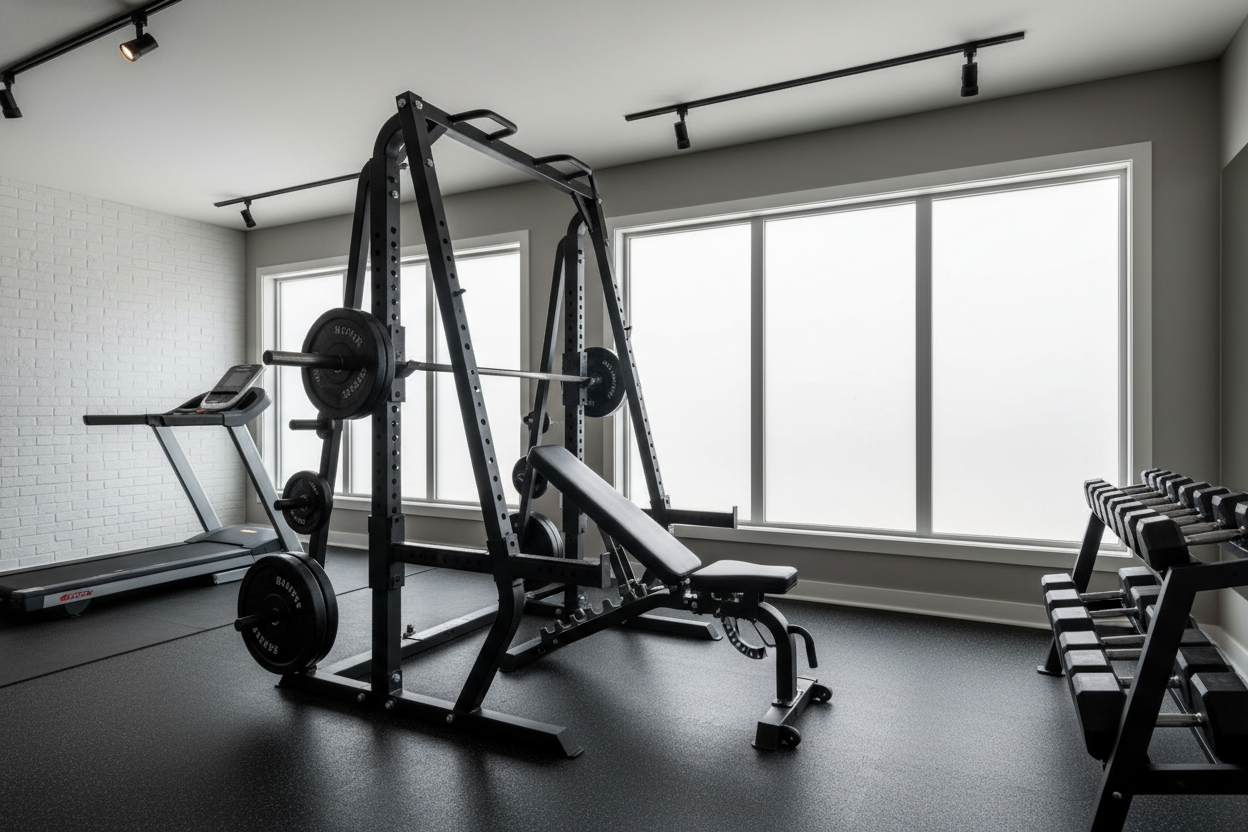
I remember the first time I walked up to a angled smith machine bench press in a commercial gym. I had spent years on vertical tracks, and suddenly I was staring at a 7-degree slope like it was a calculus problem. I laid down, guessed a direction, and by the third rep, my front delts felt like they were being pried off the bone with a crowbar.
Getting the smith machine bench press direction wrong isn't just a minor technicality; it's a recipe for impingement. Most people treat the Smith machine as a 'set it and forget it' piece of gear, but that slant is intentional. It’s designed to work with your body, not against it, provided you know which way the wind is blowing.
Quick Takeaways
- Always face the direction that allows the bar to travel toward your face as you press up.
- The slanted path should mimic the natural 'J-curve' of a free-weight bench press.
- Align the bar with your mid-to-lower chest at the bottom of the rep.
- If the bar moves toward your feet as you lock out, you are facing the wrong way.
The Great Slanted Track Dilemma
The 7-to-12 degree pitch on a slanted smith machine bench press causes more confusion than a complex tax return. Why didn't they just keep it vertical? Because humans don't move in straight lines. When comparing it to a standard barbell, you’ll notice that a natural press doesn't travel straight up and down—it moves in a slight arc from the lower chest back toward the rack.
The angled track is the manufacturer's attempt to force that 'natural' path. However, if you lay down backwards, you’re forcing your shoulders into a path that is the literal opposite of how your joints want to move. It’s the difference between a smooth set of ten and a week of icing your rotator cuffs.
The Golden Rule: Which Direction Should You Actually Face?
Here is the definitive answer to which way to face on smith machine bench press setups: You must face the direction that allows the bar to travel up and back toward your head. As you press the bar away from your chest, the bar should be getting closer to the top of the machine's frame behind your eyes.
This mimics the biomechanical J-curve. If you setup so the bar travels away from your face toward your waist, you are putting your shoulders into extreme internal rotation at the bottom of the lift. This is the most common mistake I see in big-box gyms, and it’s usually why people claim the Smith machine 'kills their shoulders.'
Step-by-Step: How to Position Your Bench Under the Bar
Knowing which way to face is half the battle; the other half is bench placement. Start by sliding your versatile bench press set into the center of the rack. I like to drop the bar to its lowest point first to make sure the bench is perfectly centered—there is nothing worse than an off-center Smith press.
When you lie down, the bar should be hovering directly over your nipple line when it’s at the bottom of the track. If the bar is hitting you in the throat or the stomach, you’re too far forward or back. Check your grip—aim for about a thumb's length outside your shoulders. Since the bar path is fixed, you don't have to worry about stabilizing the weight, so you can really focus on the squeeze.
Does the Setup Change for Incline Presses?
When you move to an incline, the rules for which way to bench on angled smith machine rigs stay the same, but the stakes get higher. The goal is to build a bigger chest by targeting the clavicular fibers, and the slanted track is actually superior here for many lifters.
On an incline, the 'up and back' path is even more pronounced. If you face the wrong way on an incline, the bar will feel like it’s trying to dump over your head, putting massive stress on the acromioclavicular (AC) joint. Keep the bench angle around 30 to 45 degrees and ensure that at the top of the movement, the bar is roughly over your chin.
Three Painful Signs You're Benching Backwards
If you're still unsure about your smith machine bench press direction, listen to your body. The first sign is a 'pinching' sensation in the front of your shoulder. This usually happens because the bar is forcing your elbows into a position they can't naturally support. The second sign is your wrists—if they feel like they are being snapped back toward your forearms, the angle is working against your leverage.
Finally, if you feel like the bar is drifting dangerously toward your stomach, you’re definitely backwards. If you've tried every adjustment and the fixed path still feels like a straightjacket, you might prefer the freedom of a dedicated chest press machine that allows your arms to move independently. Sometimes, the fixed track just doesn't mesh with certain shoulder widths.
Personal Experience: My 225-lb Mistake
I once walked into a hotel gym, loaded up two plates on a slanted Smith, and didn't even look at the track angle. I laid down facing the mirror, which seemed logical. On the first rep, the bar path felt like it was trying to push my shoulders into my ears. I finished the set out of pure stubbornness, but I couldn't do a push-up for two weeks afterward. Now, I always do a 'dry run' with the empty bar to make sure the path moves toward my face on the way up. It’s a five-second check that saves five months of rehab.
FAQ
Which way do you face on a slanted Smith machine for bench?
Face the direction that allows the bar to move toward your head as you press it up. The bar should start at your chest and end up over your face at the top of the rep.
Is the Smith machine bench press harder than a regular bench?
Usually, it’s easier because you don't have to stabilize the weight. However, if the angle is wrong, it will feel much harder and more awkward because you're fighting the machine's mechanics.
Can I do close-grip bench on an angled Smith?
Yes, but be extra careful with your elbow tuck. The fixed angle can be unforgiving on the elbows if your bench isn't positioned perfectly to allow for that 'up and back' travel.
Share:
Why My Go-To Living Room Weight Is a 25 lb Neoprene Dumbbell
I Ditched the Barbell: My Favorite Alternative to Bench