
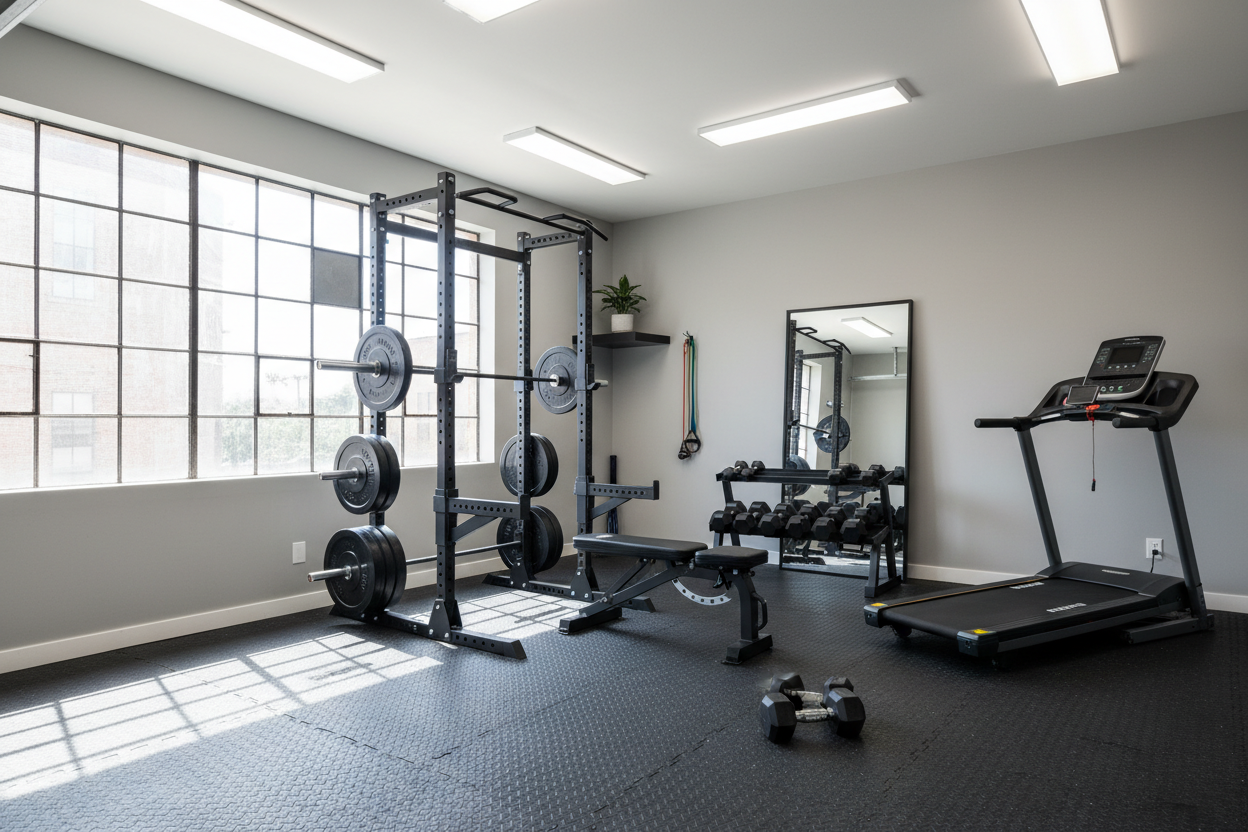
I remember the night I finally hit a wall with my local commercial gym. It was 6:00 PM, the place smelled like a locker room that hadn't seen bleach in a decade, and I was third in line for the only decent power rack. I went home, cleared out the mountain of cardboard boxes in my garage, and started researching equipment for a home gym. I didn't want a room full of chrome machines; I wanted a place where I could move heavy weight without a crowd.
The mistake most people make is trying to recreate a 20,000-square-foot commercial facility in a 100-square-foot spare room. You don't need forty different machines. You need a few high-quality pieces that allow for hundreds of variations. When you are building a home gym, every square inch is real estate. If a piece of gear only does one thing, it better do that one thing incredibly well, or it shouldn't be in your house.
- Safety First: Never skimp on the rack; it's the only thing between you and a trip to the ER.
- Barbell Quality: Your bar is your primary connection to the weight—get one with a high PSI rating.
- Space Management: Use vertical storage and adjustable gear to keep your floor clear.
- Versatility: Prioritize equipment that handles the 'Big Four': Squat, Bench, Deadlift, and Press.
Why Most People Buy the Wrong Stuff First
It’s tempting to hop on Amazon and buy the first 'all-in-one' home gym system that pops up. They look flashy, they promise 50 exercises, and they usually end up as expensive clothes hangers. These machines often use cheap plastic pulleys and thin cables that feel 'stretchy' when you actually put some weight on them. They limit your range of motion and take up a massive footprint for very little actual utility.
The essential equipment for home gym success isn't a cable crossover machine. It’s the stuff that lets you move naturally. I spent my first year with a cheap multi-station gym and I hated it. It felt flimsy, the resistance curves were wonky, and I couldn't even do a proper squat. When you're building a home gym, focus on the home gym essentials that build real-world strength. Versatility beats variety every single time. A single barbell can do more for your physique than a dozen single-use machines ever will.
The 'Big Four' Non-Negotiables
If you want to get strong, there is a home gym equipments list that actually matters. I call these the non-negotiables. These four items are the key gym equipment pieces that form the foundation of any serious program, whether you're a powerlifter or just trying to look better in a t-shirt. This setup allows you to hit every major movement pattern—push, pull, squat, and hinge—safely and effectively.
A Power Rack You Can Actually Trust
Your rack is the centerpiece. It’s your spotter when you’re training solo at 5:00 AM. I’ve seen people try to save a few bucks by buying a thin, 2x2-inch tube rack with no floor anchors. I’m begging you to stop buying cheap home gym equipment when it comes to your safety. A rack that wobbles when you rack 135 lbs is going to be terrifying when you’re trying to hit a PR at 315 lbs.
Look for a rack made of 11-gauge or 14-gauge steel. The uprights should be at least 2x3 or 3x3 inches. Check the hole spacing, too—Westside spacing (1-inch gaps through the bench zone) is a home gym essential because it allows you to set your safety pins at the perfect height. You want to be able to fail a bench press without the bar crushing your chest or being so high you can't get a full range of motion.
The Right Barbell (Please Don't Skimp Here)
The barbell is the most essential workout equipment for home use. A 'beater bar' from a sporting goods store will usually have a low tensile strength, meaning it will permanently bend (or 'set') once you start pulling anything over 300 lbs. I’ve owned bars where the sleeves stopped spinning after three months because the bushings were made of cheap plastic. That’s a great way to wreck your wrists during cleans or presses.
Invest in a quality multi-purpose bar with a tensile strength of at least 190,000 PSI. You want a 28.5mm or 29mm diameter for a good grip. The knurling should be present but not so sharp that it draws blood every time you deadlift. A good bar is a must have home fitness equipment piece that will literally last your entire life if you keep it dry and occasionally brush the chalk out of the knurling.
Weight Plates That Won't Destroy Your Floor
You have two choices here: iron or bumpers. If you’re a traditional powerlifter and you don't plan on dropping weights from overhead, iron is the necessary home gym equipment choice. It's thinner, so you can fit more on the bar, and it has that classic 'clank' that sounds like progress. However, if you're training in a garage with a concrete floor, iron is loud and can eventually cause cracks.
Bumper plates are must-have home gym equipment for anyone doing Olympic lifts or heavy deadlifts. They are made of high-density rubber, which protects your floor and reduces noise. Even if you aren't dropping 400 lbs, bumpers make for a much more neighbor-friendly experience. At the very least, buy a pair of 45-lb bumpers to act as a base, and you can fill in the rest with smaller iron plates to save money.
A Heavy Flat Bench That Stays Put
A home gym essential is a bench that doesn't feel like a seesaw. Many people think they need an adjustable incline/decline bench right away. Unless you’re spending $500+, most adjustable benches have a lot of 'play' in the hinge. For a at home gym necessities list, I always recommend a heavy-duty flat bench first. Look for a tripod design (three feet on the ground) so your feet don't hit the bench legs when you're trying to set your drive for a bench press.
The pad matters too. You want high-density foam that doesn't bottom out. A 12-inch wide pad is the sweet spot—it provides enough support for your scapula without getting in the way of your shoulders. This is the best equipment to build muscle at home because it provides the stable base you need to actually push heavy weight without worrying about the bench tipping over.
What About Dumbbells and Accessories?
You don't need a full commercial rack of dumbbells. It's a waste of space. For at home workout equipment essentials, a pair of high-quality adjustable dumbbells is the way to go. I use a set that goes from 5 to 50 lbs in 5-lb increments. It takes up the space of two shoeboxes but replaces an entire wall of gear. If you’re on a budget, loadable Olympic dumbbell handles are even cheaper, though they can be a bit clunky for certain movements.
You can supplement your heavy lifting with basic bodybuilding home gym equipment like resistance bands and a doorway pull-up bar. Bands are incredible for face pulls, tricep extensions, and lateral raises. They take up zero space and cost almost nothing. This is how you handle isolation work without turning your garage into a crowded maze of metal. These are the must haves for at home gym owners who want to look like they lift, not just move heavy objects.
Sneaking Cardio into a Tight Space
Cardio is usually the last thing people think about when necessary equipment for home gym setups are discussed. Most of us don't have room for a 7-foot long commercial treadmill. I tried a cheap folding treadmill once, and the belt felt like it was slipping every time my foot hit the deck. It was a total waste of $400.
If you have a small footprint, look for a foldable upright exercise bike. I personally use a foldable upright exercise bike because I can roll it in front of the TV for a 30-minute session and then fold it up and shove it in a closet. It's the essential at home workout equipment for staying lean without sacrificing the floor space you need for your power rack. If you're really tight on space, a $15 jump rope is still one of the most effective home workout equipment ideas out there.
Personal Experience: My Biggest Mistake
When I first started, I bought a 'complete' 300-lb weight set from a big-box store for $200. I thought I was a genius for saving money. Within three months, the bar had a permanent curve in it from sitting on the rack with 225 lbs on it. The plates were also wildly inaccurate—one '45-lb' plate actually weighed 42 lbs, while the other was 47 lbs. It made my lifts feel lopsided and stalled my progress. I ended up selling the whole set for $50 and buying the quality gear I should have bought in the first place. Buy once, cry once.
FAQ
How much space do I really need for a home gym?
You can fit a full power rack setup in an 8x8 foot area. If you want room to move around and do things like lunges or deadlifts outside the rack, a 10x12 foot space is the gold standard for a single-user garage gym.
Is a home gym actually cheaper than a membership?
In the long run, yes. A decent setup costs about $1,500 to $2,500. If your gym membership is $60 a month, the equipment pays for itself in about three years. Plus, you save on gas, time, and the 'annoyance tax' of crowded gyms.
Can I build muscle with just a barbell and a bench?
Absolutely. Some of the greatest physiques in history were built with just a barbell. Between squats, deadlifts, presses, rows, and floor-based movements, you can hit every muscle group in your body with zero machines.
Share:
Why the Technogym Smith Machine Bar Weight Feels Heavier Than Normal
I Broke the Top Home Gym Equipment to See What Actually Lasts