
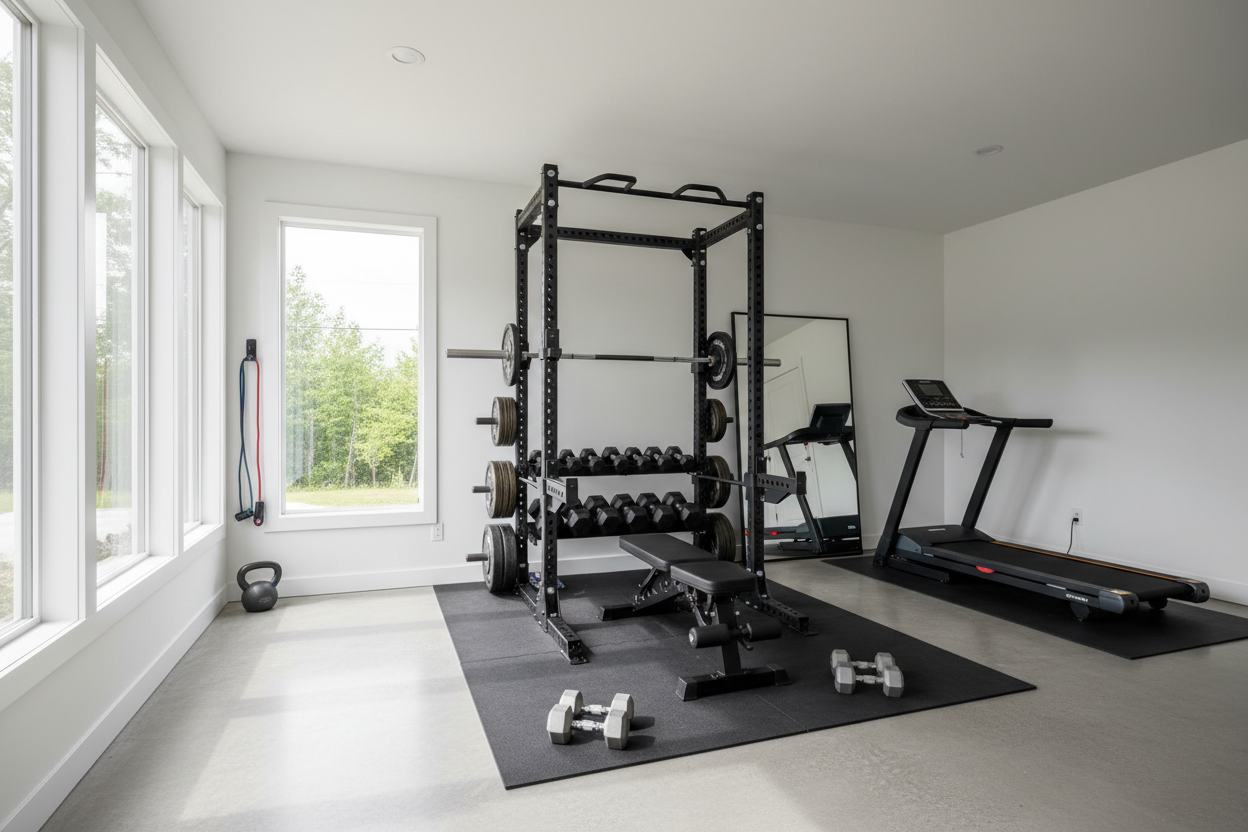
I remember the first time I tried to save fifty bucks on a flat bench. I was halfway through a heavy set of presses when I felt the frame shift two inches to the left. That is the moment you realize that finding the best home weight equipment isn't about scrolling through sponsored TikToks or picking the flashiest color; it is about finding gear that doesn't try to kill you when you are training alone in a garage at 6:00 AM.
Most people buy gear based on a pretty photo. They end up with a rack that shakes like a leaf and plates that are five pounds off their stated weight. I have spent a decade breaking, bending, and outgrowing equipment so you do not have to. If you want a gym that actually lasts until your grandkids are lifting, you need to ignore the hype and look at the specs.
- Look for 11 or 12-gauge steel for any load-bearing rack.
- Prioritize high-density foam pads that do not bottom out under 200 pounds.
- Stick to 2x2 or 3x3 tubing sizes for maximum accessory compatibility.
- Avoid any 'smart' tech that requires a monthly subscription to function.
Why Most Five-Star Reviews Are Completely Worthless
If you spend five minutes on Amazon, you will see thousands of glowing reviews for benches and racks that look like they are made of soda cans. Here is the reality: the building a functional home gym crowd is split between people who actually lift and people who want a clothes hanger for their bedroom. Most of the 'highest rated home exercise equipment' online is rated by people who have never put more than 100 pounds on the bar. Of course a bench feels 'solid' when you are only using 10-pound dumbbells.
Manufacturers know this. They use thin 14-gauge steel and spray it with a shiny coat of paint to hide the sloppy welds. They call it 'commercial grade' because there is no legal definition for that term in the fitness industry. To me, commercial grade means it can survive a 500-pound drop without the uprights buckling. To an Amazon seller, it means the box didn't break during shipping.
When you are hunting for gear, ignore the stars. Look for the shipping weight. If a power rack weighs 100 pounds, it is a toy. A real rack should be a beast to move. You want to see 11-gauge steel—which is about 1/8th of an inch thick—and 5/8-inch or 1-inch hardware. That is the difference between a piece of equipment and a lifetime investment. You are not just buying a tool; you are buying the confidence to go for a PR without wondering if the safety bars will hold.
So, What Is Best Equipment For Home Gym Spaces?
The answer depends on your floor plan, but the physics of a good lift never change. People often ask me best home gym fitness equipment is just 3 things, and while that minimalist approach works, you need to make sure those three things are overbuilt. The 'what the best home fitness equipment' question usually leads people to buy all-in-one machines that do twenty things poorly instead of two things perfectly.
Tubular steel thickness is your primary metric. A 2x2-inch frame is the standard for most home setups, but 3x3-inch frames are becoming the gold standard for anyone planning to squat over 400 pounds. Why? Because the heavier the frame, the less it moves. There is nothing more distracting than a rack that sways when you are trying to re-rack a heavy bar. It gets in your head, and it ruins your session.
Modularity is the second factor. The best gear uses standard hole spacing (usually 2 inches apart). This allows you to add dip bars, landmines, or cable attachments later. If you buy a proprietary system from a big-box store, you are locked into their ecosystem. When they stop making parts, your gym is a dead end. I always tell people to buy into a 'system,' not just a product. You want a setup that grows as your strength does, not one that limits your programming because you can't find a compatible pull-up bar.
The Non-Negotiable Core Pieces You Actually Need
You do not need a cable crossover or a leg press on day one. You need a place to squat, a place to press, and something heavy to lift. Everything else is just garnish. If you get the foundations right, you can build a world-class physique in a one-car garage. If you get them wrong, you will be browsing Craigslist in six months trying to offload your mistakes.
A Bench That Won't Wobble Under a 300-Pound Load
A cheap bench is a literal safety hazard. I have seen welds snap under a heavy bench press, and it is not pretty. When you are looking for an adjustable weight bench OWB01, you are looking for three things: a wide tripod base for stability, a high weight capacity, and zero 'pad gap.' A lot of adjustable benches have a massive hole between the seat and the backrest that swallows your lower back when you lie down.
Pad density matters more than you think. If you can pinch the foam and feel the plywood underneath, it is junk. You want firm, 'grippy' vinyl that keeps your shoulders from sliding during a press. A solid bench should feel like a rock, not a sofa. Look for a unit that weighs at least 60-70 pounds. If it is light enough to pick up with one finger, it is going to slide around the floor the moment you try to do a seated row or a heavy dumbbell press.
Racks and Smith Machines That Actually Protect You
If you train alone, safeties are your best friend. A smith machine home gym station is a massive asset for those who want to push to failure without a human spotter. The key is the linear bearings. If a Smith machine uses cheap plastic bushings, the bar will feel 'sticky' and jerky. You want high-end bearings that feel like the bar is floating on ice.
For the purists, a power rack is the way to go. But even then, look at the safety straps or flip-down safeties. They should be easy to adjust. If it is a pain to move the safeties, you won't use them, and that is how accidents happen. A good rack should feel like a cage of protection, not a flimsy obstacle. I prefer racks with a 'westside' hole spacing pattern—1-inch gaps through the bench zone—so you can set the safeties at the exact height you need to breathe while the bar is off your chest.
Figuring Out What The Best Home Fitness Equipment Is For Your Goals
Stop buying gear for the person you want to be in five years and buy for the training you do today. If you are a powerlifter, you need a stiff bar and iron plates. If you are into bodybuilding, you need cable versatility and a rock-solid bench. Most people waste thousands on 'smart' machines with touchscreens when they should have just bought a better barbell. The philosophy is simple: equipment for home gym gains doesn't plug into a wall.
Iron doesn't have a software update. A well-made rack doesn't need a Wi-Fi connection to help you squat. When you invest in heavy-duty steel, you are buying a tool that works every single time you walk into the garage. Focus on the raw materials. Check the weight capacities. Read the manual online before you buy to see how it's actually put together. If the assembly instructions look like they're for a Lego set, keep looking.
My Biggest Gear Mistake
Years ago, I bought a 'bargain' Olympic barbell from a sporting goods store. It had no knurling to speak of and the sleeves were held on by hex bolts. One day, while doing cleans, the sleeve literally slid off the end of the bar, dumping 45-pound plates onto my toes. I spent the next six weeks in a walking boot. I could have bought a professional-grade bar for the cost of my medical co-pay. Don't be me. Buy the right gear once, even if it hurts your wallet a little more upfront.
Frequently Asked Questions
How much space do I really need for a home gym?
An 8x8 foot area is the absolute minimum for a rack and a barbell. If you have a 10x10 space, you can fit a full power rack, a bench, and a plate tree comfortably. Just remember to account for the 7-foot width of a standard Olympic bar.
Is 14-gauge steel really that bad?
For a pull-up bar or a light accessory stand, it's fine. For a squat rack where you're dropping 300+ pounds? It's a risk. 11-gauge is the industry standard for serious lifting for a reason.
Do I need to bolt my rack to the floor?
If the rack has a small footprint or you're doing dynamic movements like kipping pull-ups, yes. If it's a heavy 3x3 rack with a flat-foot base, you can usually get away without bolting it, but it's always the safer option.
Share:
Stop Squatting on Wobbly Steel: You Need a Real Powerlifting Barbell
The Wobbly, Clanking Reality of Lifting With J Bells Dumbbells