
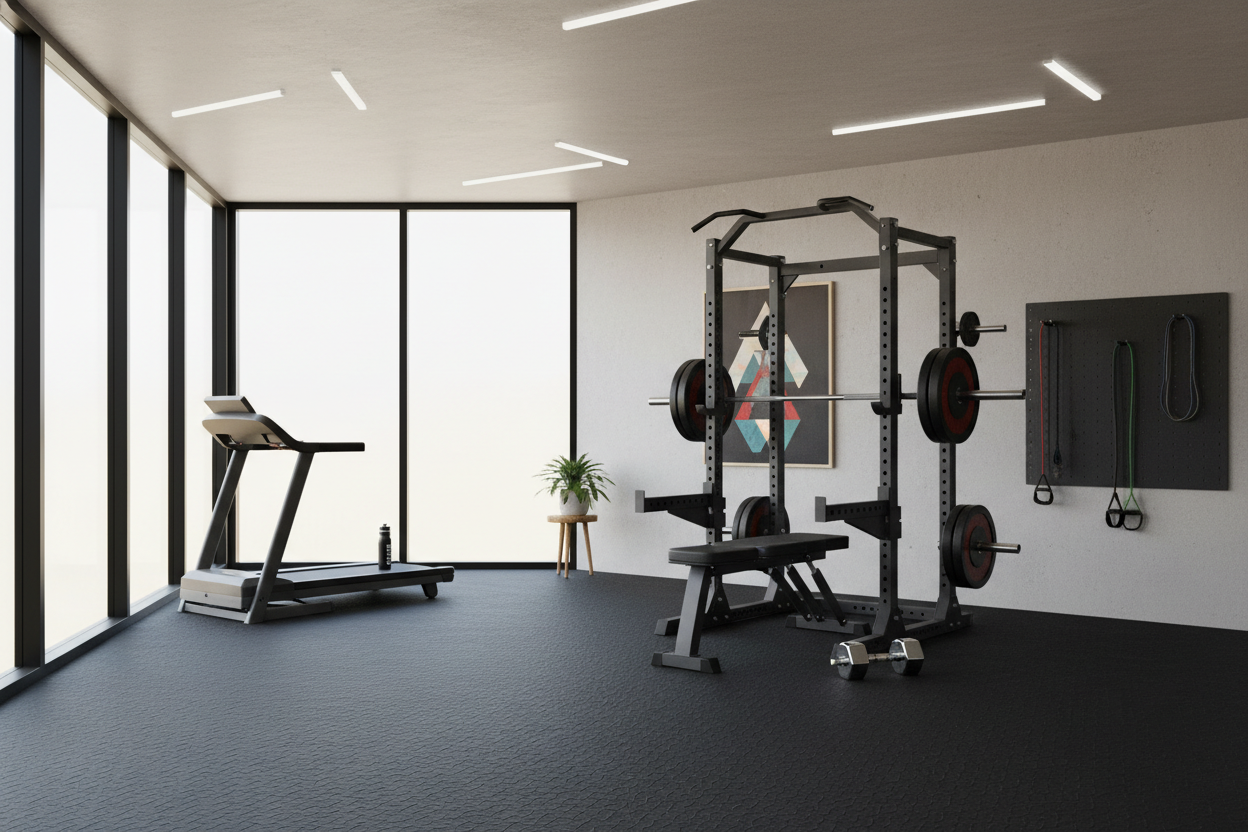
I remember the first time I fell for a 'total body' machine. It was a 20-in-1 monstrosity I found in a catalog that promised to replace an entire commercial gym. I spent six hours assembling it in a cramped basement, only to find that the leg extension felt like kicking a bag of wet sand and the chest press was so wobbly I felt more like I was balancing a unicycle than building muscle. Finding the best weight machine for your home isn't about how many exercises are listed on a sticker; it's about whether the machine actually moves with your body or fights against it.
- Avoid 'Swiss Army Knife' multi-gyms that claim to do 30+ exercises in a tiny footprint.
- Prioritize 11-gauge steel frames and aluminum pulleys over plastic ones.
- Understand your pulley ratios (1:1 vs 2:1) before you buy.
- Independent arms are non-negotiable for preventing muscle imbalances.
The Multi-Gym Trap (Why Most Basements Are Filled With Junk)
Most residential multi-gyms sold at big-box retailers are designed for a 5'9' person who doesn't plan on lifting more than 100 pounds. The moment you try to move real weight, the frame flexes. These rigs usually use thin 14-gauge steel and nylon bushings that create a jerky, 'stuttering' feel during your reps. If the biomechanics are off, you'll feel the stress in your elbows and shoulders rather than your target muscles. I've seen more of these become expensive coat racks than actual training tools because they simply aren't enjoyable to use.
What Actually Makes the Best Weight Machine Worth Buying?
If you want a machine that lasts longer than your next New Year's resolution, look at the frame gauge first. 11-gauge steel is the gold standard—it's what you find in commercial facilities. It doesn't shake when you're mid-set. Next, look at the upholstery. Cheap pads use low-density foam that bottoms out, meaning you'll feel the metal plate against your spine during a heavy press. High-density foam should be firm and snap back immediately when you press your thumb into it.
The Pulley Ratio and Cable Friction Reality Check
Not all cable systems are created equal. A 1:1 pulley ratio means if you set the stack to 100 lbs, you are pulling 100 lbs. A 2:1 ratio (common in functional trainers) means you're only pulling 50 lbs, but you get more cable travel for lunges or sports-specific movements. The biggest red flag? Plastic pulleys. They flat-spot over time and create friction. Look for machines with aluminum pulleys and sealed ball bearings; they stay smooth for a decade, not just a week.
Plate-Loaded vs. Weight Stacks (Which Is Better for Home?)
Weight stacks are the ultimate convenience. You move a pin, and you're ready for a drop set. However, they add significant cost and shipping weight to your order. Plate-loaded machines are much more budget-friendly if you already own a set of Olympic plates. The downside? You'll spend a lot of time loading and unloading 45-lb plates, which can kill your momentum if you're trying to keep your heart rate up. If you have the cash, a selectorized stack is almost always the better experience for a home gym.
Why I Prefer Independent Arms for Upper Body Work
One of the biggest flaws in cheap home equipment is the fixed single-bar press. Your dominant side will always take over, leading to imbalances and eventually, injury. I always recommend looking for a chest press machine with independent arms. This setup forces each side of your body to work in isolation. It allows for a more natural converging path of motion, which mimics how your muscles actually move in space, giving you a better contraction and saving your rotator cuffs from unnecessary wear.
Wait, Are Hybrid Smith Racks the Answer?
Hybrid systems that combine a Smith machine with a functional trainer are the current kings of the garage gym world. They save a massive amount of floor space by stacking functions. When I tested the Valor Fitness Smith machine, I realized that the quality of the linear bearings makes or breaks the unit. If those bearings aren't high-quality, the bar will hitch during a heavy squat, which is the last thing you want when you're training alone in a garage.
The Non-Negotiable Checklist for Your Setup
Before you hit 'buy,' measure your ceiling height and then measure it again—don't forget to account for the height of the pull-up bar. Check the warranty; if a company won't guarantee the frame for at least 10 years, they don't trust their welds. Finally, remember that many of these systems require a solid adjustable weight bench to be effective. Don't spend $2,000 on a cable rig and then try to use a $50 wobbly bench from a garage sale. Stability is the foundation of strength.
FAQ
How much space do I really need for a weight machine?
Most best weight machines require at least an 8x8 foot footprint to account for the machine itself and the range of motion for your arms or the weight plates. Always check the 'working area' specs, not just the base dimensions.
Are home weight machines as good as the ones in commercial gyms?
If you buy 11-gauge steel units with high-quality pulleys, yes. The main difference is usually the weight stack capacity; commercial units often go up to 300 lbs, while home units might top out at 160 or 200 lbs.
Do I need to grease the cables?
Don't grease the cables themselves. Instead, use a dry silicone spray on the guide rods every three to six months. This keeps the weight plates sliding smoothly without attracting dust and pet hair like heavy grease does.
Share:
Why the Reverse Leg Press on Smith Machine Isn't Just an Instagram Hack
I Was Wrong About Machine Weight Training (And My Joints Prove It)