
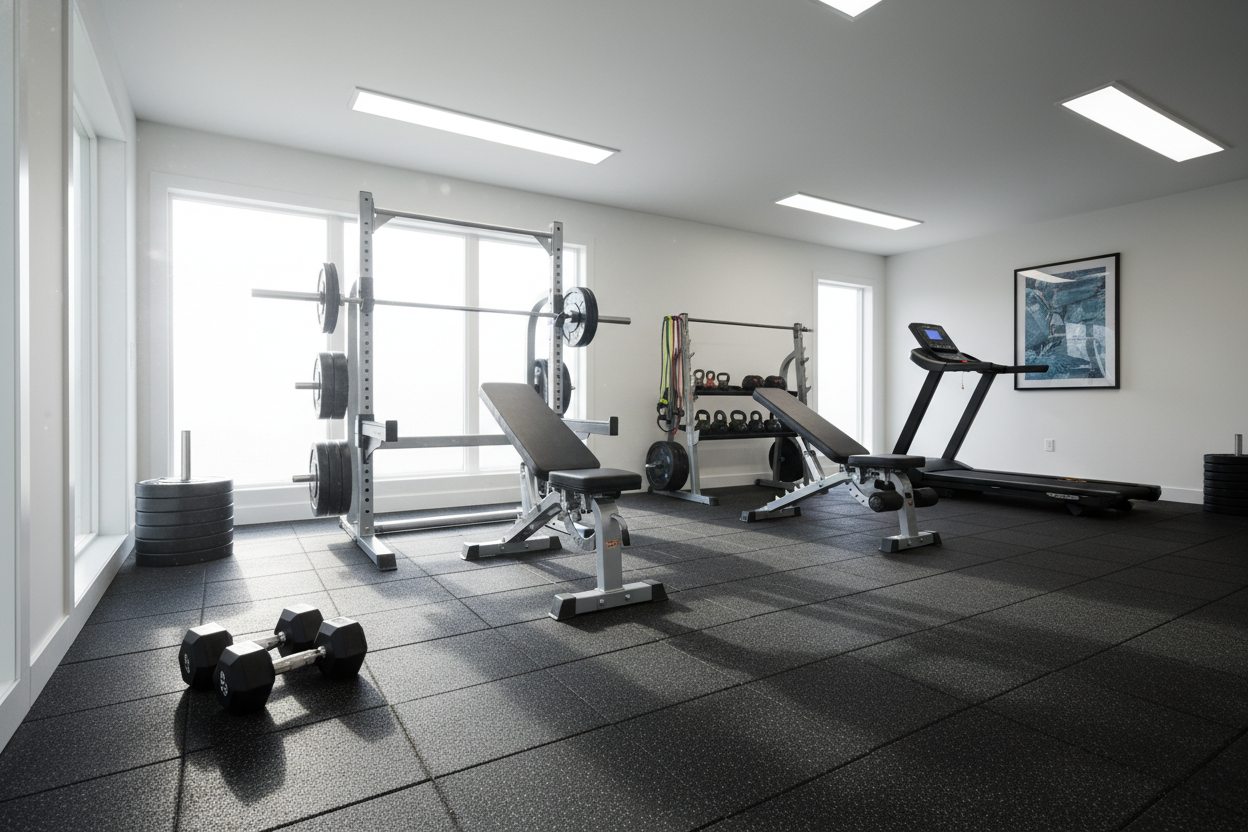
I remember scrolling through Amazon at 1 AM a few years ago, staring at a weights benches listing that looked like it was held together by hope and thin aluminum. I almost bought it because the price was right, but I pictured myself mid-press with 225 pounds over my throat and thought better of it. Most home lifters fall into two traps: they either buy a 'toy' bench that wobbles the second they pick up a dumbbell, or they drop a grand on a massive heavy duty bench press bench that eats up half their garage floor.
Quick Takeaways
- Dumbbell-only lifters should prioritize a light weight bench that folds or stands vertically.
- General trainees need a height adjustable weight bench with at least a 600-lb capacity.
- Powerlifters require 11-gauge steel and a 12-inch wide pad to stay stable.
- Avoid 'all-in-one' units unless they use independent arms and heavy steel.
The Trap of Buying Too Much (Or Too Little) Bench
Buying a home weights bench is usually an exercise in frustration. You see these 'gymnasium bench' clones online that claim to do everything but wash your car, yet they weigh 30 pounds and feel like a folding chair. On the flip side, commercial-grade heavy duty weight benches are incredible to use, but they are often 50+ inches long and impossible to move without a forklift. You have to be honest about your space and your ceiling—meaning, how much weight are you actually going to lift in the next three years?
Tier 1: The Minimalist Space-Saver (Dumbbell Warriors)
If you are working out in a spare bedroom or a tight apartment, you don't need a tank. You need small weight benches that disappear when you're done. For high-rep hypertrophy work with dumbbells, a simple incline bench for home use is the best tool in the shed. These usually feature a lighter frame, making them easy to drag from the corner to the center of the room. When you're looking at a Weight Bench in this category, check the 'stowed' dimensions first. If it doesn't stand upright or fold flat, it's going to become a very expensive laundry rack within a month.
Tier 2: The Garage Gym Workhorse (The Sweet Spot)
This is where 80% of us should be shopping. You want a home gym weights bench that feels solid when you're doing heavy rows but doesn't cost as much as a used car. A height adjustable weight bench is the ultimate utility player here. I personally recommend something like the Adjustable Weight Bench Owb01 because it balances a high weight capacity with a footprint that doesn't dominate the room. I actually wrote about this transition recently—I Traded My Flat Pad for an Adjustable Utility Weight Bench (Here's Why)—because the ability to hit low inclines for chest and steep inclines for shoulders is non-negotiable for a complete physique.
Tier 3: The Powerlifting Monolith (Heavy Barbell Pressers)
If your goal is a 405-pound press, stop looking at anything 'light.' You need a bench press professional setup. These are usually fixed flat benches or massive adjustable units made from 3x3-inch, 11-gauge steel. A heavy duty bench press bench stays put because it weighs nearly 100 pounds itself. You want a 12-inch wide pad here to support your scapula and a tripod foot design so your feet can get into a proper drive position without hitting the bench frame. It’s overkill for a 20-lb bicep curl, but it’s a lifesaver for a max-effort triple.
What About Those Swiss Army Knife Benches?
We’ve all seen the all-in-one bench for gym setups that have leg rollers, preacher pads, and pulley attachments hanging off them. Most of the time, they are 'jack of all trades, master of none.' However, if you are short on space but want a machine-like feel, the Weight Bench Chest Press Machine Independent Arms Z1 Pro is one of the few that actually gets it right by using independent arms. It replaces a dedicated chest press machine while still acting as a weights bench home foundation. Just make sure the 'extras' don't get in the way of your basic movements.
How to Finally Decide Which Frame Fits Your Room
Before you pull the trigger, take a piece of painter's tape and mark the bench's footprint on your floor. A weights bench home setup needs at least two feet of clearance on all sides so you aren't hitting your shins on other gear. If you are lifting over 300 pounds total (you + the bar), skip the budget Amazon finds and get something with a reinforced spine. Your neck will thank you later.
FAQ
How wide should a weight bench pad be?
Twelve inches is the gold standard. Anything narrower than 11 inches feels like you're balancing on a tightrope when you try to press heavy weight. Anything wider than 13 inches can restrict your shoulder blades.
What is the standard height for a bench?
Look for a height of 17 to 17.5 inches. This is the IPF standard. If a bench is 20 inches high, your feet won't touch the floor properly, and you'll lose all your leg drive during a press.
Is a bolt-together bench worse than a welded one?
Not necessarily. As long as the bolts are high-grade and you use a real wrench (not the toy one they include in the box) to tighten them, a bolt-together frame can be just as stable as a welded one.
Share:
The Ecosystem Trap Every Fitness Equipment Brand Wants You In
I Swapped Steel for a Wooden Weight Bench (Here's What Happened)