
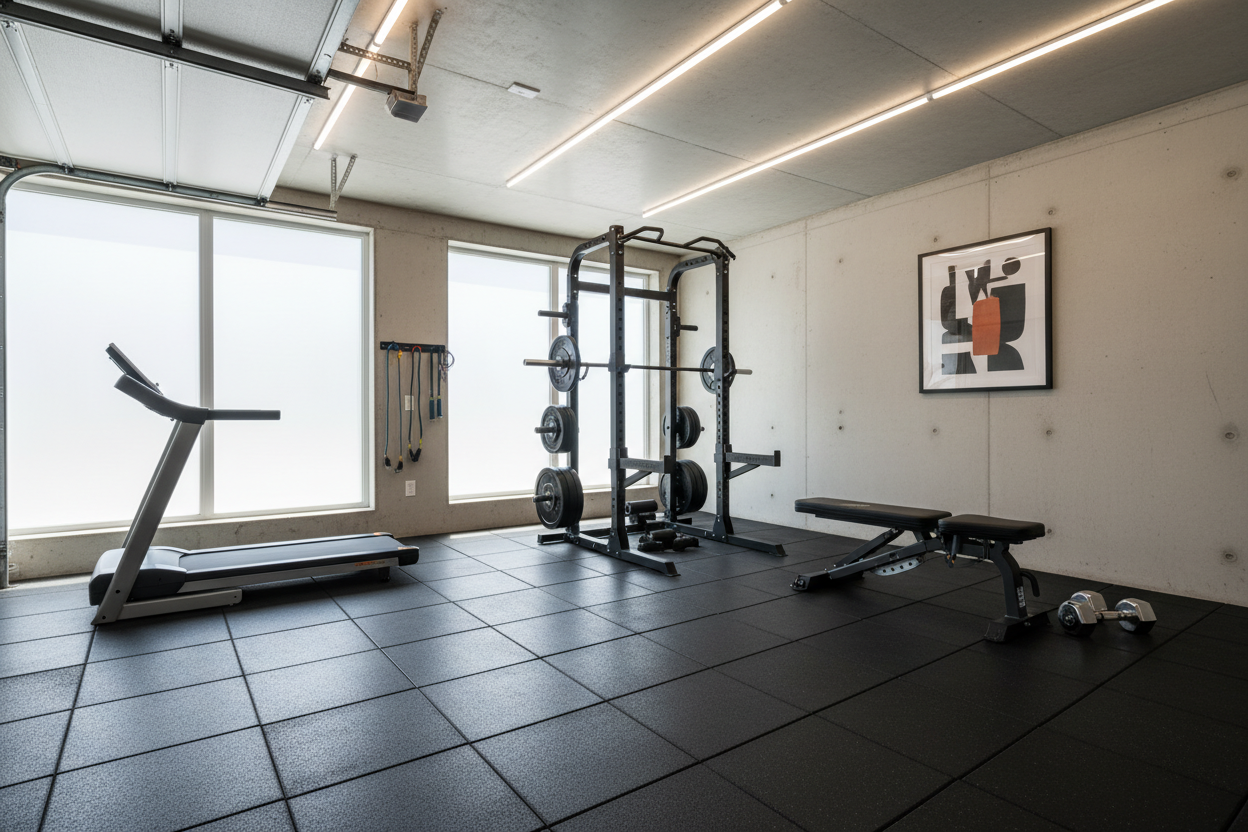
I remember the night I almost blew three grand on a multi-stack cable system because a late-night infomercial made it look like the secret to effortless gains. I was standing in my cold garage, measuring a floor space that definitely didn't have room for a seven-foot-wide steel spider. Thankfully, I put the card away. Most lifting weight equipment sold to home gym owners is designed to look impressive in a catalog while performing mediocrely in practice. You don't need a dozen pulleys to get strong; you need heavy things and a safe way to move them.
Quick Takeaways
- Prioritize a power rack and a quality barbell over any single-use weight lifting machine.
- Look for 11-gauge or 14-gauge steel to ensure your rack doesn't wobble during heavy re-racks.
- A stable, high-weight-capacity bench is a non-negotiable safety requirement for heavy pressing.
- Avoid 'weight systems' with plastic-coated cables that fray and snap under real tension.
The Trap of Buying Too Much Gear at Once
The biggest mistake I see new lifters make is trying to recreate a commercial gym in a 10x10 spare bedroom. You see those rows of specialized machines at the local big-box gym and think you need the same variety at home. This leads people to hunt for a massive gym weight lifting machine that promises to work every muscle from your traps to your toes. In reality, these 'all-in-one' units are often jacks of all trades and masters of none. They have awkward resistance curves, the cables feel 'crunchy' instead of smooth, and they take up a massive footprint.
When you buy a complex weight lifting machine for sale, you're often paying for the engineering of the pulleys rather than the quality of the steel. I've seen guys drop $2,000 on a machine only to realize three months later that they only use the lat pulldown and the chest press. The rest of the attachments just sit in a bin, gathering dust and spiders. Before you click buy, ask yourself if that machine allows you to perform the big four: squat, bench, deadlift, and overhead press. If it doesn't, it's a secondary tool, not a foundation.
The Core Setup: Where Your Money Should Actually Go
If you want to get serious, your budget should be split 60/40 between your 'big three' and everything else. The 'big three' are your rack, your barbell, and your plates. This is the foundational weight lifting machine that has built more muscle than any fancy cable stack ever could. I recommend a power rack with at least 2x3 inch steel uprights. This gives you the stability to fail a squat safely. If you’re lifting alone, those safety pins are the only thing standing between a good workout and a trip to the ER.
Next is the barbell. Don't buy the cheap, chrome-plated bar from the local sporting goods store. Those bars usually have a low tensile strength and will permanently bend if you leave 300 pounds on them overnight. Look for a bar with a 190,000 PSI rating and decent knurling. Knurling is that diamond pattern on the bar that helps you grip; it should feel like a firm handshake, not like you're holding a piece of sandpaper. High-quality plates are also vital. Cast iron is fine if you don't mind the noise, but bumper plates are better if you plan on doing any Olympic lifts or deadlifting on a concrete floor without a platform.
Why You Cannot Cheap Out on Your Bench
Your bench is the most underrated piece of safety equipment in your gym. I’ve been on benches that felt like they were made of recycled soda cans—creaking and swaying while I had 225 pounds hovering over my windpipe. That is not where you want to save fifty bucks. You need a base that doesn't budge. A solid tripod design or a wide-set rear frame is essential for preventing lateral wobble during heavy sets.
Look for a bench with high-density foam padding. Cheap foam bottoms out after six months, leaving you pressing against a hard plywood board. If you want versatility for incline work, I highly recommend the Adjustable Weight Bench Owb01. It’s built with the kind of heavy-duty steel that stays planted when you're digging your feet in for a PR. It offers the stability of a flat bench with the utility of an incline, which is crucial if you're trying to maximize a small space.
Do You Really Need a Weight Lifting Machine at Home?
There is a lot of debate about whether searching for weightlifting machines for sale is a waste of time for home lifters. My take? It depends on your goals and your joints. Free weights are king for building raw strength and stability, but machines have their place for hypertrophy and working around injuries. The problem is that most commercial weightlifting machines are huge. A dedicated leg press or hack squat machine can easily eat up 40 square feet of your garage.
If you have a nagging shoulder injury or you just want to blast your chest without worrying about balancing a barbell, a plate-loaded machine is a smart compromise. For example, a chest press machine Z1 Pro gives you that isolated, controlled feel of a lift machine gym without the massive price tag or the footprint of a cable crossover. It uses independent arms, which is a huge deal. Most cheap machines link the arms together, allowing your stronger side to do all the work. Independent arms force both sides to carry their own weight, which is how you actually fix imbalances.
Ultimately, if you’re looking for a gym lifting machine, prioritize 'plate-loaded' over 'selectorized' (the ones with the pin and the weight stack). Plate-loaded machines are easier to move, cheaper to ship, and allow you to use the plates you already own. It’s a much more efficient way to build out a lift weight machine setup without doubling your equipment costs.
The 'Nice to Haves' That Usually Gather Dust
We’ve all seen them: the complex weight systems with 50 different adjustments and a DVD instruction manual. These are the sirens of the fitness world, luring you in with the promise of 'total body transformation.' In my experience, the more moving parts a piece of equipment has, the more likely it is to become an expensive clothing rack. Leg extension attachments that take ten minutes to set up or pec-deck arms that feel flimsy are the first things you'll stop using.
Instead of buying a dozen mediocre tools, buy three great ones. A high-quality Weight Bench, a solid rack, and a set of dumbbells will always be more effective than a mid-range weight training machines for sale bundle. If you find yourself craving variety, look into small accessories like resistance bands or a landmine attachment for your rack. These take up zero floor space but add hundreds of exercise variations to your routine.
Personal Experience: The Lesson of the Snapped Cable
Early in my home gym days, I bought a budget-friendly weight lifter machine from a big-box retailer. It looked great in the photos. But about six months in, I was doing heavy lat pulldowns when the plastic coating on the cable peeled, caught in the pulley, and snapped. I ended up hitting myself in the forehead with the bar and falling backward off the seat. It was a literal wake-up call.
That experience taught me that in the world of home gym gear, you get what you pay for in terms of safety and durability. I sold that machine for scrap and invested in a thick steel power rack and a high-end bench. I realized that I didn't need twenty different exercises; I needed five exercises that I could do with absolute confidence in my gear. If you're on a budget, buy the best version of the basics rather than the cheapest version of the 'fancy' stuff.
FAQ
Is a weight lifting machine safer than free weights?
Machines are safer in the sense that they have a fixed path, making it harder to drop the weight on yourself. However, they don't train your stabilizer muscles. For a home gym, a power rack with safety spotter arms offers the safety of a machine with the benefits of free weights.
How much space do I need for a full gym lifting machine?
Most all-in-one systems require at least an 8x8 foot area, but you also need 'buffer' space to move around it. A standard power rack setup usually fits comfortably in a 4x6 foot space, leaving you more room for floor exercises or cardio gear.
Can I get big using only a lift machine gym setup?
Absolutely. Your muscles don't know the difference between a 45-lb plate on a bar and a 45-lb plate on a machine. However, machines can lead to plateaus faster because the movement is so specific. Mixing in free weights is usually the best path for long-term growth.
Share:
I Traded My Power Rack for an Assisted Barbell Machine
How Much Should You Actually Pay for a Smiths Machine For Sale?