
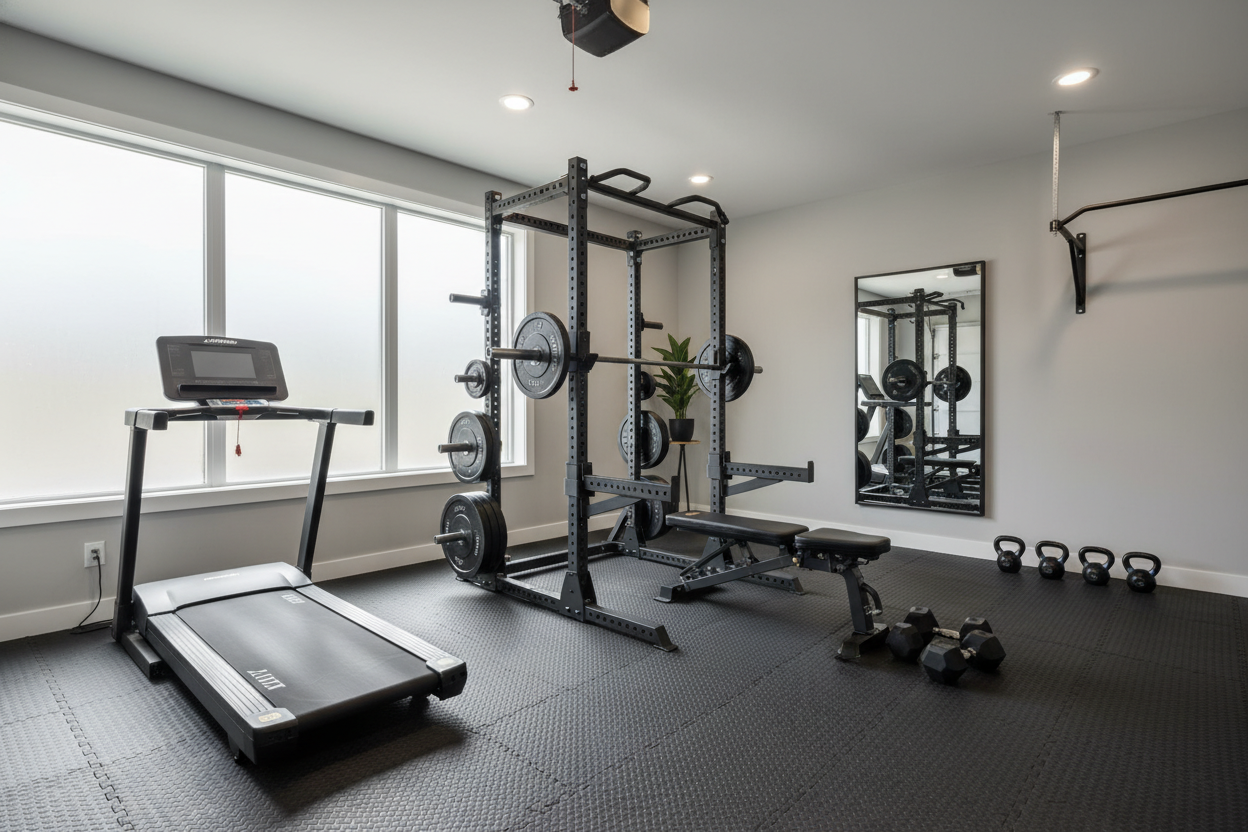
I have spent more time staring at freight tracking numbers than I have at my own kids. Okay, that is a slight exaggeration, but the anxiety of hitting 'order' on a $1,500 power rack based on a single Instagram ad is a feeling every garage gym owner knows. You are staring at a screen, trying to figure out if the welds are actually clean or if the manufacturer just used a really good filter. Finding the right gym equipment to buy online often feels like a high-stakes poker game where the pot is your floor joists and your lower back.
- Safe Bets: Cast iron plates, name-brand power racks, and Olympic barbells from reputable makers.
- Risky Business: Adjustable benches and any cable machine with 'budget' in the name.
- Spec Check: Always verify 11-gauge steel and hardware size before clicking buy.
- Shipping Truth: If it is heavy and the shipping is free, the cost is hidden in a higher sticker price.
The convenience is undeniable. You can buy home gym online and have a semi-truck drop a literal ton of steel in your driveway. But without a physical touch-test, you are relying on specs and the honesty of the brand. I have been burned by 'commercial grade' claims that turned out to be flimsy 14-gauge tin cans, and I have been surprised by sleeper hits. Here is how I separate the rock-solid investments from the scrap metal.
The Green Light: Gear You Can Confidently Order Sight-Unseen
Some categories of online home gym equipment are incredibly hard for even the most corner-cutting factory to mess up. These are the pieces where the physics are simple and the materials are standardized. If you stick to the specs, you do not need to sit on these or shake them in a showroom to know they will work. You are looking for mass and material density here, not moving parts.
Cast Iron Plates and Fixed Dumbbells
Dead weight is dead weight. If you are buying standard Olympic cast iron plates, the only real variables are weight tolerance and hole diameter. A 45-lb plate from a reputable online dealer might be off by a few ounces, but it is not going to break when you drop it. Fixed rubber hex dumbbells are another safe bet. As long as the heads are pinned and the knurling looks decent in the high-res photos, there is very little that can go wrong. I have bought thousands of pounds of iron online and, aside from some chipped paint during shipping, it is the safest way to build your base.
Power Racks from Reputable Brands
A power rack is just a box made of steel tubes. If the spec sheet says it is 3x3-inch 11-gauge steel with 5/8-inch or 1-inch hardware, you know exactly what you are getting. There is no 'feel' to a rack; it is either stable or it is not, and mass usually wins that fight. When I am hunting for a new centerpiece, I ignore most top rated home gym equipment lists that feel like they were written by people who have never touched a barbell. Instead, I look for the actual weight of the unit. If a rack weighs 400 lbs, it is going to be stable. If it weighs 120 lbs, it is a clothes rack.
The Danger Zone: What Needs an In-Person Reality Check
This is where the 'slick photo' trap gets you. Anything with a hinge, a bearing, or a cable is a potential disaster. Manufacturers love to hide cheap components where you cannot see them. A photo cannot tell you if a pulley has a hitch in it or if a bench pad feels like it was stuffed with old newspapers. This is the gear that often looks 'commercial' in a render but feels like a toy once you are under a heavy load.
Adjustable Benches (The Wobble Trap)
The adjustable bench is the most deceptively difficult piece of equipment to build. I have sat on $500 benches that rattled like a spray paint can. If there is any play in the pivot point or the adjustment spine, you will feel it the second you try to press. A bench that wobbles while you have 225 lbs over your face is not just annoying; it is dangerous. Unless you are buying a proven tank from a brand like Rep or Rogue, buying a bench online is a massive gamble. Look for a wide rear base and a massive bolt at the main hinge point.
Complex Pulley Systems and Multi-Stations
Cable machines live and die by their friction. High-end commercial units use aluminum pulleys and aircraft-grade cables that feel like butter. Budget units use plastic pulleys and stiff cables that make 50 lbs feel like 70 lbs on the way up and 30 lbs on the way down. If you are looking at a Smith machine home gym station, you absolutely must verify the bearing type. If it does not specify 'linear ball bearings,' stay away. Cheap bushings will seize up or get 'crunchy' within six months of use, and by then, the shipping cost to return the 500-lb beast will cost more than the machine itself.
My 3-Step Checklist Before Hitting 'Checkout'
Before you hand over your credit card, do your homework. First, check the warranty—specifically the 'wear items' like cables and upholstery. A 'lifetime warranty' on the frame is easy to give because steel rarely breaks, but if the cables only have a 90-day warranty, that is a red flag. Second, hunt for 'real' photos. Go to Reddit or Instagram and look for tagged photos from actual garages. Marketing photos use wide-angle lenses to make racks look bigger and lighting to hide poor weld quality.
Third, check the shipping weight versus the product weight. Some companies inflate their shipping weight to make the product seem heavier. You want to know the 'net weight' of the steel. I once bought a 'heavy-duty' functional trainer that arrived in three boxes. It felt light. When I weighed the actual unit, it was 40 lbs lighter than the website claimed. That is 40 lbs of structural integrity that just was not there. Do not be afraid to email customer service and ask for the gauge of the steel if it is not listed.
Don't Buy It All at Once
The biggest mistake I see is the 'full room' purchase. People drop $5,000 on a complete setup from one brand before they know if that brand is actually any good. Start with the essentials—a bar, some plates, and a rack. See how the company handles the shipping, how they pack the boxes, and how the gear holds up after a month of heavy use. If the barbell arrives bent and customer service ghosts you, you will be glad you did not buy the functional trainer from them too. Follow the exact order you should buy gym equipment to ensure you are building a foundation of quality rather than a room full of regret.
FAQ
Is 14-gauge steel okay for a home gym?
For a pull-up bar or a light accessory, sure. For a power rack where you are squatting 300+ lbs? No. Stick to 11-gauge. It is thicker, heavier, and provides the structural rigidity you need when you have to bail on a lift.
Why is shipping so expensive for gym gear?
Because steel is heavy and bulky. Many 'free shipping' sites just bake that $200-400 cost into the price of the item. Compare the total 'to-your-door' price rather than just the MSRP.
Can I trust Amazon reviews for gym equipment?
Take them with a grain of salt. Most Amazon reviewers are happy if the box arrived on time. They are not necessarily testing the weight capacity or checking the knurling with a magnifying glass. Look for reviews on dedicated lifting forums instead.
Share:
Your Ceiling Can't Handle Gymnastics Equipment at Home (Here's the Fix)
How to Decode All 4 Fitness Machines Types Before Buying