
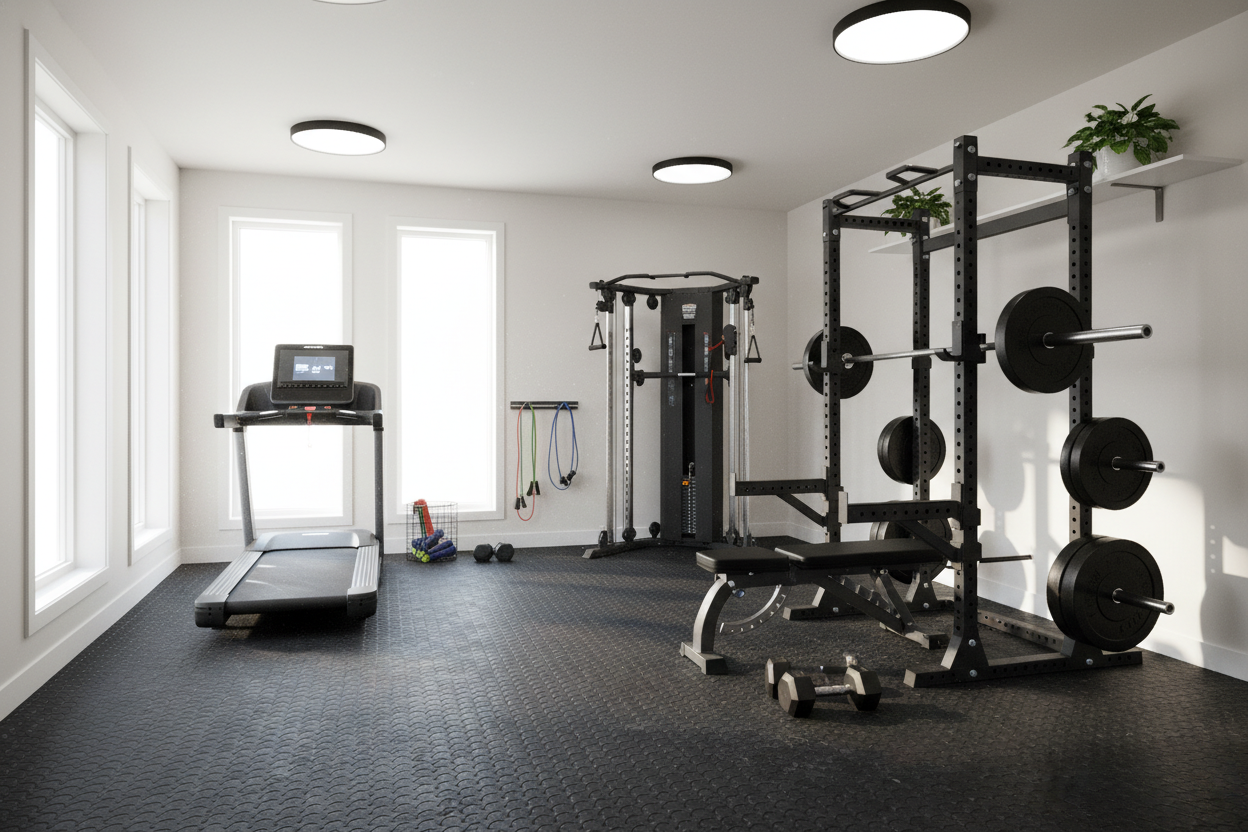
I have spent way too many hours in my garage, staring at a pile of bolts and wondering if the machine I just bought is actually going to hold up under a heavy set of rows. Most people buy full body workout equipment for home because they want to save time and space, but they end up with a glorified coat rack that wobbles the moment they try to pull more than 100 pounds. If you are serious about getting stronger, you cannot settle for flimsy cables and plastic pulleys.
Quick Takeaways
- Avoid machines with plastic pulleys; they will fray your cables within months.
- Check the cable ratio—a 2:1 ratio is standard for functional trainers, but 1:1 is better for heavy lifting.
- Measure your ceiling height twice before ordering anything with a pull-up bar.
- Plate-loaded machines usually offer more longevity and a higher weight ceiling than fixed stacks.
The 'Does Everything, Masters Nothing' Trap
The biggest mistake I see is people buying those entry-level multi-gyms from big-box stores. They promise 50 exercises in one tiny footprint, but the reality is that the resistance feels 'mushy' and the frame shakes during basic movements. This cheap traded free weights for a full body workout machine trap is how most lifters hit a plateau by month three. If the stack only goes to 150 lbs, you are going to outgrow it on chest presses and rows before you even get your first oil change for the machine.
When searching for full body exercise equipment for home, look for at least 11-gauge or 12-gauge steel. If the manufacturer does not list the steel gauge, it is probably thin-walled tubing that will flex under load. You want a rig that feels like it is bolted to the earth, not one that slides across the floor when you do a cable crossover.
Biomechanics Matter More Than Exercise Count
A machine claiming to offer 100+ exercises is usually lying. They are counting every slight hand adjustment as a new movement. What actually matters is the pivot points and the cable travel. If the pulleys are fixed in a weird position, you will feel a nasty pinch in your rotator cuffs during flyes or presses. I have tested machines where the 'chest press' arm was so high it felt like I was doing a weird overhead shrug.
Pay attention to the cable ratio. A 2:1 ratio means 100 lbs on the stack feels like 50 lbs in your hand, but you get more cable length for dynamic movements. If you want to do heavy compound work, you need a machine that can handle the load without the cables snapping or the pulleys binding up.
The Weight Stack vs. Plate-Loaded Dilemma
Weight stacks are convenient—you just move a pin and go. But they are expensive and heavy to ship. If you are on a budget but want high weight capacity, plate-loaded is the way to go. You use the Olympic plates you already own, and the weight ceiling is limited only by how many plates you can fit on the sleeves. A Smith machine home gym station is a prime example of this; it gives you the safety of a guided bar with the massive weight capacity of iron plates.
Plate-loaded machines also tend to be easier to maintain. If a weight stack guide rod gets bent, the whole machine is trashed. With plate-loaded gear, the mechanics are usually simpler and more rugged for a high-traffic garage environment.
Getting It Through the Front Door (Literally)
I once bought a massive functional trainer only to realize it was two inches taller than my garage ceiling. Don't be that guy. Most full-scale rigs require at least 84 to 90 inches of clearance. When mapping out your home gym, you also need to account for 'working space.' A machine might be 4 feet wide, but you need at least 2 feet of clear space on either side to actually move your arms and load plates.
Think about the floor, too. A 500-lb machine plus a 200-lb lifter is a lot of concentrated pressure. If you are setting this up on a second floor or over a crawlspace, you might want to reconsider the weight stack and go for something more modular.
My Blueprint for the Perfect All-In-One Setup
If I were building a setup from scratch today, I would look for a hybrid. You want dual adjustable pulleys for accessory work and a solid rack for the big lifts. High-quality full body workout equipment at home should include a multi-grip pull-up bar, adjustable cable heights, and a spot to perform squats or bench presses safely. This ensures you aren't limited by the machine's fixed range of motion.
The Full Body Multifunctional Training Station M1 is a great example of this philosophy. It uses heavy-duty steel and smooth cable tracks that actually feel like commercial gym gear. It is the kind of setup that stays in your gym for a decade rather than ending up on Facebook Marketplace after six months. Look for linear bearings and aluminum pulleys if you want that 'buttery' feel during your reps.
Personal Experience: The Cable Snap Incident
A few years ago, I cheaped out on a lat pulldown machine. I thought, 'Steel is steel, right?' Wrong. I was doing a heavy set of rows when the plastic-coated cable frayed and snapped at the crimp. I ended up flying backward into a stack of storage bins. It was a painful lesson in why build quality matters. Now, I check the max load ratings on every piece of gear I buy, and I never trust a machine that uses nylon pulleys for heavy loads.
Frequently Asked Questions
What is the best cable ratio for home use?
For most people, a 2:1 ratio is ideal because it allows for longer cable travel and smoother movements for things like lateral raises and functional training. If you strictly want to lift as heavy as possible on rows and presses, look for a 1:1 ratio.
How much floor space do I actually need?
Budget for at least an 8x8 foot area. While the machine might only be 4x5 feet, you need room to step back for rows, space to move your bench, and clearance to load plates onto the sleeves without hitting a wall.
Can I put a full-body machine on carpet?
You can, but it is not ideal. The machine will settle into the carpet and might become unlevel, which causes the cables to rub and wear out faster. Use 3/4-inch rubber horse stall mats or specialized gym flooring for a stable, safe base.
Share:
Why Your New Lift Weight Set Is Probably Going to Break
Stop Guessing Your Lift Bar Weight (It Isn't Always 45 Lbs)