
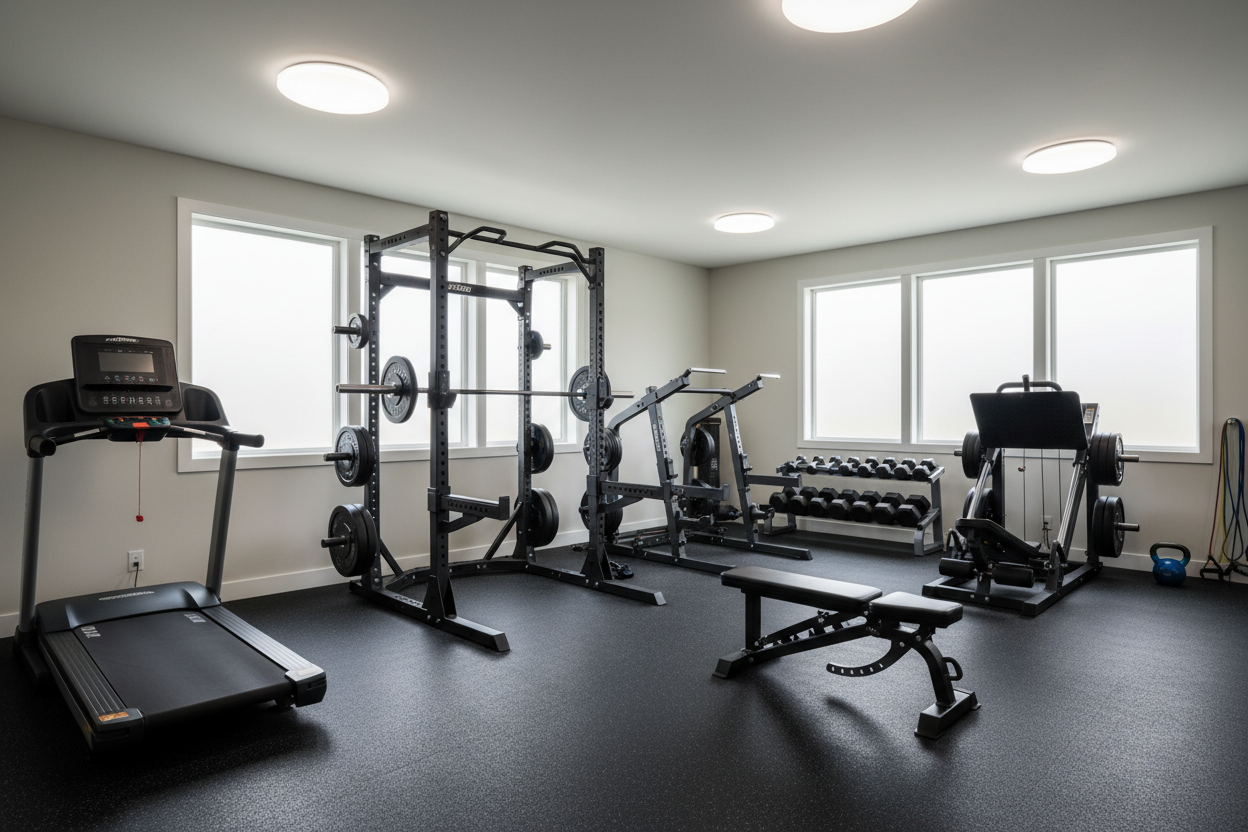
I have spent way too many Friday nights measuring my garage floor with a tape measure and a prayer. If you are like me, you are tired of the local big-box gym where the leg press is always sticky and the squat rack has a twenty-minute wait. You want to build massive legs at home, but space is the ultimate enemy. Choosing between the various types of squat machines feels like a high-stakes game of Tetris where the loser gets a 500-pound piece of steel they can't even use.
- Hack Squats are the kings of quad isolation but usually require the most floor space.
- Belt Squats offer the best lower-back protection for lifters with high-mileage spines.
- Pendulums provide a unique arcing path that mimics natural human movement better than linear sleds.
- Smith Machines are the most versatile space-savers if you need one piece of kit to do everything.
Why You Can't Just Call It 'The Leg Machine'
Walk into any commercial gym and point at a piece of heavy iron in the corner. If you call it 'the leg machine,' you are going to get blank stares. In the home gym world, precision is everything. Knowing the specific squat machine name isn't just about sounding smart; it is about knowing if the damn thing will fit under your seven-foot ceiling. Different squat machines serve wildly different purposes, from isolating the teardrop muscle in your quad to allowing you to squat heavy without compressing your discs.
When you are shopping for different types of squat machines, you have to look at the footprint versus the payoff. A dedicated leg press is great, but if it prevents you from parking your truck inside during a hail storm, was it worth it? Most of us are looking for squat machine variations that offer the most bang for the buck. Understanding the mechanics—whether it is a linear sled or a leverage arm—changes how you program your accessory work. Don't just buy the first thing that looks heavy. Map out your floor plan first.
Decoding the Different Hack Squat Machines
If your goal is to make your quads scream, the hack squat is your primary tool. Traditional hack squat machine types usually feature a 45-degree angle sled. You lean back against a pad, hook your shoulders under the supports, and drive upward. This fixed path removes the stability requirement of a barbell squat, letting you drive your legs to absolute failure without worrying about tipping over. These are the different hack squat machines you will likely encounter: the classic 45-degree, the vertical hack, and the hybrid sled.
The vertical hack is a space-saver, but it can be brutal on the knees if your mobility isn't spot-on. For most home lifters, I recommend a combo unit. A 3 in 1 hack squat leg press combo machine is a massive win because it flips between a hack squat and a leg press in about thirty seconds. This solves the 'types of hack squat machine' dilemma by giving you two of the best leg builders in a single footprint. When looking at types of hack squats, pay attention to the footplate size. A larger plate allows for different foot placements, which can shift the focus from your quads to your glutes and hamstrings.
Arcing Iron: V-Squats and Pendulum Monsters
Not all machines move in a straight line. Arcing squat machine variations, like the V-Squat and the Pendulum, move the weight in a circular path. This is a subtle but massive difference. While a linear hack squat machine types keep the resistance constant, a pendulum machine gets harder or easier depending on where you are in the rep. It mimics the natural 'strength curve' of a human squat. You are strongest at the top and weakest at the bottom; a good pendulum machine respects that.
V-squats are often more compact than a 45-degree hack squat. They use a pivot point at the base, which feels more like a natural squat movement while still providing the safety of a machine. If you have the budget and the room, a pendulum is the 'Ferrari' of the leg world. It feels incredibly smooth, but be warned: these things are usually massive. If you are choosing between different types of hack squat machine and an arcing V-squat, think about your joints. Many lifters find the arcing motion much friendlier on the hips and ankles over long-term training cycles.
Belt Squats: Max Leg Drive, Zero Spinal Compression
If your lower back feels like it is full of dry Cheerios every time you put a bar on your shoulders, you need to look at belt squat machine types. The mechanics are simple: you wear a dip belt around your hips, which is attached to a weight stack or a leverage arm. The weight pulls directly from your center of mass. This means zero load on your spine. You can take your legs to the brink of collapse without your lower back being the limiting factor.
There are two main squat machine variations here: cable-based and pivot-arm. Cable-based units are often integrated into a power rack to save space. Pivot-arm units, or 'lever' belt squats, are standalone machines that offer a much more stable feel. I have used both, and while the pivot-arm is superior for heavy loading, the cable versions are a godsend for small garages. If you are asking 'what is the squat machine called' that lets me squat with a herniated disc? This is it. It is the ultimate tool for high-volume hypertrophy work without the systemic fatigue of a barbell.
The Smith Machine: The Ultimate Space-Saving Compromise
I know, I know. The 'hardcore' crowd loves to hate on the Smith machine. But if you are working with a single-car garage, you have to be realistic. A dedicated leg sled is a luxury. A versatile Smith machine setup can act as your squat rack, your bench press, and your leg machine all in one. Because the bar is on a fixed track, you can place your feet way out in front of you—something you can't do with a free barbell—to mimic the exact mechanics of a hack squat.
In fact, I often tell people that a hack squat on Smith machine is 90% as effective as a dedicated unit. You get the stability, the safety of the lockout pins, and the ability to grind out reps. When considering the different types of squat machines, don't overlook the Smith just because of gym lore. If you buy one with high-quality linear bearings, it will feel as smooth as any dedicated sled. It is the smartest way to get 'different types of hack squat machine' functionality without actually buying a second six-foot-long piece of equipment.
How to Pick the Right Setup for Your Floor Plan
Before you pull the trigger, be honest about your square footage. A full-sized 45-degree hack squat is going to eat an 8x4 foot area once you account for plate loading. If you are tight on room but still want that sled feel, the compact 30 degree leg press hack squat combo machine is the middle ground I usually point people toward. It gives you the quad-killing angles without requiring a dedicated warehouse to store it.
The bottom line? If you have back issues, get a belt squat. If you have the space and want the best quad growth possible, get a hack squat. If you are limited on space and budget, a Smith machine is your best friend. Every one of these types of squat machine has a place; you just have to decide which one earns its spot on your floor. Stop overthinking the 'perfect' choice and pick the one that you will actually show up and use on Monday morning.
Is a leg press the same as a hack squat?
No. On a leg press, your back is stationary and you move the weight with your feet. On a hack squat, your feet stay on a fixed plate and you move your entire body weight plus the sled. Hack squats generally recruit more core and glutes than a standard leg press.
Can I do hack squats on a Smith machine?
Absolutely. By walking your feet forward about 12 to 18 inches and leaning your back against the bar, you can replicate the angle of a hack squat. It is a fantastic alternative if you don't have room for a dedicated sled.
Which machine is best for bad knees?
The belt squat is usually the winner here because it allows for a very vertical shin angle and removes all spinal loading. However, a pendulum squat is also excellent because its arcing path reduces the sheer force on the patella at the bottom of the movement.
How much weight does a hack squat sled weigh?
Most commercial and high-end home hack squat sleds have a 'starting weight' (the weight of the empty carriage) between 75 and 125 pounds. Always check the specs before you start adding plates so you know your true total.
Share:
Does the Logo Matter When Comparing Brands of Fitness Equipment?
Most Exercise Equipment Full Body Rigs Are a Massive Trap