
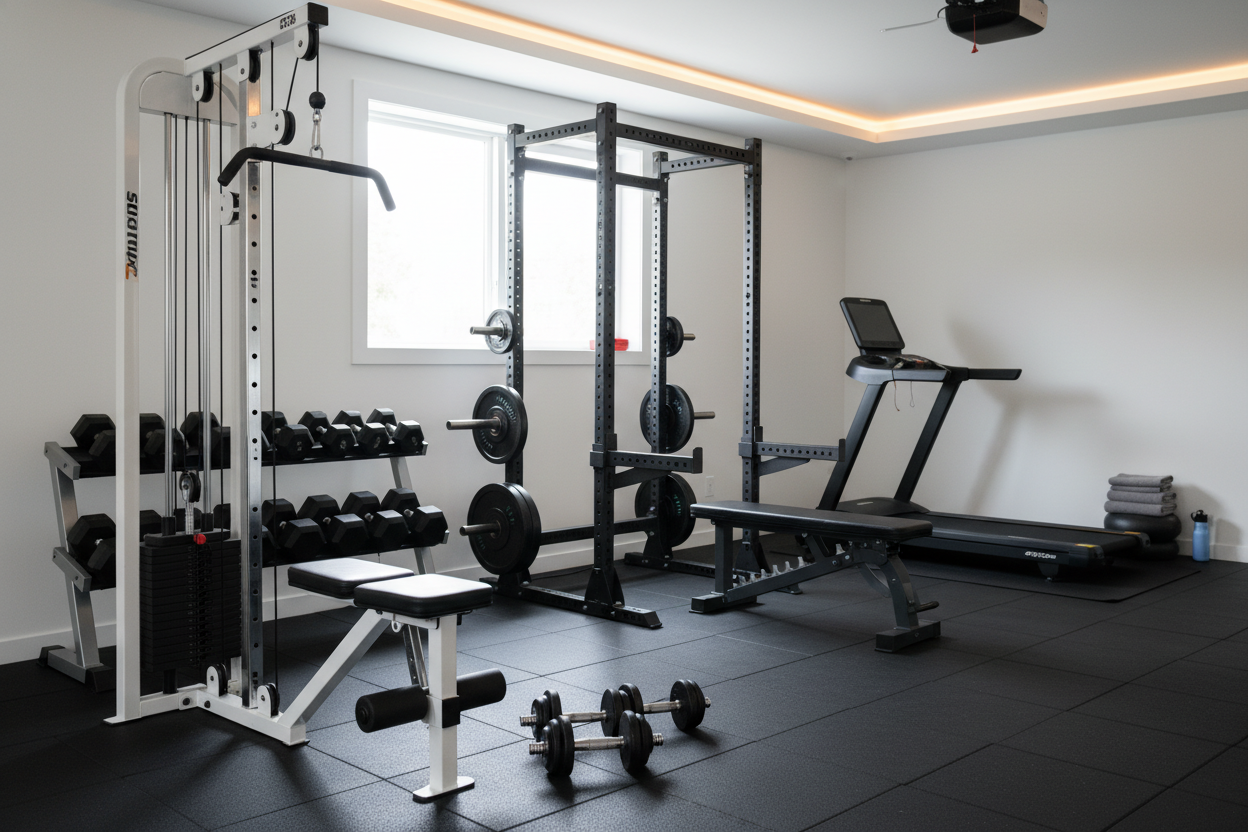
I have spent the last decade in garage gyms, basement setups, and high-end commercial facilities. I have seen $5,000 racks that felt like tanks and $200 Amazon specials that felt like they were held together by hope and Elmer glue. The temptation to exercise machines shop for deals is real, especially when your local gym just hiked their monthly dues again.
Quick Takeaways
- If the shipping weight is under 100 lbs for a strength machine, it is probably junk.
- 11-gauge steel is the gold standard for safety; 14-gauge is for light-duty only.
- Cheap nylon pulleys create friction that ruins your mind-muscle connection.
- Buying one quality rig is cheaper than replacing three 'budget' rigs over five years.
The Trap of the Bargain Basement Rig
We have all been there. You are scrolling through listings, and you see an 'exercise machine cheap' enough to fit your monthly grocery budget. It looks shiny in the photos. The description uses a lot of buzzwords. But when it arrives in a box that looks like it was dragged behind the delivery truck, the reality sets in. These machines are often manufactured with the thinnest steel possible to save on shipping costs.
The problem with a bottom-barrel exercise machine price is that it does not account for physics. When you are moving 200 pounds on a cable system, that energy has to go somewhere. On a cheap rig, it goes into the frame. You will feel the uprights sway, the bolts creak, and the entire unit slide across your floor. It is not just annoying; it is distracting. You cannot focus on hitting a PR when you are worried the machine might tip over if you pull too hard.
Most of these units end up as expensive clothes hangers within six months. Either a part breaks that you cannot replace, or the experience is so miserable that you stop using it. That is the ultimate 'cheap' tax—spending money on something that kills your motivation to actually train.
What Actually Determines an Exercise Machine Price?
When you look at the landscape of exercise machines and prices, the variance is staggering. Why does one functional trainer cost $800 while another costs $2,500? It is rarely just the brand name on the sticker. High-quality manufacturing requires precision engineering and heavy raw materials, neither of which are cheap to source or transport.
A premium machine uses laser-cutting technology for its holes and joints, ensuring everything lines up perfectly. This means no 'death rattle' when you use it. It also means the weight stacks are machined for smoothness rather than being cast-iron blocks with jagged edges. When you pay a higher exercise machine price, you are paying for the R&D that ensures the resistance curve feels natural from the bottom of the rep to the top.
Steel Gauge, Welds, and Structural Integrity
In the world of strength gear, steel gauge is king. Most commercial-grade equipment uses 11-gauge steel, which is about 3mm thick. It is heavy, rigid, and safe. Budget gear often drops down to 14-gauge or even thinner. While 14-gauge is fine for a spice rack, it is questionable for a rack meant to hold hundreds of pounds over your head.
The welds are the next giveaway. Look for 'stacked dimes'—clean, consistent beads. Cheap machines often have 'booger' welds that are porous and weak. If you are serious about your progress, investing in a higher exercise machine price for a frame that won't fatigue over time is the only logical move. I have seen thin-walled tubing buckle under loads that were technically within the 'rated' capacity because the manufacturer lied about the specs.
The Cable and Pulley Ecosystem
This is where the 'fit machine' marketing usually falls apart. A cable machine is only as good as its pulleys. Cheap units use plastic pulleys with low-grade bearings that create massive amounts of friction. This friction makes the weight feel 'stuttery.' It is why that why that cheap workout exercise machine feels like garbage compared to the smooth glide you feel at a professional club.
High-end machines use aluminum pulleys with sealed bearings and aircraft-grade cables. This setup ensures that 50 lbs feels like 50 lbs, not 40 lbs on the way up and 60 lbs on the way down due to drag. If you are trying to shop workout machine options for hypertrophy, you need that consistent tension. You cannot get that from a pulley system that feels like it is filled with sand.
When Does it Make Sense to Shop Workout Machine Deals?
I am not a total gear snob. There are times when it makes sense to save your cash. Simple cardio equipment is often a safe place to cut corners if you aren't an elite athlete. For example, a foldable upright exercise bike is a great budget-friendly way to get your heart rate up without breaking the bank. These machines have fewer points of failure and don't have to support 300-lb dynamic loads.
However, when you move into the realm of heavy lifting, the math changes. You have to decide if a Smith rig is the best exercise machine for your specific goals. If you are planning on doing heavy squats or presses, the structural requirements are much higher than a simple stationary bike. Saving $200 on a squat rack is a bad deal if it means you are constantly worried about the safety catches failing.
The Math: Replacing Junk vs. Buying Once
Let's talk real numbers. If you buy an exercise machine cheap for $400, and it lasts you two years before the cables fray or the frame bends, you are out $200 a year. If you buy a high-quality all-in-one Smith machine with cable crossover for $2,000, and it lasts you twenty years (which it will), you are looking at $100 a year. Plus, the resale value on quality gear is actually decent.
Finding an exercise machine with price transparency is key. A premium unit replaces four or five separate cheap stations, saving you floor space and the headache of multiple shipping fees. I have spent more money replacing 'budget' cable crossovers than I would have spent if I just bought the commercial version on day one. Don't repeat my mistakes.
My Hard-Learned Rules for Home Gym Shopping
After testing hundreds of pieces of gear, I have a few non-negotiables. First, always check the footprint. Manufacturers love to make things look bigger in photos. Second, look at the warranty. If a company only offers 90 days on the frame, they don't trust their own product. Third, check the weight capacity—and then subtract 20% to be safe.
My personal rule? If I am going to be under the weight, I don't buy the cheapest option. I have had a cheap bench collapse during a chest press, and let me tell you, the medical bill was way more expensive than a high-end bench would have been. Buy once, cry once. Your body will thank you.
FAQ
Is a higher price always a guarantee of quality?
Not always, but it is a strong indicator. You are looking for the weight of the machine. Heavy machines use more steel, and steel is expensive. If two machines cost the same but one weighs 50 lbs more, go with the heavy one.
How do I know if a machine is 'commercial grade'?
Look for 11-gauge steel, 1-inch hardware, and a weight capacity of at least 1,000 lbs for racks or 300 lbs for cable stacks. If the specs aren't listed, it is probably not commercial grade.
Can I upgrade a cheap machine later?
Usually, no. You can't easily swap out the steel frame or the pulley housings. You can sometimes upgrade the cables, but if the frame is wobbly, new cables won't fix the underlying safety issues.
Share:
Why I Finally Stopped Ignoring the V-Squat Machine
Your Garage Floor Probably Can't Handle a 5 100 Dumbbell Set