
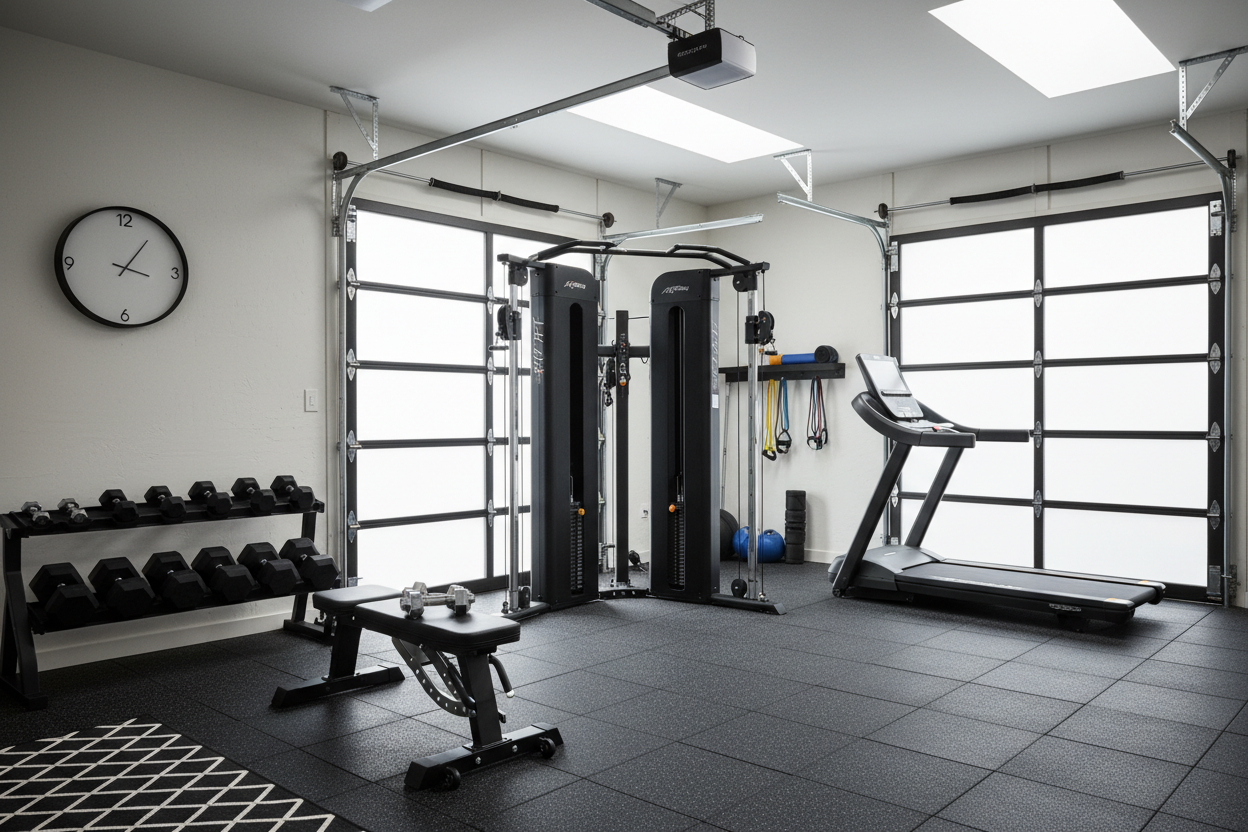
I have spent the last decade turning my garage into a revolving door of steel and disappointment. You know the feeling: you see a sleek ad for the best at home exercise machine, it looks like it belongs on a spaceship, and it promises to replace every dumbbell in existence. Then it arrives, and you realize it has the structural integrity of a wet cardboard box.
Finding the best equipment to exercise at home shouldn't feel like you are being sold a used car. If a machine can be folded and tucked under a bed, it probably isn't going to handle a heavy set of squats without making you fear for your life. I have tested the junk and the commercial-grade beasts, and the difference is always in the details you cannot see in a glossy photo.
Quick Takeaways
- Steel gauge is king; 11-gauge steel is the gold standard for stability.
- Avoid 'foldable' gear if you plan on lifting more than 50 pounds.
- A hybrid system is the best in home workout machine for saving floor space.
- Check the pulley ratio; 2:1 is common, but 1:1 feels like real weight.
Stop Buying Machines Because They Look Good on TV
The fitness industry loves a gimmick. They want to sell you a lightweight, plastic-heavy best at home fitness machine that looks 'clean' in a living room. But here is the reality: physics doesn't care about your interior design. If you are looking for the best weight training equipment for home, you need mass. Mass moves mass.
I have sat on machines that cost $1,500 and felt them wobble the second I loaded two 45-pound plates on the carriage. Most heavily marketed all-in-one units use 14-gauge steel or thinner. That is fine for a clothes rack, but for a squat? Forget it. You want something that doesn't scream when you rack the bar. The best home workout machines are built to take a beating, not just to look pretty in a 30-second commercial.
The Structural Math of Gear That Won't Break
When you are hunting for the best in home gym machines, you have to look at the spec sheet like a contractor. I look for 2x3 or 3x3 inch steel tubing. If the manufacturer doesn't list the steel gauge, they are hiding it. You also need to look at the cables. Aircraft-grade cables with a 2,000-pound tensile strength are the minimum if you want to avoid a cable snapping mid-lat pulldown.
I always tell people that the best at home weight lifting equipment doesn't fold away. Hinges and pins are weak points. If you want a machine that survives daily abuse for a decade, it needs a fixed, solid footprint. Look for aluminum pulleys over plastic ones; plastic wears down and creates friction that makes 100 pounds feel like 80 one day and 110 the next.
Why a Hybrid Unit Beats 10 Single Machines
Most people don't have a 5,000-square-foot warehouse. You need the best home training machine that does everything. This is where a hybrid unit—combining a functional trainer with a guided barbell—wins. A high-quality Smith machine home gym station replaces a squat rack, a cable crossover, and a pull-up bar in one go.
This is the best machine for workout at home because it allows for both heavy compound movements and isolation work. I love being able to go from a heavy Smith press to a cable fly without walking across the room. It is about efficiency. When you have 45 minutes to train before work, you don't want to be swapping attachments on three different flimsy tools. You want one rock-solid hub.
The Hidden Trap of Flimsy Attachments
You can buy the best indoor fitness equipment on the market, but if the bench it comes with feels like a park bench, your workout will suck. I have seen guys spend three grand on a rack and then use a $40 bench that creaks when they sit down. That is a recipe for a shoulder injury.
To maximize a cable or Smith system, you need a heavy-duty weight bench chest press machine setup. Independent arm movements on your attachments allow you to fix muscle imbalances that a fixed bar can't touch. Don't settle for thin foam pads that bottom out under your shoulder blades. Your contact points with the machine are just as important as the frame itself.
My Verdict on What Actually Deserves Your Money
Stop trying to save $200 by buying the 'budget' version of a machine you plan to use 200 days a year. The best home strength equipment is an investment in your own safety and progress. If you buy cheap, you will be browsing Craigslist in eighteen months trying to offload your regret so you can finally buy the real thing.
A true home gym is built around one or two 'anchor' pieces of equipment. For me, that is a heavy-duty functional trainer with a built-in rack. It is the best machine to exercise at home because it grows with you. Whether you are doing rehab work or trying to hit a new PR, the machine should be the last thing on your mind. It should just work.
Personal Experience: My 'Slinky' Mistake
Years ago, I bought a total-body resistance machine that used 'power rods.' The ad made it look like I'd be ripped in weeks. In reality, the resistance felt like pulling on a giant rubber band. There was no 'weight' at the top of the movement, and the whole thing flexed like a Slinky when I tried to do rows. I sold it for a third of what I paid and bought a real cable machine. Lesson learned: stick to steel and iron.
FAQ
Is a Smith machine better than free weights for a home gym?
It is not necessarily 'better,' but it is safer if you train alone. The built-in safety catches allow you to push to failure without needing a spotter, which is a huge win for home lifters.
What is a good pulley ratio for home machines?
A 2:1 ratio means 100 pounds on the stack feels like 50 pounds of resistance. This is great for functional movements and high-rep work because it gives you more cable travel. A 1:1 ratio is better for heavy lifting.
How much space do I actually need for a full machine?
Most multi-functional machines need at least an 8x8 foot area. You have to account for the bar width and the space you need to move around the machine to load plates.
Share:
The Exact Order You Should Buy Gym Equipment for Your Home
I Maxed Out a Budget Gold Gym Bench So You Don't Have To