
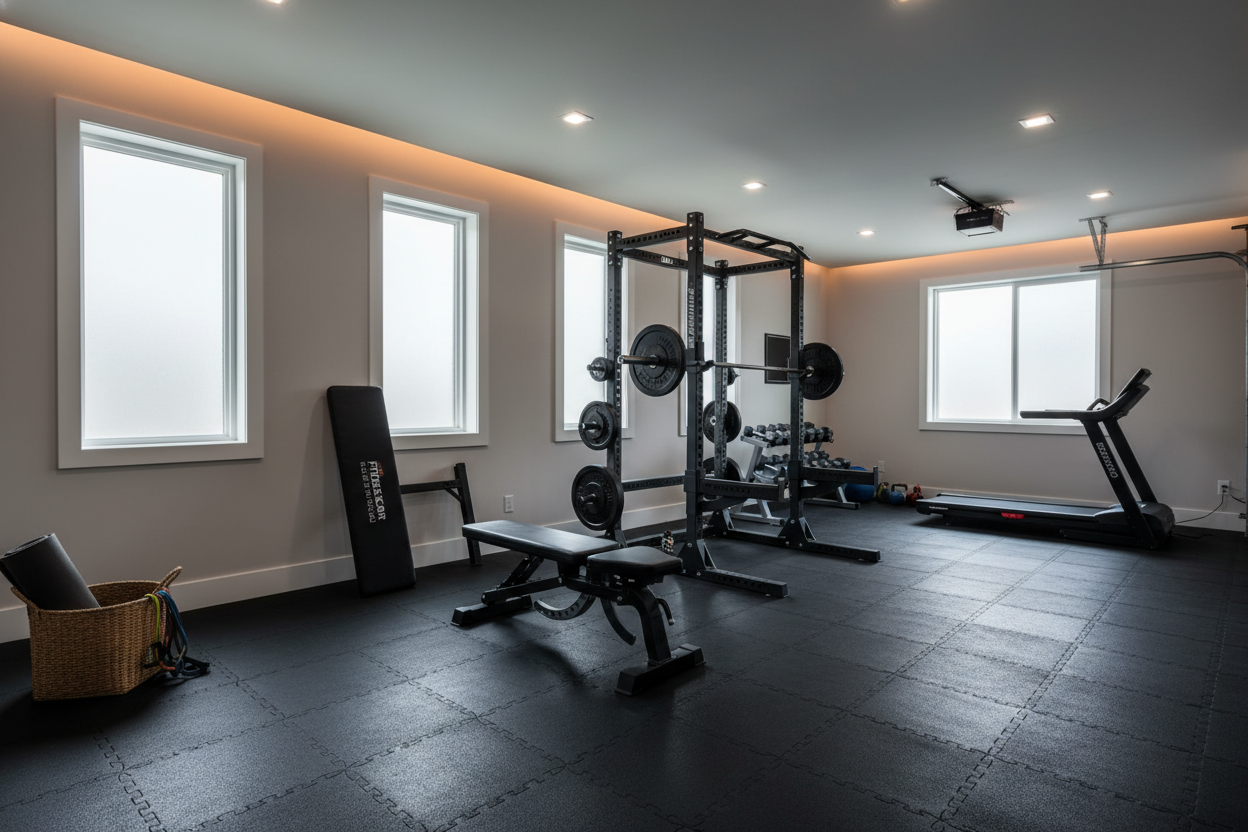
I remember the day I hauled the fitness gear pro olympic bench into my garage. I’d just cancelled my commercial gym membership because I was tired of waiting twenty minutes for a rack. At the sporting goods store, this bench looked like a beast—shiny black powder coat, thick padding, and a built-in leg developer. It felt like the ultimate one-and-done solution for a guy trying to build a respectable chest without spending three months' rent on a commercial-grade setup.
- Fixed uprights that can interfere with your natural grip width.
- Integrated leg developer and preacher curl attachments that add footprint but lack stability.
- Rated for 600 lbs total weight, which sounds like a lot until you’re actually moving heavy steel.
- Assembly is a multi-hour project involving a manual that could be clearer.
The Allure of the Big-Box Starter Setup
There is something undeniably satisfying about walking into a store and walking out with an entire gym setup in the back of your truck. The fitness gear pro series bench is designed for exactly that impulse. It’s the centerpiece of the Fitness Gear ecosystem. When I first unboxed it, I was impressed by the sheer amount of steel. It felt like a massive upgrade from the rickety folding benches you see at department stores.
First impressions were solid. The padding on the fitness gear pro bench is surprisingly dense, and the adjustable backrest moves through the incline, flat, and decline positions with a simple pull-pin. For a beginner or someone just looking to stay active, it feels like all the bench you could ever need. But as I started adding plates to the bar, the honeymoon phase ended quickly.
Upright Spacing: The Silent Shoulder Killer
The biggest flaw with the fitness gear olympic bench isn't the steel—it’s the geometry. Because the uprights are fixed, you are stuck with their width. If you have long arms or prefer a wide grip for powerlifting, you’ll find your hands constantly bumping into the J-cups during the unrack. I found myself having to take a narrower grip than I liked just to clear the hardware, which started putting a weird strain on my anterior deltoids.
If you compare this to my Fitness Gear Pro Utility Weight Bench review, you’ll see that a standalone bench often offers more freedom. With fixed uprights, you’re forced to adapt your body to the machine, rather than the other way around. Over months of heavy pressing, that slight misalignment can lead to real shoulder nagging that sidelines your progress.
Can the Fitness Gear Pro Bench Handle Serious Weight?
The marketing says this fitness gear pro weight bench can handle a 600-lb total load (user plus barbell). On paper, that’s great. In practice, once I got north of 275 lbs on the bar, I started to feel a bit of side-to-side sway. The bolts are thick, but the footprint isn't wide enough to keep the unit completely anchored during a shaky re-rack.
The weld quality is decent for the price point, but it's not the heavy-duty 11-gauge steel you’ll find in a dedicated power rack. If you’re a casual lifter, this won't matter. But if you're chasing a four-plate bench, the fitness gear olympic weight bench starts to feel a little too 'home-grade' for comfort. I never felt like it was going to collapse, but I definitely stopped feeling 'planted' during high-effort sets.
What the Fitness Gear Pro Olympic Bench Manual Doesn't Tell You
Putting this thing together is a rite of passage. The fitness gear pro olympic bench manual is a stack of exploded diagrams that require a PhD in patience. One thing the manual completely glosses over is the tension on the pivot points. If you tighten the bolts for the leg developer too much, the movement is jerky and useless. Too loose, and the whole thing rattles like a bucket of bolts.
I spent two hours troubleshooting a wobble only to realize the base stabilizer wasn't perfectly flush with my garage floor. The fitness gear pro olympic bench manual doesn't give you tips on shimming or leveling. You’ll also want to keep a real socket wrench handy; the 'tools' included in the box are basically pieces of stamped tin that will round off your nuts before you get them tight.
Why I Swapped to a Standalone Modular Setup
Eventually, I hit a wall. I wanted to do heavy squats, but I couldn't because the bench uprights were in the way. I wanted to do wide-grip work, but the J-cups were in my path. I realized that a fixed fitness gear olympic weight bench is actually a limitation disguised as a feature. By trying to do everything—bench, leg curls, preacher curls—it does none of them perfectly.
I finally sold the combo unit and moved to a modular setup. I bought a solid power rack and a high-quality adjustable weight bench Owb01 that I could slide in and out. This changed everything. I could finally set my safety bars at the right height and bench with a grip that didn't destroy my joints. If you're serious about long-term gains, I always recommend looking for a dedicated weight bench and a separate rack rather than these all-in-one units.
Is the Fitness Gear Pro Bench worth it for beginners?
Yes, if you are just starting and want a full setup for under $300, it’s a functional entry point. Just know that if you get strong, you will likely want to upgrade within two years.
Does it come with the barbell and weights?
Usually, no. The fitness gear pro bench is sold as the frame only. You’ll need to buy an Olympic barbell and 2-inch plates separately, which can double your initial investment.
How much space does it actually take up?
It’s a footprint hog. Between the bench length and the width of a 7-foot Olympic bar, you need at least an 8x8 foot area to use it safely without hitting walls or storage racks.
Can I remove the leg developer?
Yes, the leg developer and preacher pad are removable. However, removing them leaves the attachment post exposed, which can be a bit of an eyesore but gives you more room for standard pressing.
Share:
Stop Overcomplicating It: Start With Dumbbells Exercise Equipment
Why I Refuse to Pay Retail for a Life Fitness Dumbbell