
I remember scrolling through forums at midnight, trying to decide if a $400 barbell was actually better than the $100 rust-bucket I had been using. I trusted the first ten garage gym reviews I read, bought the 'top-rated' pick, and watched the chrome flake off the sleeves after three months of light use. It is incredibly frustrating when you realize most 'experts' have never actually put 405 lbs on the steel they are selling you.
- Affiliate commissions often dictate rankings more than actual product durability or performance.
- Pristine, scratch-free equipment in photos is a dead giveaway that the gear has not been truly tested.
- Focus on structural specs like steel gauge and pulley ratios rather than marketing buzzwords.
- Real testing involves failing lifts and seeing how the safety catches actually respond.
Affiliate Links Ruined the Iron Game
The industry shifted about a decade ago when every fitness blogger realized they could make a $50 commission if you clicked a link and bought a rack. This led to a flood of gym garage reviews that praise every wobbly bench and friction-heavy pulley system as if it were a piece of precision engineering. The honesty has been replaced by a race to the bottom of the 'Best Of' list.
I have seen reviewers push people into buying massive commercial gym rigs that take up 80% of a standard two-car garage. They do not care if you have room to breathe; they just want the higher commission payout from a $3,000 sale. If every single review on a site ends with a 'Buy Now' button and a 5-star rating, you are reading an ad, not a review.
How to Spot a Fake Gear Tester in 5 Seconds
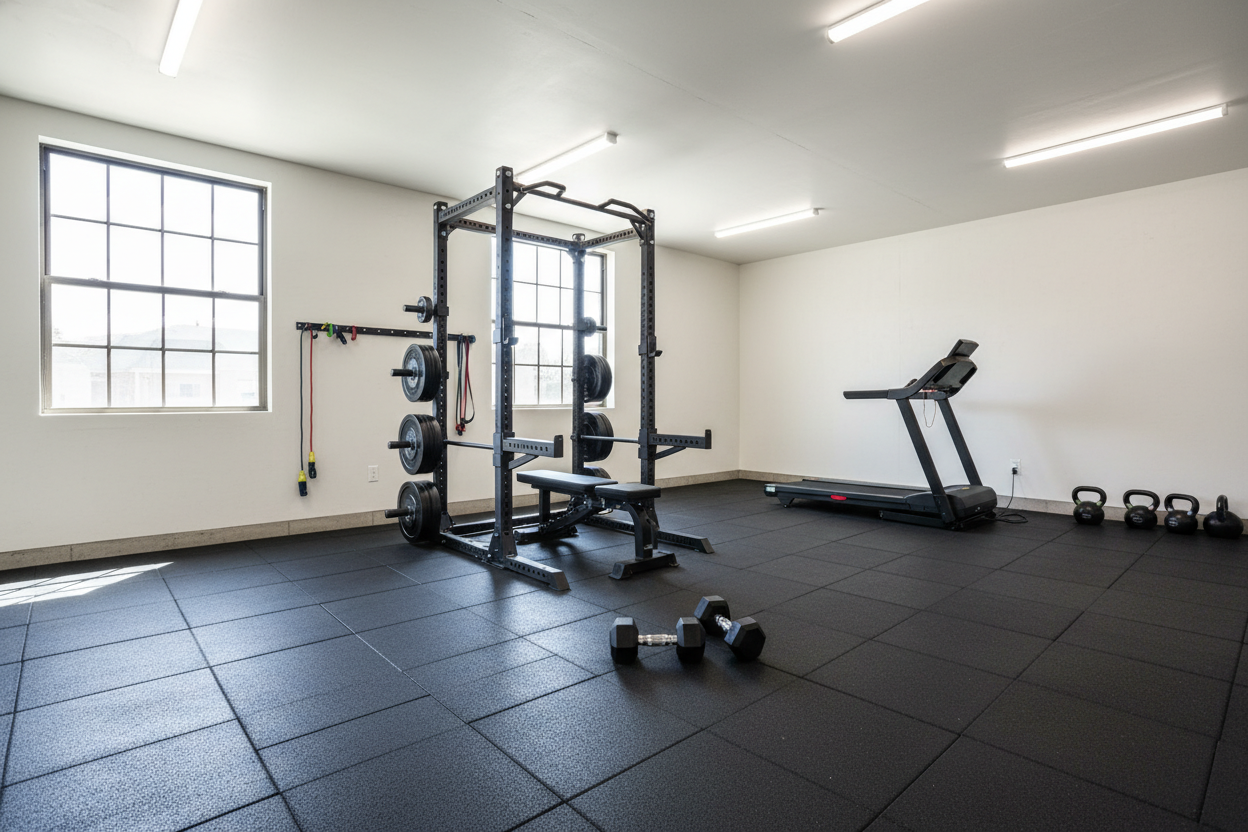
Look at the photos. If the powder coat is perfect, the knurling is free of chalk, and the floor under the rack is spotless, that person has not trained on that equipment. Real garage reviews show the reality of a lifting space: rubber floor scuffs, sweat drops on the vinyl, and scratches on the J-cups where the knurling has bitten into the steel.
Another red flag is the use of manufacturer stock photos. If a reviewer cannot be bothered to take a photo of the gear in their own space, they probably do not own it. They are likely just summarizing the product description and calling it a 'deep dive.' Real testing means dropping a loaded bar on the safeties to see if they bow.
The 'We Test Everything' Illusion
Some massive websites claim to provide garage gym reviews everything from $5 chalk blocks to $10,000 modular functional trainers. Unless they have a 50,000-square-foot warehouse and a rotating staff of powerlifters, they are not testing that volume of gear. They are skimming spec sheets and rewriting the 'Pros and Cons' from Amazon comments.
I would much rather hear from one guy who has used a single 20kg bar for three years than a site that 'reviewed' fifty different barbells in a single weekend. You cannot know how a bushing will hold up or if a rack's paint will chip until you have put it through a few hundred sessions. Volume does not equal expertise.
What Actually Matters When Evaluating a Rack
When I am evaluating a power rack, I do not care about the 'sleek aesthetic' or the brand logo. I care about the lateral wobble when I am racking a heavy set of squats. I care if the hole spacing is actually 2 inches or if I am stuck between a height that is too high to unrack safely and too low to keep my back tight. After testing multiple garage gym rigs, I have learned that the small details—like the quality of the welds and the thickness of the J-cup padding—make the biggest difference.
Check the steel gauge. 11-gauge steel is the standard for a reason; 14-gauge belongs in a clothes rack, not a squat stand. Look at the usable inside depth. If you are a big guy and the rack only gives you 24 inches of depth, you are going to be banging plates against the uprights every time you move. Real reviews focus on these logistical headaches, not just how the rack looks in a sunset photo.
My No-BS Baseline for Your Setup
When building a dedicated home gym, you need a solid foundation, not a room full of gadgets you saw on Instagram. You need a rack that will not tip when you dip, a bar with a tensile strength of at least 190,000 PSI, and enough weight to keep you progressing. Most of the 'innovative' gear you see reviewed online is just a distraction from the basic heavy lifting that actually builds muscle.
Stop chasing the 'perfect' setup and start chasing the 'functional' one. If a piece of equipment has five moving parts, that is five points of failure. Keep it simple, keep it heavy-duty, and stop trusting people who get a paycheck for telling you that every piece of plastic gear is a 'must-have' for your garage.
Invest in the Anchor, Go Cheap on the Accessories
Your money should go toward the 'Anchor' pieces—the items that keep you safe. If you are looking for a heavy-duty Smith machine station, do not cheap out on the bearings or the safety catches. A cheap Smith machine feels like dragging a sled through wet sand. It ruins the lift and puts unnecessary stress on your joints.
Spend the cash where moving parts and structural integrity are involved. You can buy cheap iron plates or basic cable attachments from almost anywhere, but your rack and your primary bar are the two places where 'budget' can actually be dangerous. Buy once, cry once, and ignore the fluff.
FAQ
Is 11-gauge steel really necessary for a home gym?
Yes, if you plan on lifting heavy or not bolting your rack to the floor. The extra weight of 11-gauge steel provides the stability you need so the rack doesn't shift when you're racking a heavy bar. It's about safety and a solid feel.
How can I tell if a barbell review is honest?
Look for mentions of the 'whip' and the 'knurling feel.' If a reviewer just says the grip is 'good,' they haven't used it. An honest reviewer will tell you if the knurling is too aggressive for high-rep work or if the sleeves have too much play in them.
Should I buy a package deal or individual pieces?
Package deals are often a way for companies to offload mediocre accessories alongside one good main piece. Usually, you are better off hand-picking your rack and bar, then finding used plates locally to save on shipping costs.
Share:
How Adjustable Dumbbells 70 lbs Fixed My Awkward Range of Motion
Why Finding a Weight Bench UK Lifters Trust Is So Hard