
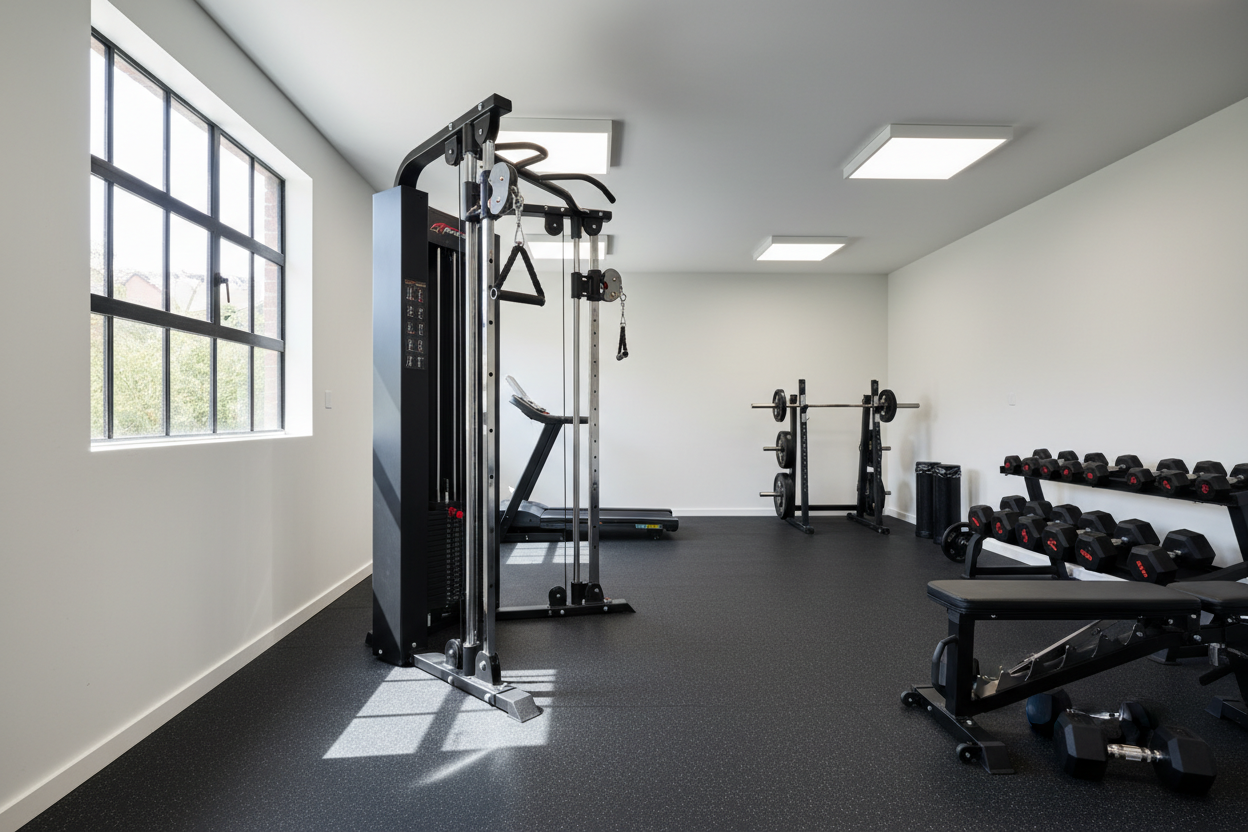
I was standing in my garage at 6:00 AM, shivering while my phone screen buffered. I was paying forty bucks a month for a digital home fitness trainer that was currently telling me to do 'air squats' for the third time this week. My garage was full of half-baked gear, and I was bored out of my mind. I realized I wasn't paying for coaching; I was paying for a glorified timer.
The math didn't add up. After two years of that subscription, I’d spent nearly a thousand dollars and had nothing to show for it but a library of expired videos. I decided to fire the app and buy something made of 11-gauge steel instead.
Quick Takeaways
- Monthly apps are 'rented' motivation; equipment is an asset you own.
- A functional trainer offers more exercise variety than any 20-minute dumbbell circuit.
- Physical machines naturally guide your form, reducing the need for constant digital oversight.
- Investing in heavy-duty gear eliminates the 'gym boredom' that leads to abandoned equipment.
The Monthly Fee Trap: When Digital Coaches Stop Delivering
We’ve all been there. You sign up for a home fitness coach app because it’s cheaper than a personal trainer. But six months in, the novelty wears off. You’re tired of the same high-energy instructor screaming through your phone speakers while you struggle with a pair of rusty dumbbells. Digital motivation has a shelf life, especially if your environment doesn't inspire you to work hard.
The reality is that an app can't fix a bad gym setup. If your space is cramped or your gear is flimsy, you’re going to quit. This is Why Most Home Fitness Gyms Turn Into Expensive Clothes Hangers. You don't need another subscription; you need a reason to actually go into the garage. A real, physical piece of equipment provides a tactile experience that no screen can replicate.
Redefining the Home Fitness Trainer (Hint: It's Made of Steel)
I stopped looking at a 'trainer' as a person on a screen and started looking at it as a tool that dictates my movement. A high-quality functional trainer or cable machine is the ultimate home fitness coach. It doesn't just sit there; it provides constant tension, forced paths of motion, and immediate feedback on your strength levels.
Most people waste their budget on aesthetics. They want the 'clean' look they see on social media, but that often leads to a room full of gear that looks good but performs poorly. I’ve found that Why Most Pinterest Home Fitness Room Ideas Are Actually Terrible is usually because they prioritize a minimalist vibe over actual functionality. A real trainer should be heavy, stable, and versatile enough to hit every muscle group from multiple angles.
Why a Cable Setup Beats Any Fitness Coach Subscription
Let’s talk numbers. A premium fitness coach subscription usually runs between $30 and $50 a month. Over three years, that’s $1,080 to $1,800. For that same price, you can buy a piece of equipment that will literally outlive you. When I looked at the Dual Pulley Power Rack Functional Trainer Dp01 V4, I saw a machine that replaced about 15 different pieces of gear and saved me from ever needing a 'workout of the day' app again.
With a dual-pulley system, you have 2:1 or 1:1 ratios that allow for explosive movements or heavy grinds. You get two 200-lb weight stacks that don't require Wi-Fi to function. You can transition from a chest fly to a low row in five seconds. That efficiency is worth more than any digital coaching program I’ve ever tried.
Programming Your Solo Lifts Without the Screen
Once you have the right hardware, you realize you don't need an AI bot to tell you how to lift. You just need a basic split: Push, Pull, Legs. Cables allow you to isolate muscles with a level of safety that free weights can't match when you're training alone. If you're worried about going heavy without a spotter, integrating a Smith Machine Home Gym Station into your setup is a total lifesaver. It allows for that fixed-bar security while still letting you push your limits on squats or presses.
I usually spend my Sundays mapping out my lifts for the week on a whiteboard. No scrolling, no mid-workout ads, just me and the iron. I focus on progressive overload—adding five pounds or one extra rep—rather than trying to follow a 'high-intensity' video that leaves me gassed but not necessarily stronger.
The Verdict: Invest in Iron, Not Subscriptions
My biggest mistake when I started my garage gym was thinking I could 'app' my way to a better physique with minimal equipment. I bought a cheap bench and a few bands, thinking the digital coach would do the heavy lifting. I was wrong. I ended up frustrated and stagnant.
True independence in your training comes when you own the tools. When you invest in a serious Home Gym setup, you’re making a one-time payment for a lifetime of access. Stop renting your fitness and start owning it. Buy the steel, learn the movements, and leave the monthly fees behind.
FAQ
Do I really need a functional trainer if I have dumbbells?
Dumbbells are great, but they lose tension at the top or bottom of many movements due to gravity. Cables provide constant resistance throughout the entire range of motion, which is better for hypertrophy and joint health.
Are these machines hard to assemble?
Most commercial-grade trainers take about 2-4 hours to put together. It’s a bit of a project, but once it's bolted down and the cables are routed, it’s virtually maintenance-free for years.
Is a cable machine safe for beginners?
Actually, it's safer than free weights. The guided path of the pulleys prevents the weight from swinging wildly, making it much easier to learn proper form without risking a shoulder tweak or dropping a plate on your foot.
Share:
I Built a Homemade Gym From Scratch (And Regret Half of It)
The Best At Home Weight Lifting Equipment Doesn't Fold Away