
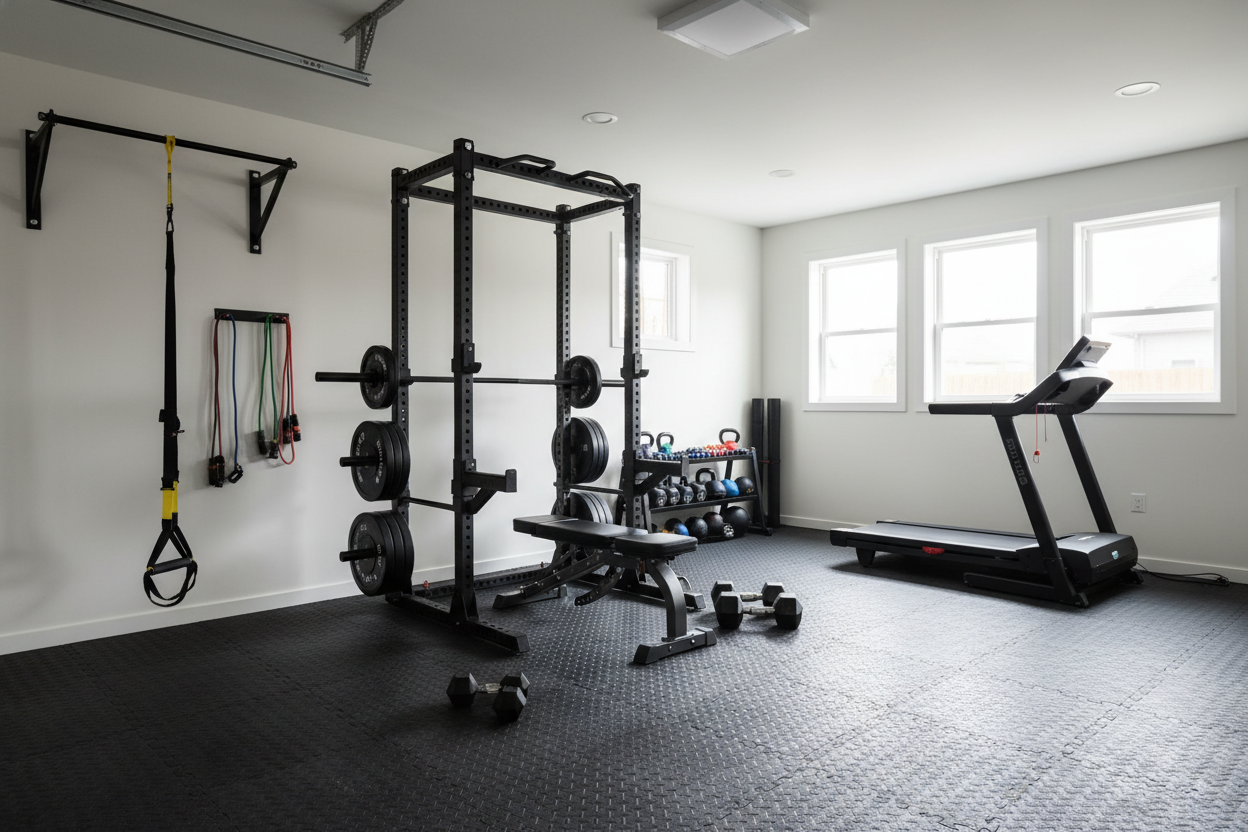
I remember the day I couldn't even walk to my car without bruising a shin on a leg extension machine I hadn't used in three months. My garage felt less like a sanctuary and more like a graveyard for oversized, single-use steel. I realized that versatile exercise equipment isn't about having a machine for every muscle; it is about having tools that do the work of ten without demanding half your square footage.
- Stop buying machines that only move in one fixed path.
- Floor space is your most valuable currency in a home setup.
- Prioritize 11-gauge steel over plastic pulleys and cables.
- Adjustable gear beats a full rack of fixed weights for 99% of lifters.
The Trap of the One-Trick Pony
New home gym owners often fall into the 'commercial gym' trap. You remember that pump you got on the seated row machine at the local franchise, so you scour Craigslist for a used one. Before you know it, you’ve blown your budget and 20 square feet on a piece of gear that only trains your lats. This is how you end up with a cramped storage unit instead of a training facility.
When you invest in versatile fitness equipment, you are buying potential. A dedicated leg curl machine is a one-trick pony. A set of rings or a solid bench, however, allows for hundreds of variations. I spent three years buying and selling 'deals' on single-action machines before I realized I was just making my workouts more complicated and my space less functional. If a piece of equipment doesn't allow for at least five distinct compound movements, it doesn't belong in a garage gym.
What Makes Gear Truly Adaptable? (Hint: Not Pulleys)
Adaptability is often marketed as '50 exercises in one,' but that is usually a lie told by people selling plastic home gyms. Real versatile gym equipment is defined by three things: range of motion, load capacity, and footprint. If a machine restricts your joints to a specific arc, it’s not versatile; it’s rigid. I want gear that handles a 500-lb squat just as easily as it handles a set of weighted pull-ups.
Heavy-duty steel is the backbone of versatility. I’ve tested those 'all-in-one' cable towers that feel like they’re going to tip over if you pull more than 100 lbs. That isn't versatility—that’s a liability. You need equipment that disappears under the weight, letting you focus on the lift rather than the stability of the frame. Free weights and high-capacity racks are the gold standard because they don't dictate how you move; they just provide the resistance for you to move however you need.
The Holy Trinity of Space-Saving Gains
You do not need a 20-piece circuit to get elite results. In fact, realizing the best home gym fitness equipment is just 3 things was the turning point for my own progress. By focusing on three core pillars, I reclaimed my garage floor and actually started hitting PRs again because my workflow wasn't interrupted by tripping over clutter.
A Bench That Actually Adjusts (And Stays Put)
A cheap, flat bench is a recipe for a hospital visit once you start moving real weight. You need a heavy-duty adjustable weight bench owb01 that offers rock-solid stability from a 0-degree flat to a 90-degree incline. I look for a bench with a 1,000-lb capacity and minimal 'pad gap.' If the bench wobbles when you’re setting up for a heavy incline press, your brain will subconsciously cut your power output to stay balanced. A solid adjustable bench turns your rack into a chest press station, a shoulder press station, and a spot for supported rows.
Dumbbells That Don't Eat Your Floor Space
A full run of hex dumbbells from 5 to 50 lbs takes up about 8 feet of wall space. In a standard two-car garage, that is a massive waste of real estate. Using space-saving adjustable dumbbells ab01 gives you that entire weight range in the footprint of two shoeboxes. I’ve dropped these (lightly, don't be a caveman) and put them through high-rep metabolic finishers. The ability to change from 10 lbs for lateral raises to 50 lbs for goblet squats in three seconds is what makes these versatile workout equipment essentials.
The Ultimate Iron Hub: A Rack System
The rack is the motherboard of your gym. Everything else is just a peripheral. Adding a versatile smith machine home gym station to your setup provides a hybrid environment where you can stick to traditional barbell work or use the guided path for hypertrophy-focused finishers. It replaces the need for a standalone squat stand, a pull-up bar, and a dedicated pressing station. It is the single most important investment for anyone serious about training at home.
Gimmicks You Think You Need (But Don't)
Avoid any equipment that looks like it belongs in an infomercial at 2 AM. If it uses 'power rods' or 'sliding resistance technology' and claims to replace a whole gym for $199, stay away. These contraptions usually do 50 things, but they do all of them poorly. They lack the inertia of real iron and the durability of 11-gauge steel. I once bought a folding 'total body' bench that felt like it was made of recycled soda bottles; it lasted exactly two workouts before the hinges started to scream. Stick to heavy iron and simple designs. Simple works.
FAQ
How much space do I really need for a versatile setup?
You can fit a world-class setup in an 8x8 foot area. If you prioritize a folding rack and adjustable dumbbells, you can even park a car in the same space when you aren't training.
Are adjustable dumbbells as durable as fixed ones?
Not quite. You can't hurl adjustable dumbbells from overhead like you can with solid rubber hex bells. However, if you treat them with a modicum of respect, they will last a decade and save you thousands in gym fees.
Should I buy a Smith machine or a Power Rack?
If you have to choose one, a hybrid system is best. It gives you the safety of a guided bar for solo sessions and the freedom of a rack for functional strength work.
Share:
How I Finally Figured Out Smith Machine Weight Conversion (Without Math)
Is the Inflight Fitness Smith Machine Overkill for a Garage Gym?