
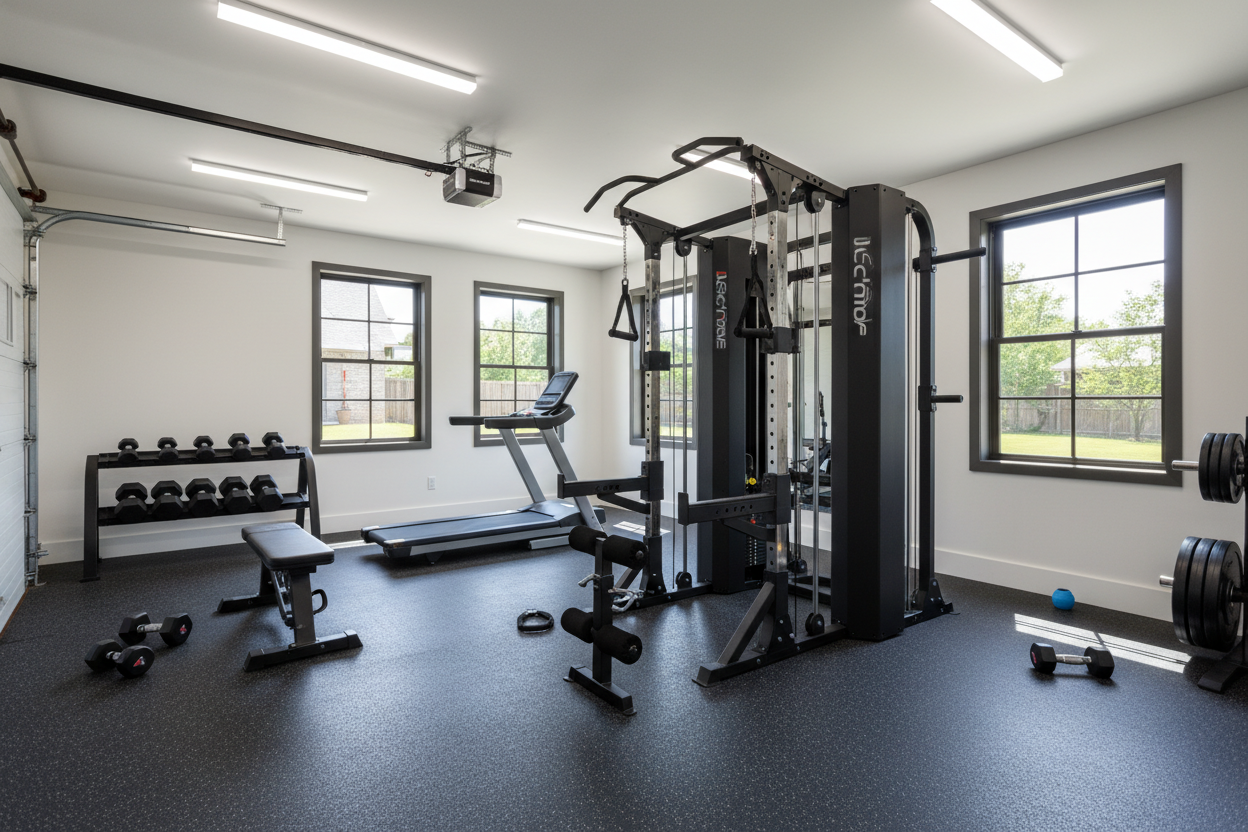
I remember scrolling through marketplace listings at midnight, desperate to escape my local gym's rising fees and the guy who spends forty minutes on the only squat rack. I finally pulled the trigger on a cheap all in one exercise machine that looked incredible in the photos. Two weeks later, a cable snapped while I was doing tricep pushdowns, and the entire frame wobbled so hard during bench presses I thought I was on a boat. It was a $600 lesson in why many all-in-one setups are bad at everything if you don't know what specs to look for.
- Steel Gauge: Aim for 11 or 12-gauge; 14 is the absolute minimum for safety.
- Pulley Material: Aluminum is king; nylon is a friction-heavy ticking time bomb.
- Footprint: If it doesn't weigh at least 400 lbs, it will walk across your floor during rows.
- Ratio: Understand the difference between 1:1 and 2:1 resistance ratios for your goals.
The 'Do Everything' Trap We Keep Falling For
We’ve all seen the ads for the all-in-one gym equipment that promises to replace twenty different pieces of gear. It’s a seductive idea. You think you're saving space and thousands of dollars. But most budget-friendly plastic multi-gyms are built for people who use them as a laundry rack. The moment you start loading actual weight, the flaws appear. The frame flexes under load. The bolts loosen after every session. If you're serious about building a complete home gym, you need a foundation that won't vibrate every time you re-rack the bar.
Point of Failure #1: Pulleys That Feel Like Sandpaper
The soul of any gym machine all in one is the cable system. Cheap manufacturers use plastic pulleys with low-grade bushings. After a month, they develop flat spots from the heat of the cable rubbing. Your smooth lat pulldown suddenly feels like you're dragging a heavy bag over gravel. Commercial-grade setups use aluminum pulleys with sealed ball bearings. They don't just feel better; they ensure the resistance stays consistent throughout the entire range of motion, which is vital if you actually want to see progress in your hypertrophy blocks.
Point of Failure #2: Spec Sheets That Straight-Up Lie
I’ve seen all in one workout equipment rated for 800 pounds that I wouldn't trust with half that weight. Manufacturers often list 'static' load ratings—meaning the weight can sit there while the machine is perfectly still. But lifting is dynamic. When you drop a 300-pound squat into the safeties of a flimsy Smith machine home gym station, the force generated is significantly higher than 300 pounds. If the uprights are made of thin, 16-gauge steel, they will buckle or shear. I've seen it happen, and it isn't pretty.
The Anatomy of a Rig That Actually Survives
If you want a workout machine all in one that lasts a decade, look at the nuts and bolts. You want a frame made of 2x3 or 3x3 inch structural steel. Look for linear bearing systems—these use actual ball bearings to slide up and down the guide rods rather than just plastic sleeves that bind when they get dusty. A high-quality all in one Smith machine with cable crossover will have a wide, heavy footprint. Weight is your friend. My first rack was so light I had to bolt it to a piece of plywood just to keep it from tipping during pull-ups. Don't make that mistake.
Your Final Checklist Before Spending a Dime
Before you hit 'buy' on that all in one home gym machine, check the warranty. A company that only offers 90 days on parts knows their machine is junk. Measure your space twice; you need at least two feet of clearance on all sides to actually load plates. Also, check the pulley ratio. A 2:1 ratio means 100 lbs on the stack feels like 50 lbs—great for functional movements, but maybe not enough for heavy rows. If you're still wondering if the best all in-one workout machine actually exist, the answer is yes, but it requires checking the gauge of the steel, not just the number of attachments in the box.
Is a Smith machine better than a power rack?
It depends on your goals. A Smith machine offers more stability and safety for solo lifters, while a power rack allows for a natural bar path. The best all-in-one units actually integrate both into one footprint.
What is the best steel gauge for a home gym?
11-gauge is the commercial standard. 14-gauge is acceptable for lighter home use, but anything higher (like 16 or 18) is essentially a toy and won't hold up to years of heavy lifting.
How much ceiling height do I need?
Most full-size units are around 80 to 84 inches tall. You want at least 90 inches of ceiling height so you aren't hitting your head on the rafters during pull-ups or overhead presses.
Share:
Do Exercise Machines That Move Your Body For You Actually Work?
Why Your Joints Hate Most Home Fitness Machines (And How to Fix It)