
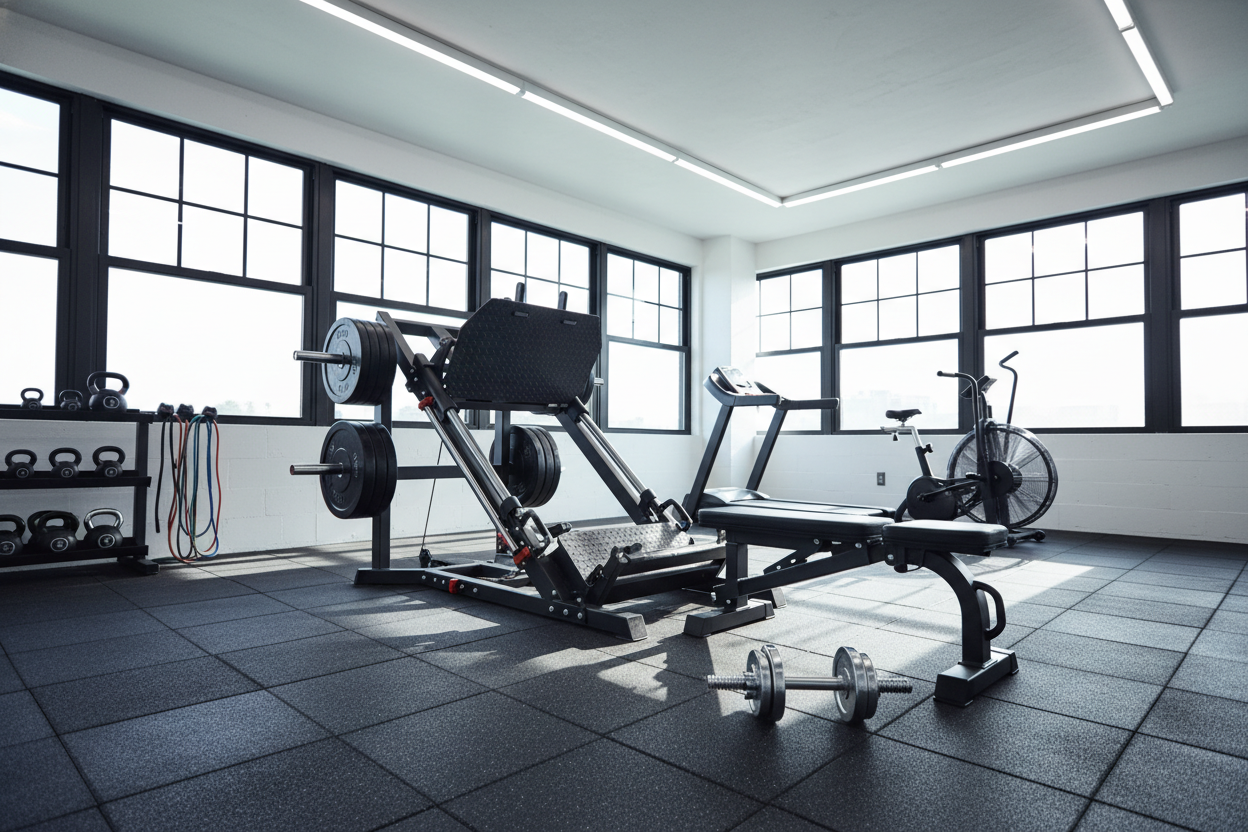
I remember sitting on a commercial 45-degree sled, stacking every 45-pound plate I could find, thinking I was a beast. Then I hit the bottom of the rep, felt a weird 'tuck' in my tailbone, and my lower back hasn't been the same since. We’ve been told the leg press machine is the safe alternative to heavy squats, but for a lot of us, it’s actually a lumbar spine trap waiting to spring.
If you've ever stood up after a set of leg pushes and felt that dull, radiating ache in your L4/L5 region, you aren't alone. It’s not the machine's fault—it’s how we’re using it. Let’s break down why this piece of iron is biting back and how to fix it before you need a chiropractor on speed dial.
Quick Takeaways
- The 'butt-wink' on a leg press is more dangerous than a squat because your spine is pinned against a backrest.
- Foot placement determines whether you're hitting quads or just grinding your hip sockets.
- Angle matters: a shallower sled is often friendlier on the lumbar spine.
- Full range of motion beats ego-loading eight plates for two-inch 'pulses.'
The Big Lie About Guided Leg Workouts
We’re conditioned to think that if we aren't balancing a barbell on our traps, we’re safe. The industry markets the leg press machine as the ultimate 'safe' leg station machine for beginners. But here is the reality: a guided path is a double-edged sword. While it removes the stability requirement, it also locks you into a fixed trajectory that your body might not be built for.
When you squat, your hips move freely in space. On a leg push machine, your torso is fixed. If your mobility isn't perfect, your body has nowhere to go but into lumbar flexion when the sled comes down. It’s a recipe for disc issues disguised as a 'controlled' workout for anyone using leg push machines without proper form.
The Dreaded Sled Butt-Wink Explained
The 'butt-wink' happens when you run out of hip flexion. As the weight on the legs press machine descends, your pelvis eventually hits its limit and starts to tilt backward. Because your back is pressed against the pad, your lower spine is forced to round to accommodate the movement. This creates massive shear force on your discs.
I’ve seen people try to mimic this movement on other gear, often wondering if a smith machine setup actually safe for your spine by comparison. The truth is, any fixed-path leg push machine can wreck you if you bring your knees too close to your chest. If your butt leaves the seat at the bottom of your leg push exercise machine reps, you’ve gone too far. Period.
Foot Placement Rules to Save Your Joints
Your footplate position is your primary safety dial. If you want a leg press machine for women (or men) that actually targets the glutes and hamstrings, move your feet high and wide. This allows for more hip involvement and less knee shear. It’s the closest thing to a natural 'sumo' squat on a sled.
Conversely, a low-and-narrow stance turns it into a quad-dominant leg pusher machine. This is great for growth but can be brutal on the patellar tendon. If you’re using it as a knee press machine because you have existing joint issues, keep your feet middle-height and shoulder-width to distribute the load evenly. Don't let your heels lift off the plate; that’s a one-way ticket to tendonitis.
Does the Angle of the Sled Actually Matter?
Most commercial gyms use a 45-degree angle, which is fine for healthy lifters but can be aggressive on the lower back. A shallower angle, like a compact 30 degree leg press, significantly reduces the gravitational load on the spine at the bottom of the movement. It’s much more forgiving for lifters with tight hamstrings.
If you’re building a home gym, versatility is king. I usually recommend a 3 in 1 hack squat leg press combo because it allows you to adjust the backrest and footplate angles. This adjustability means you aren't stuck with one fixed path, making it a much safer up and down exercise machine for long-term use compared to a fixed vertical rig.
Stop Loading Every Plate in the Gym
We’ve all seen the guy (or been the guy) loading twelve plates on a leg push back machine just to move the sled three inches. It’s useless. You’re getting zero hypertrophy and maximum joint wear. The leg push up machine isn't a trophy rack; it’s a tool.
Strip the weight back by 40%. Use a 3-second eccentric (lowering) phase and a 1-second pause at the bottom—just before your pelvis starts to tilt. If you can’t control the weight with a full range of motion on your leg push ups machine sets, you’re just ego-lifting. Your quads won't grow, but your medical bills might.
My Personal Sled Fail
Years ago, I was trying to impress a training partner on an assault leg press. I ignored the fact that my lower back was feeling 'tight' and went for a heavy double. On the second rep, I went too deep, my pelvis tucked, and I felt a hot flash in my lumbar. I couldn't tie my own shoes for a week. That was the day I stopped caring about how many plates were on the machine and started caring about my pelvic tilt.
FAQ
Is the leg press machine for seniors safe?
Yes, but keep the weight light and the range of motion conservative. Use a horizontal sled if possible, as it's easier to get in and out of and puts less vertical pressure on the spine than a vertical up and down exercise machine.
How high should my feet be?
High enough that your heels stay glued to the plate at the bottom of the rep. If your heels lift, your feet are too low, which shifts the stress from your muscles to your knee joints.
Can I do calf raises on these?
Absolutely. Just ensure the safety catches are engaged so the sled doesn't slip if your feet lose grip on the bottom edge of the plate during the movement.
Share:
Stop Buying Junk Exercise Equipment for Home Amazon Recommends
Losing Balance on Leg Day? Why Barbell Smith Machine Lunges Actually Work