
You’re scrolling through your phone at 11 PM, tired of the $80 monthly fee at that commercial gym where the cables are always frayed. You see a 'complete' set of workout weights for $149 and think you’ve hacked the system. Fast forward six weeks: those weights are gathering dust because you’re already stronger than the plastic-coated cement inside them.
Quick Takeaways
- Plastic-coated 'vinyl' sets leak sand and have zero resale value.
- Standard 1-inch bars are a dead end for progressive overload.
- Olympic-sized (2-inch) sleeves are mandatory for long-term growth.
- A quality bench is the missing link for 50% of your potential gains.
The 50-Pound Plastic Trap
Most entry-level workout weight sets you find at big-box retailers are a marketing gimmick disguised as a deal. They usually top out at 50 or 100 pounds total. If you’re a healthy adult, you’ll be squatting and rowing 50 pounds within your first three workouts.
Once you hit that ceiling, you’re stuck. These sets are usually filled with sand or concrete, making the plates twice as thick as iron. You’ll run out of sleeve space on the bar before you even break a real sweat. It’s a progression trap that forces you to buy a whole new system the moment you actually start getting results.
Expandability is the Only Feature That Matters
If your exercise weight set doesn't use 2-inch Olympic sleeves, you're buying a disposable product. Standard 1-inch plates are a nightmare to find in heavy increments, and the bars usually have a terrifyingly low weight capacity—often bending or snapping at just 200 pounds.
Your central nervous system adapts fast during those first six months of training. You need a system where you can just slide on another 10-pound plate without replacing the whole rack. A 2-inch Olympic bar can hold 500 to 1,000 pounds, meaning it’s the last bar you’ll ever need to buy, whether you're doing curls or heavy deadlifts.
You Can't Push Heavy Iron Lying on the Floor
I see plenty of guys trying to save money by doing floor presses instead of buying a bench. It’s a mistake. You lose the bottom 30% of your range of motion because your elbows hit the floor before your chest gets a proper stretch. This limits your hypertrophy and leaves your triceps doing all the work.
To actually build a chest and stable shoulders, you need a heavy-duty adjustable weight bench. A solid bench allows you to hit inclines and full-depth flat presses safely. If you’re wobbling on a cheap, thin bench while holding heavy iron over your face, you aren't focused on the lift—you're focused on not dying.
Fixed Hex vs. Loadable Bars: The Space Dilemma
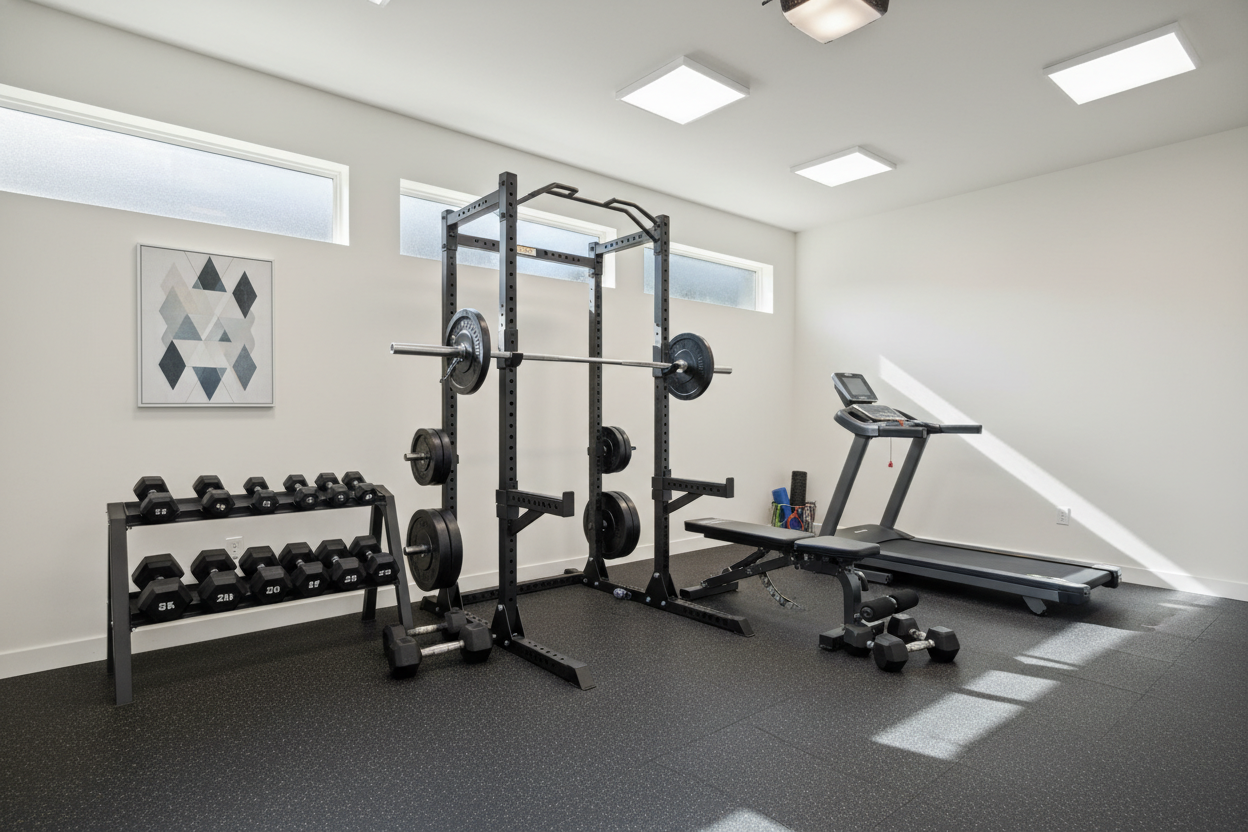
A full rack of fixed hex dumbbells looks professional, but it eats up a 6-foot stretch of wall space and costs a fortune. For most weight sets gym setups in a spare bedroom or a 6x8 corner of the garage, loadable handles are the smarter play.
While a complete weight lifting set might seem like a bigger upfront hit to the wallet, it’s significantly cheaper than buying 10 individual pairs of dumbbells as you get stronger. Loadable handles allow you to use the same plates you use on your barbell, saving both floor space and several hundred dollars in the long run.
The Buy-Once, Cry-Once Starter Blueprint
Skip the shiny, sand-filled gimmicks that look good in a catalog but fail in the garage. Buy a 45-pound Olympic barbell with decent knurling and a pair of 45-pound iron plates to start. Iron doesn't expire, and it doesn't leak gray dust on your floor when you drop it.
Pair that iron with a reliable weight bench and a basic squat stand. This 'Buy-Once, Cry-Once' philosophy might cost a bit more today, but it ensures your equipment is still functional ten years from now when you're moving three times the weight you are today.
My Honest Mistake
When I started my first home gym, I bought a '110-lb Vinyl Set' from a garage sale for fifty bucks. Within a month, the plastic casing on one of the 25-pound plates cracked and started leaking sand all over my carpet. I couldn't even give them away on Craigslist. I ended up spending twice as much to replace them with real cast iron. Don't repeat my mistake—buy real iron from the start.
Frequently Asked Questions
How much weight do I need to start?
For most men, a 160-lb to 300-lb set is the sweet spot. For women, a 110-lb to 160-lb set provides plenty of runway for compound movements like deadlifts and squats.
Are bumper plates better than iron?
Only if you plan on dropping the weights from overhead, like in CrossFit or Olympic lifting. For standard bodybuilding and powerlifting, iron plates are cheaper and thinner, allowing you to fit more weight on the bar.
Do I really need a 45-lb barbell?
Yes. A standard 20kg (45-lb) bar is the universal language of lifting. It fits all standard racks and benches, and the sleeve rotation protects your wrists during heavy presses.
Share:
Stop Using Bands: Why the Smith Machine Pull Up Is Better
Does a Weight Bench With Cables Actually Replace a Functional Trainer?