
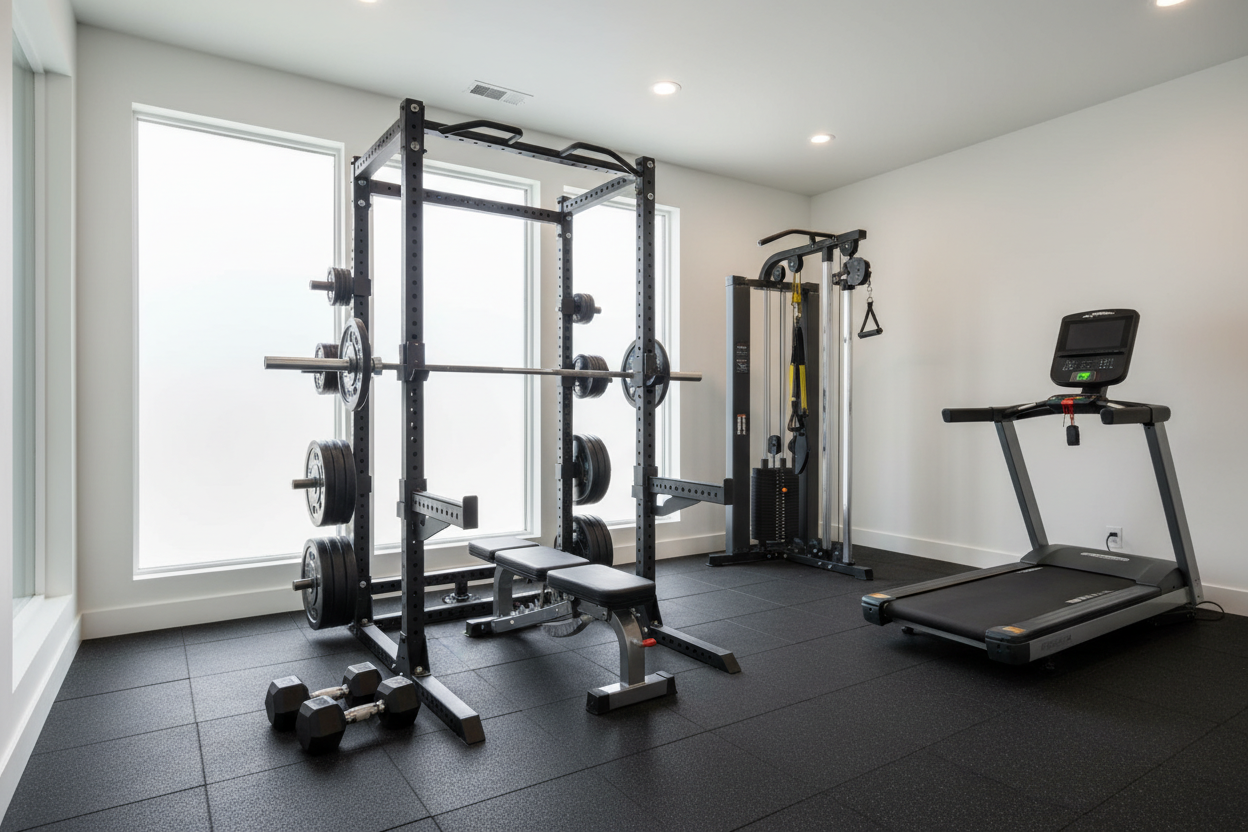
I remember the first time I bought a 'universal' gym from a big-box store. I spent six hours bolting together what looked like a professional rig, only to realize the whole frame shook when I tried to do a chest press with more than 50 pounds. It was basically an expensive place to hang my laundry. Finding the best at home gym system isn't about how many exercises are listed on the poster; it's about whether the machine stays still when you're actually training.
- Steel Gauge: 11-gauge is the standard; anything thinner will wobble.
- Pulley Quality: Aluminum or high-grade nylon beats plastic every time.
- Weight Stacks: Cast iron is king; avoid those plastic-shrouded sand weights.
- Footprint: Measure your ceiling height before you buy a Smith machine.
The Infomercial Trap: Why Most Multi-Station Rigs Suck
Most machines you see on late-night TV are built for shipping efficiency, not for heavy lifting. They use thin-gauge steel that flexes under load and plastic pulleys that develop flat spots after a month of use. If you can move the entire machine with your pinky, it’s not going to feel stable when you’re grinding out a final set of rows.
When you're looking to turn a spare room into a legitimate Home Gym, you have to look past the shiny covers. A real machine needs mass. If the unit weighs less than you do, it’s a coat rack, not a training tool. You want a frame that uses 2x3 or 3x3 inch steel tubing to ensure the pulleys don't bind up the moment you add a second plate to the stack.
What Actually Makes the Best Home Exercise Gym?
The best home exercise gym isn't necessarily the biggest one. It’s the one that uses commercial-grade components. Look for 11-gauge steel frames and dual weight stacks. Dual stacks allow for true functional movements, letting you adjust the height of the pulleys for everything from low cable pulls to high-angle face pulls.
Linear bearings are another non-negotiable for me. Cheap machines use plastic rollers that get jumpy and loud. High-end systems use polished steel rods and ball bearings that feel like butter. If you’re paying four figures for a machine, it shouldn't sound like a squeaky shopping cart every time you do a rep.
Cable Crossovers vs. Smith Machine Hybrids
If you have the space, a functional trainer with two independent cable columns is the most versatile tool you can own. But for many, the best workout gym for home environments is a hybrid system. These units combine a power rack, a cable system, and a guided bar into one footprint.
A Smith Machine Home Gym Station is often the smarter play if you lift alone. It gives you the safety of a guided bar for heavy squats and presses while still providing the cable versatility for accessory work. Just check the ceiling clearance—many of these hybrids stand 84 inches or taller, which can be a tight fit in a finished basement.
The Truth About Weight Capacities and Pulley Ratios
This is where brands trick you. You see a 200-lb stack and think you're getting a heavy workout. But if the machine has a 2:1 pulley ratio, that 200 lbs only feels like 100 lbs at the handle. This is great for high-rep cable crossovers because it gives you more travel and smoother increments, but it's terrible for heavy lat pulldowns.
Always check if the machine is 1:1 or 2:1. A 1:1 ratio is rare on home cable machines but essential if you’re a strong lifter who doesn't want to max out the stack on day one. If you’re stuck with a 2:1 ratio, make sure the weight stack is heavy enough—at least 200 lbs per side—to keep the resistance meaningful.
My Top Picks for the Best Weight Training Machine
I’ve tested enough gear to know that the best universal gyms prioritize independent movement. Fixed-path machines are fine for rehab, but for building muscle, you want arms that move independently. This forces your stabilizer muscles to work, just like free weights would.
If you’re looking for the best weight training machine that actually mimics a commercial gym floor, look for units that offer unilateral pressing. A machine like the Weight Bench Chest Press Machine Independent Arms Z1 Pro is a prime example of how you can get a heavy, plate-loaded feel without needing a spotter. It solves the 'wobble' problem by using a dedicated, heavy-duty frame for a specific movement pattern.
Is a Massive All-In-One Actually Worth Your Floor Space?
Final verdict: if you have a 10x10 space and want to do 50 different exercises, an all-in-one is unbeatable. It keeps the floor clear and the workout efficient. However, if you only care about the big three lifts, a rack and a barbell might serve you better.
Remember that The Best Weights Home Gym Setup Doesn't Need 50 Pairs of Dumbbells if your machine has a high-quality cable system. You can replicate almost any dumbbell fly or lateral raise with a good pulley. Just make sure you aren't sacrificing the quality of the steel for the quantity of the attachments.
How much floor space do I actually need?
Most all-in-one systems require at least an 8x8 foot area. You need room to extend your arms for flyes and enough space behind the machine to access the weight stacks if they aren't front-loading. Always add two feet to the machine's dimensions for a safety buffer.
Can I assemble these machines alone?
You can, but I wouldn't recommend it. These things are heavy and involve a lot of tensioned cables. Having a second person to hold the uprights while you bolt the crossmembers will save your floor and your sanity. Expect it to take 4 to 8 hours.
Do I need to bolt my home gym to the floor?
If it’s a high-quality, heavy-duty unit (over 400 lbs), you usually don't need to bolt it down. However, if you’re doing heavy cable work where you’re pulling away from the machine, bolting it down provides that 'commercial gym' rock-solid feel that keeps the frame from shifting over time.
Share:
Smith Machine Versus Free Weights: Why Barbell Purists Are Half Right
The Only Affordable Crossfit Equipment That Survives Daily WODs