
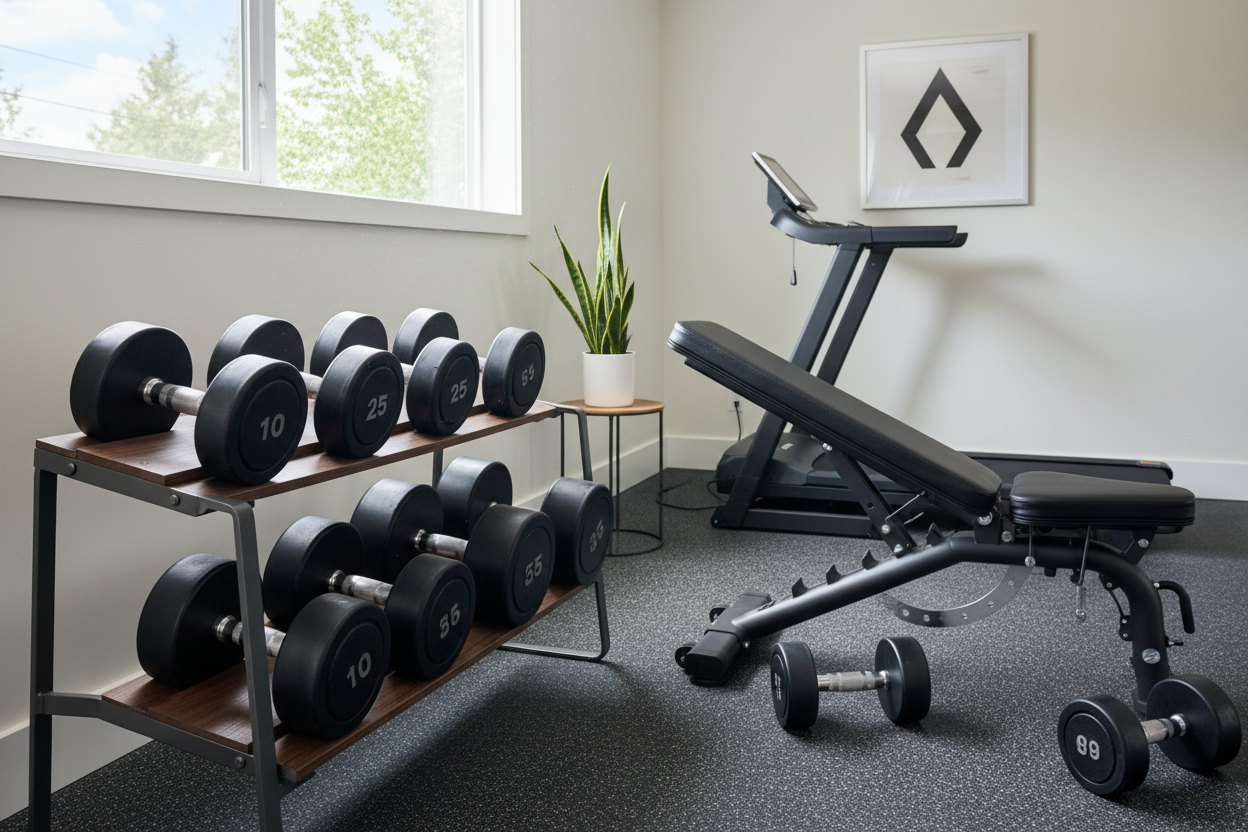
I have spent the last decade building, tearing down, and re-optimizing three different garage gyms. Every single time, I see new lifters make the same $1,000 mistake: they buy a massive, 5-50lb commercial rack because they think it makes their space look 'official.' In reality, they end up with 400 pounds of unused iron taking up six feet of wall space. Finding the best dumbbell set for your specific goals is actually about utility, not volume.
- Fixed hex weights are superior for floor-based movements and durability.
- Adjustable blocks are the undisputed kings of small-space efficiency.
- Most lifters can do 90% of their training with just three key weight increments.
- High-quality rubber coating prevents floor damage and reduces noise.
The 5-50lb Rack Fantasy vs. Garage Gym Reality
We have all seen those glossy photos of a pristine home gym with a 10-pair rack of shiny weights. It looks professional. But unless you are running a personal training business out of your garage, your home gym setup doesn't need 50 pairs of dumbbells. When I tracked my own training for six months, I realized I touched the 15s, 25s, and 40s about 80% of the time. The 12.5-lb and 17.5-lb pairs just sat there collecting dust and spider webs.
A full rack is an expensive garage decoration. It eats up precious square footage that could be used for a functional trainer or a power rack. If you are working in a standard 20x20 garage, every foot counts. Buying the best weight set for home gym use means being honest about what you actually lift, not what you think looks cool on Instagram.
Adjustables vs. Fixed: Picking the Best Dumbbell Set for You
This is the classic debate. If you have a 10x10 spare room, adjustable dumbbells are the best home weight set because they replace an entire wall of iron with two handles. You can go from 5 lbs to 52.5 lbs or even 80 lbs in seconds. The downside? They are mechanical. If you drop a dial-based adjustable dumbbell from overhead, there is a high chance the internal plastic gears will shatter. They are precision tools, not blunt instruments.
Fixed dumbbells, specifically rubber-coated hex models, are the tanks of the fitness world. There are no moving parts to break. If you are doing high-intensity circuits or training to failure, you want the freedom to drop the weight without worrying about a $400 repair bill. They are the best weights for home gym owners who train hard and fast.
When Adjustable Blocks Actually Make Sense
If your primary goal is bodybuilding or accessory work in a cramped apartment, adjustables are the best at home weight set. They allow for quick supersets where you need to drop the weight by 10 pounds immediately without tripping over five different pairs of handles. I kept a pair of 50-lb adjustables in my living room for two years, and they were perfect for sneaky lunch-break workouts because they tucked right under the coffee table.
Why I Personally Lift With Fixed Rubber Hex
Despite the space savings of adjustables, I keep a reliable rubber hex dumbbell set in my main garage. I do a lot of renegade rows and 'devil presses' where the dumbbell is on the floor supporting my body weight. Fixed hex weights provide a stable, flat base that won't roll or wobble. Plus, there is a psychological benefit to just grabbing a weight and going without clicking a dial.
The rubber coating is non-negotiable for me. It protects the concrete floor and keeps the noise down so I don't wake up the kids during a 6:00 AM session. If you have ever used raw cast iron weights, you know they eventually rust and leave orange rings on everything they touch. Rubber-encased heads solve that problem entirely.
The Toxic Rubber Smell and Other Cheap Weight Traps
Don't buy the cheapest weights on Amazon just to save fifty bucks. Many generic brands use low-quality recycled rubber that off-gasses a pungent, chemical smell that can linger in a closed garage for months. I once bought a 'deal' set that made my entire house smell like a tire fire. Also, watch out for loose heads. Cheap dumbbells are often poorly pinned; if you feel the head rattling or spinning on the handle, stop using it immediately. That is a safety hazard waiting to happen.
How to Build Your Iron Collection Without Going Broke
The smartest way to build the best free weights collection is to buy in stages. Start with three pairs: a 'light' pair for lateral raises and curls, a 'medium' pair for overhead presses, and a 'heavy' pair for rows and squats. For most guys, that looks like 15s, 30s, and 50s. For women, maybe 10s, 20s, and 35s. This covers your bases without a massive upfront investment.
As you get stronger, you can stop overpaying for your iron by only adding pairs as you hit specific milestones. Need to move up to 60s for your chest press? Buy them then. By the time you have a 'full' set, you will know that every single pound is actually being used. This tactical approach is how you build a world-class gym on a realistic budget.
Dumbbell FAQ
Are hex dumbbells better than round ones?
For home gyms, yes. Hex dumbbells won't roll away on uneven garage floors, and they are much safer for floor-based exercises like push-ups on the handles.
Should I get 1-inch or 2-inch handles?
Most standard rubber hex weights come with a contoured chrome handle that is roughly 28mm to 35mm. It is the gold standard for grip comfort. Avoid the super thin, straight handles found on cheap cast iron sets.
How do I stop my dumbbells from rusting?
If you have raw iron, a light coat of 3-in-1 oil every few months helps. If you have rubber-coated hex weights, just wipe the chrome handles down after a sweaty session to prevent salt corrosion.
Share:
Should You Listen to the Athlean-X Smith Machine Warning?
Your Rack Is Fine: The Best Home Gym Accessories for a Premium Feel