
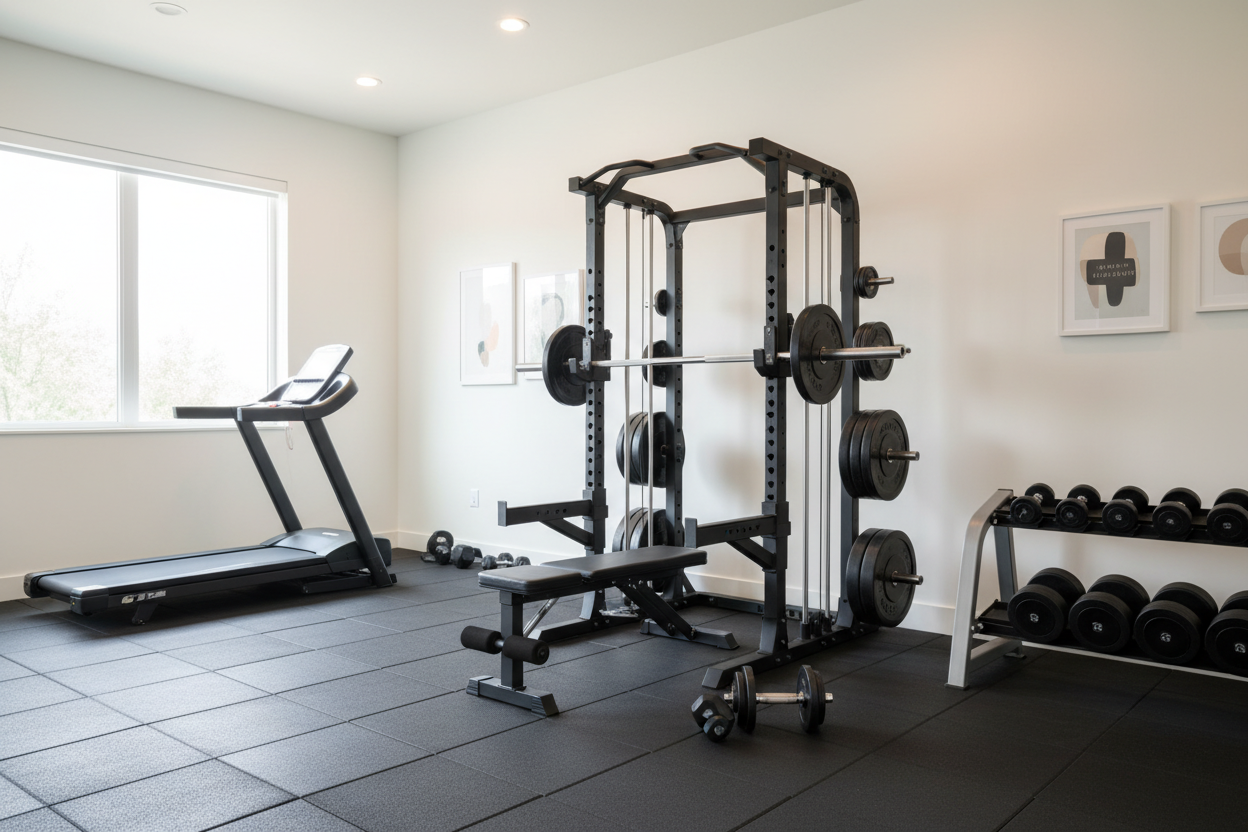
I spent years trying to cram a commercial gym's worth of iron into a single-car garage. I bought the cheap adjustable dumbbells that rattled like a bag of bolts and the 'all-in-one' tension rod machine that felt like pulling on a giant rubber band. It was junk. If you're hunting for the best full body home workout machine, you need to stop looking at plastic and start looking at steel. You need a setup that handles heavy squats on Tuesday and high-volume cable crossovers on Wednesday without skipping a beat.
Quick Takeaways
- Skip the 'as seen on TV' gadgets; they lack the mass required for real strength gains.
- A Smith-functional trainer hybrid is the most space-efficient way to hit every muscle group.
- Stability is king—look for machines weighing at least 300-400 lbs to avoid wobbling.
- Pulley ratios matter; a 2:1 ratio offers smoother travel for isolation work.
Stop Falling for Late-Night Fitness Infomercials
The fitness industry loves selling the dream of a 'total body transformation' using nothing but a few elastic bands and a folding chair. It’s nonsense. If you want to actually change your physique, you need mechanical tension and progressive overload. Most flimsy full body workout at home equipment is designed to be shipped cheaply in a small box, not to support a 225-lb bench press. When you're training alone in your garage, you don't need a gadget; you need a partner made of 11-gauge steel.
Building a serious home gym requires making hard choices about floor space. You can't fit fifteen different machines in a 10x10 room. This is why the 'all-in-one' concept is tempting, but you have to distinguish between a toy and a tool. A true full body weight machine uses gravity and iron plates. If the machine feels like it’s going to tip over when you do a pull-up, it’s not a gym—it’s a liability.
The Anatomy of a Machine That Actually Builds Muscle
To move the needle on muscle growth, you need three things: stability, adjustable resistance, and safety. A Smith machine home gym station provides all three by integrating a fixed barbell path with a structural rack. For a solo lifter, the Smith bar is a godsend. You can push your sets to absolute failure on incline presses or split squats because a simple flick of the wrist hooks the bar back onto the frame. No spotter? No problem.
This is arguably the best home gym for full body workout routines because it removes the 'stability tax.' When you aren't fighting to keep a barbell from drifting, you can drive more force directly into the target muscle. The integrated frame also usually includes a pull-up bar and landmine attachment, covering your vertical pulling and core rotation in the same footprint. It’s about maximizing the utility of every square inch you own.
Why Cables and a Fixed Bar Rule the Garage
The real magic happens when you combine that Smith bar with dual adjustable pulleys. This synergy creates the most versatile full body home gym equipment on the market. I can start my workout with heavy Smith-machine rows for back thickness and immediately transition into standing cable flies to finish off my chest. There’s no downtime moving between different stations across a crowded club floor.
Cables provide constant tension that free weights just can't match. Whether you're doing lateral raises or tricep pushdowns, the resistance stays on the muscle throughout the entire range of motion. Having two independent pulley stacks allows for 'functional' movements too—think woodchops or cable lunges. This combination is why I consider a hybrid rig the best home full body workout equipment for anyone who wants to look like they actually lift.
How I Spot Quality in a Sea of Clones
Don't get blinded by shiny paint or 'bonus' plastic attachments. When I’m vetting a rig, I look at the unsexy specs first. Check the pulley cables—are they aircraft-grade with a high burst rating? Look at the bearings; the Smith bar should glide like it’s on ice, not grind like sandpaper. I also check the steel gauge. A rack built with 2x3-inch or 3x3-inch steel tubing is going to feel significantly more planted than the thin stuff you find at big-box retailers.
Weight is the ultimate truth-teller. As I mentioned in I Finally Found the Best Gym Machine for Home (It Weighs 400lbs), you should never trust a machine you can easily slide across the floor. You want a unit with some 'thud' to it. A 400-lb machine isn't just harder to move; it's safer. It absorbs the vibration of the weights and stays put when you're performing heavy low rows or face pulls.
Does This Setup Actually Replace a Commercial Club?
If you choose a high-end integrated system, the answer is a resounding yes. You are essentially getting a power rack, a Smith machine, a functional trainer, and a pull-up station in a single 6x8 foot area. For my money, the Full Body Multi Training Station Smith Machine DM01 is the gold standard for this 'all-in-one' philosophy. It handles the heavy compound lifts that build the foundation and the isolation work that carves out the details.
Investing in the best home gym full body workout setup upfront saves you thousands in the long run. No more monthly dues, no more waiting for the guy on his phone to finish his sets, and no more 'out of order' signs on the only cable machine in the building. You get commercial-grade physics in your own house. That’s the ultimate cheat code.
Personal Experience: The 'Wobble' Lesson
I once bought a cheap 'bolt-together' rack because it was $200 cheaper than the heavy-duty model I actually wanted. Big mistake. Every time I racked more than 185 lbs, the whole thing shivered. It got to the point where I was scared to squat heavy because I didn't trust the uprights. I ended up selling it at a loss and buying a proper Smith rig. The peace of mind that comes with a rock-solid frame is worth every extra penny. Don't buy twice—buy once and buy heavy.
FAQ
Is a Smith machine better than free weights for beginners?
It’s safer for beginners because the fixed path prevents the bar from falling on you. It allows you to focus on the mind-muscle connection before worrying about complex balancing.
How much ceiling height do I need for a Smith rig?
Most standard rigs are around 80 to 84 inches tall. I recommend at least an 8-foot ceiling so you have room to head-clear during pull-ups without hitting the drywall.
Can I do leg day effectively on this?
Absolutely. Between Smith machine squats, lunges, and cable-based leg curls or pull-throughs, you can absolutely torch your lower body without needing a dedicated leg press machine.
Share:
Why I Actually Kept Those Trendy Beige Dumbbells
How I Finally Figured Out Smith Machine Weight Conversion (Without Math)