
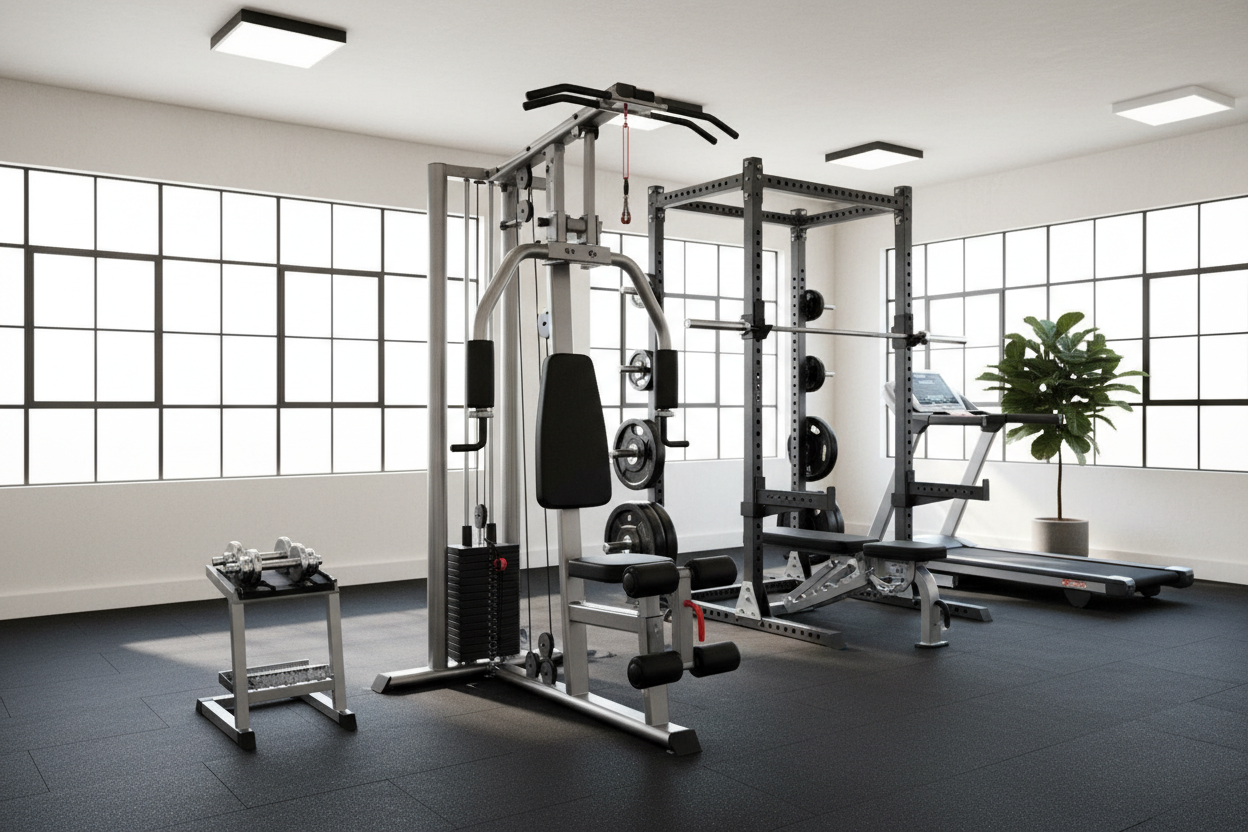
I remember the first time I tried to buy a leg press for my garage. I found a model online for $899—a steal, I thought. I had the cash ready, the floor space cleared, and my ego prepared for heavy sets. Then I hit the checkout button. Between the residential delivery fees, the liftgate service, and the tax, that $900 machine turned into a $1,350 headache before I even touched a wrench. It was a brutal lesson in how the industry works.
Quick Takeaways
- Freight shipping can add $200–$500 to the listed price if you don't have a loading dock.
- Square footage is a 'tax'—a machine that only does one thing is expensive real estate.
- Smart machines with screens often hide $40/month subscription fees in the fine print.
- Plate-loaded machines are usually the best value because you aren't paying to ship a 200-lb lead stack.
The Illusion of the 'Budget' Price Tag
Marketing departments are geniuses at making heavy steel look affordable. They show you a sleek, 11-gauge steel functional trainer and slap a price tag on it that seems lower than a used Honda. But here is the reality: the base cost of weight machine units rarely includes the 'utility' tax. You are buying the frame, but you aren't buying the experience of actually using it safely. Often, the 'budget' version uses plastic pulleys that will crack within six months or 1-inch pegs that won't fit your Olympic plates.
Last year, I tracked the cost of weight machine gear for a year to see where the money actually goes. I found that 'budget' buyers often spend 40% more than the sticker price just to get the machine functional and stabilized. Whether it is floor bolting hardware or upgraded cable sets, the entry price is just the cover charge for the club.
Freight Shipping Will Break Your Heart (and Wallet)
You cannot ship a 400-pound box via standard ground. It comes on a pallet, on a semi-truck. Most people don't realize that the listed price for weight machine models assumes you have a way to get that pallet off the truck. If you don't have a forklift (and let's be real, you don't), you have to pay for a 'liftgate' service. That is an extra $75 to $150 right there. Then there is the 'residential delivery' fee because semi-trucks hate narrow neighborhood streets.
I once watched a driver leave a 600-lb crate at the end of my 100-foot driveway because I didn't pay for 'inside delivery.' I spent the afternoon dragging individual pieces of steel through the rain. When you are calculating the total weight machines price, always add a $300 buffer for logistics. If the company offers 'free shipping,' look closely—they have usually just baked that $300 into a higher base price for the steel itself.
The Hidden 'Square Footage' Tax
In a garage gym, space is your most valuable currency. If you have a 20x20 two-car garage, every square foot is worth a premium. A dedicated chest press machine might take up a 6x6 foot footprint. That is 36 square feet dedicated to one single movement. If you value your home's square footage at even $150/sq ft (national average), that machine is sitting on $5,400 worth of real estate.
Compare that to a high-quality Adjustable Weight Bench Owb01. A solid bench takes up maybe 10 square feet and allows you to do everything from dumbbell presses to step-ups. When you buy a massive, single-use weight machine, you aren't just paying for the steel; you are paying the opportunity cost of everything else you can no longer fit in that corner. Unless you are a competitive bodybuilder, the 'rent' on a single-use machine is usually too high to justify.
Why Smart Tech Inflates the Long-Term Bill
The new trend is 'digital weight.' It looks cool—no plates, just a touchscreen and some electromagnetic resistance. But when you are looking at the total weight machines price for these units, the hardware is only half the story. Most of these require a monthly subscription to even turn the resistance on. If you stop paying that $39/month, you are left with a very expensive, very heavy wall mirror.
There is also the 'bricking' factor. A plate-loaded machine from the 1970s works exactly the same today as it did then. A smart machine relies on software updates and a tablet that might be obsolete in three years. I always tell people to look for the hidden cost of buying a smart weight lifting machine before they commit. You are basically signing a gym membership contract that you can never cancel, all while keeping the equipment in your own house. It is a weird financial trap that a lot of home lifters fall into because they want the 'Peloton experience' for lifting.
The Few Pieces Actually Worth the Investment
So, what should you actually buy? If you are going to drop four figures on a machine, make it a plate-loaded leverage machine. These things are tanks. They don't have cables to snap or pulleys to melt. They use the Olympic plates you already own, which saves you a fortune on shipping weight. You want gear that uses 11-gauge steel and has independent arm movement so your dominant side doesn't do all the work.
The Weight Bench Chest Press Machine Independent Arms Z1 Pro is the kind of gear I actually respect. It provides that locked-in, commercial feel but doesn't require a maintenance contract or a computer science degree to operate. It is a 'buy once, cry once' piece of equipment. However, for 90% of people, building their gym around a versatile Weight Bench and a set of dumbbells is the most cost-effective move. You can always add the specialized machines later once you have mastered the basics and saved up for the inevitable shipping fees.
Personal Experience: My $2,000 Mistake
I once bought a 'pro-sumer' functional trainer because the price was too good to pass up. Within three months, the 'aircraft grade' cables started fraying. I called the company, and they told me the warranty only covered the frame, not 'wear items' like cables or pulleys. I ended up spending another $300 on high-end aftermarket cables and aluminum pulleys just to make the machine safe to use. The lesson? If the price seems too low for the amount of steel you are getting, they cut corners on the parts that actually move.
FAQ
Is it cheaper to buy plate-loaded or selectorized machines?
Plate-loaded is almost always cheaper. Selectorized machines (with the built-in weight stack) are heavy, which makes shipping costs skyrocket. Plus, you are paying for the weight twice if you already own Olympic plates.
How much should I budget for maintenance?
For a standard cable machine, budget about $50 a year for silicone spray and the occasional cable replacement. For smart machines, budget $400-$500 a year for the mandatory subscription fees.
Will a weight machine damage my garage floor?
If it is a heavy machine, yes. You need at least 3/4-inch horse stall mats. Don't trust those thin interlocking foam tiles; a 400-lb machine will compress them into nothing in a week, leaving permanent dents in your concrete.
Share:
I Sold My 5-50lb Rack: Why Huge Dumbbells Sets Are a Mistake
How to Find Fun At Home Workout Equipment That Isn't Junk