
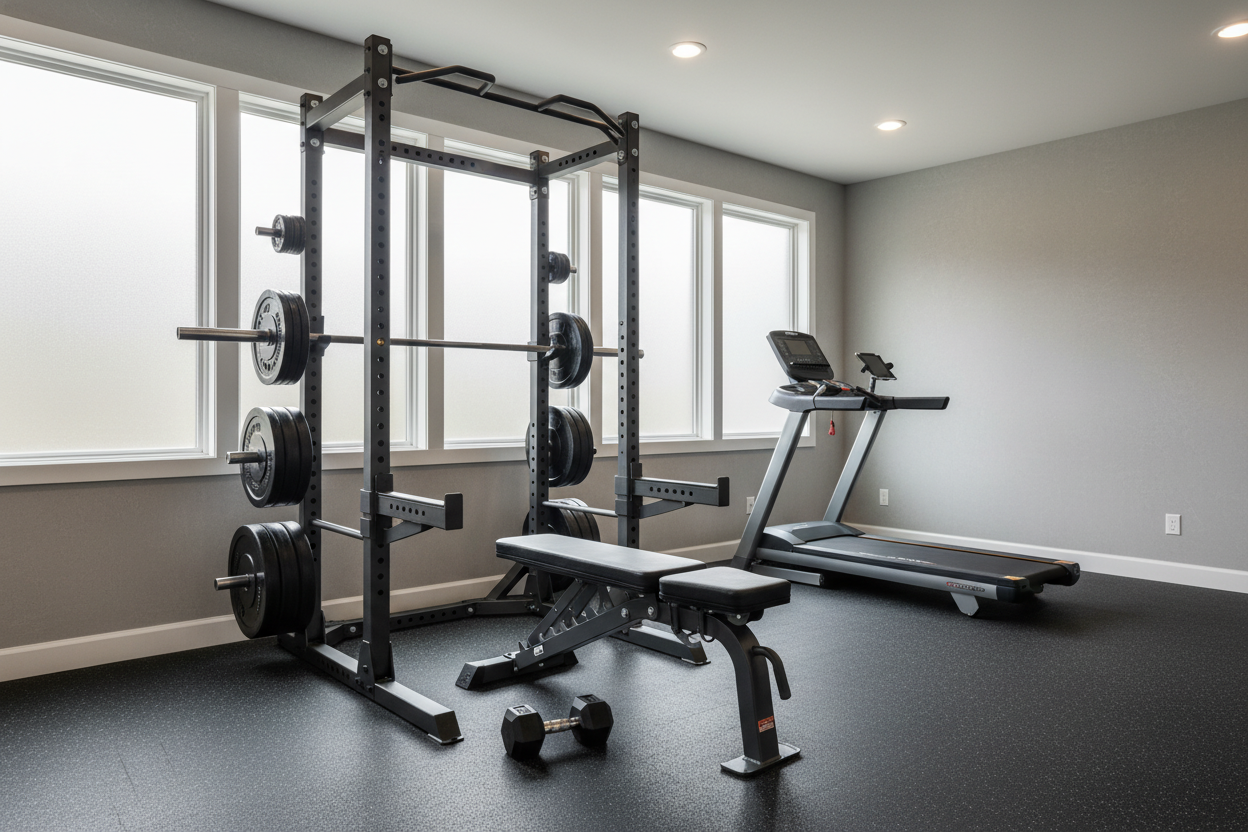
I remember scrolling through Amazon at midnight, hunting for a deal to finish my garage setup. I saw a weighted bench for eighty bucks that claimed a 1,000-pound capacity. It looked sleek in the photos, but when it arrived, I could lift the entire box with one hand. That was the first red flag. When I finally bolted it together and sat down with just 50-pound dumbbells, the whole frame groaned like a sinking ship.
- Physical mass equals stability; a light bench is a tipping hazard.
- Static weight ratings are marketing fluff that ignore lateral movement.
- Look for 11-gauge steel and a shipping weight of at least 60-70 pounds.
- Avoid 'all-in-one' attachments that compromise the structural integrity of the frame.
The Marketing Lie of the 1,000-Pound Capacity
Budget brands love to boast about high weight capacities. They'll tell you their cheap weight bench can hold half a ton. What they don't tell you is that this is a 'static' rating. Sure, if you carefully stack 1,000 pounds of lead bricks on the center of the pad, it might not collapse. But you aren't a stack of bricks. You are a moving, breathing lifter who might unrack a bar unevenly or shift your weight during a grindy rep.
When you are shopping for a strength training bench, the real metric you need to watch is the gauge of the steel and the total weight of the unit. A cheap workout bench made of thin 14-gauge steel will flex and twist under load. This lateral instability is what causes those terrifying 'micro-wobbles' when you're trying to focus on your chest. If the bench only weighs 35 pounds, it doesn't have the footprint or the mass to keep you grounded when the weights get heavy.
Why Your Off-Center Lifts Demand a Heavy Frame
Standard bench pressing is actually the easiest thing for a weight lifting bench to handle because the force is mostly vertical. The real danger starts with accessory work. If you're doing Bulgarian split squats or step-ups on a weightlifting benches setup that's too light, the bench is going to slide across your floor or tilt the moment you apply pressure to the edge of the pad.
A heavy duty bench press station acts as an anchor for your entire body. When you're using a weight lifting chair for seated overhead presses, you need to know that if you lean back slightly to catch your balance, the front feet aren't going to lift off the ground. Most exercise benches found in big-box stores fail this test because they use a narrow 'T-frame' at the head and a light overall build. You want a weight workout bench that feels like it’s part of the foundation of your house.
The Dumbbell Row Tipping Point
I once watched a buddy try to pull a 110-pound dumbbell for rows while bracing his knee on a cheap exercise bench he bought at a garage sale. As he reached the top of the movement, his center of gravity shifted just a few inches outside the frame. Because the lifting bench lacked physical mass, it didn't resist the shift—it just flipped. He ended up face-first on the stall mats with a hundred pounds of iron pinned under his arm. That doesn't happen with a full workout bench that has a 75-pound frame and a wide rear stabilizer.
Skipping the Attachments for a Solid Base
You’ll see a lot of universal weight bench models that come with leg developer rollers, preacher curl pads, and even resistance band pegs. My advice? Ignore them. These 'Swiss Army Knife' benches are almost always built with thinner steel to keep the price down while adding features. You are much better off buying a weight bench only model that puts every cent of its manufacturing cost into the hinge and the frame.
A basic workout bench made of 2x3 or 3x3-inch steel is infinitely safer than a workout bench set that tries to do everything poorly. When you shop weight bench options, look for a black weight bench with a simple, beefy adjustment mechanism—ideally a ladder or a thick pop-pin. A basic weight bench that weighs 80 pounds is a tool that will last a lifetime; a multi-attachment weight lifting table is a piece of furniture that will end up in a landfill in two years.
How to Spec Check Your Next Lifting Station
Before you hit 'buy' on that workout bench sale, check the shipping weight. If it’s under 50 pounds, it’s a toy. You want to see '11-gauge steel' in the description. This is the industry standard for training benches that actually survive heavy use. Also, check the pad width. A 12-inch wide pad is the sweet spot for shoulder support without restricting your range of motion.
If you're looking for a commercial weight bench for your garage, you should also look at the footprint. A wide rear base—at least 18 to 21 inches—is non-negotiable for stability. Don't worry about whether it’s a men's weight bench or a bench for exercise at home; look at the hardware. If the bolts are the size of your pinky finger, keep looking. You want thick, grade-8 hardware that won't shear under stress.
Moving a Heavy Bench Without Ruining Your Floor
The biggest complaint about a heavy duty bench press is that it's hard to move around a small at home gym bench space. This is a valid concern, but it's easily solved by quality hardware. A well-designed lifting bench will have integrated wheels. I’m not talking about cheap plastic wheels that rattle; I’m talking about high-durometer urethane wheels like you’d find on a pair of rollerblades.
A sturdy adjustable weight bench with a front-mounted handle allows you to tilt the mass onto the wheels and roll it like a suitcase. This gives you the best of both worlds: a weight bench home setup that is rock-solid when you're under the bar but easy to tuck into a corner when you're done. When you buy workout bench equipment, don't sacrifice your safety just to save ten pounds of lifting weight during setup.
FAQ
Where can I buy a weight bench that won't wobble?
Avoid the generic big-box retailers. Look for dedicated strength equipment brands that specialize in powerlifting or CrossFit gear. Check the 'About Us' section; if they don't actually lift, don't buy their workout bench buy options.
What is the ideal weight bench weight?
For a flat bench, 45-60 pounds is solid. For an adjustable weight lifting bench, you really want to be in the 70-90 pound range. Anything lighter usually indicates thin-walled tubing.
Is a cheap gym bench worth it for beginners?
Actually, beginners need stability more than anyone. If your bench press seat is wobbling while you're still learning to stabilize the bar, you're going to develop bad habits or get injured. Buy once, cry once.
Share:
Stop Using Regular Furniture for Gym Spaces (It Won't Last)
The Only Gifts for a Home Gym That Won't End Up on eBay