
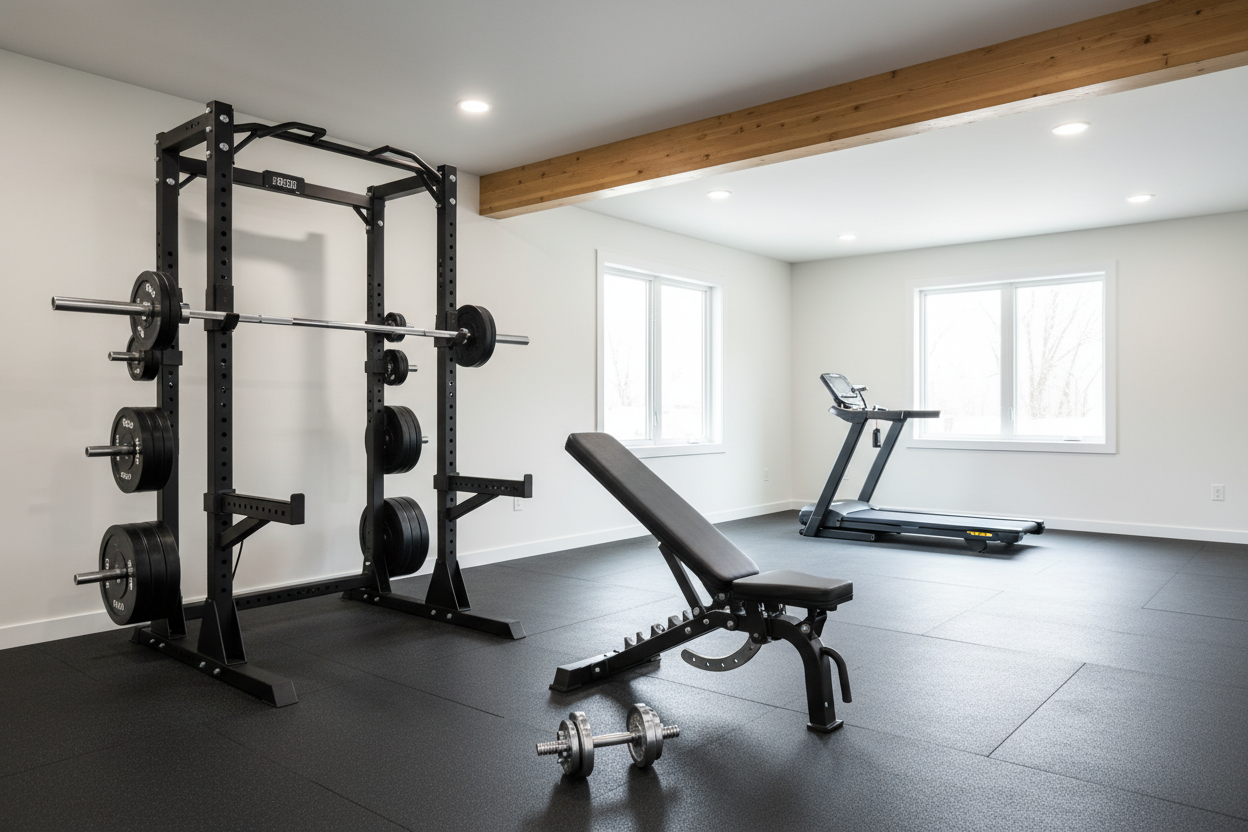
I remember my first budget bench for gym sessions in my drafty garage. It looked fine in the Amazon photos, but the first time I loaded 225 pounds, the whole thing groaned like a rusty gate. It is easy to think a bench is just a place to sit, but if yours is soft, narrow, and wobbly, you are basically pressing on a marshmallow. That is a fast track to a rotator cuff tear.
- Avoid 'squishy' foam; it kills stability and ruins your force production.
- Look for a pad width of at least 11-12 inches to support your shoulder blades.
- Tripod designs (three feet) are superior for proper foot placement and leg drive.
- A 1,000-lb rating is meaningless if the hinge has side-to-side play.
The Scapula Trap: Why Soft Pads Are Dangerous
When you press, your shoulder blades need to be pinned back and down into the pad to create a stable platform. On a cheap gym bench, the foam is usually low-density garbage. As soon as you unrack the bar, your scapulae sink into the foam, losing their 'shelf.' This shifts the entire load onto your vulnerable rotator cuffs and front delts.
A high-density pad should feel firm—almost hard—when you press your thumb into it. If you can feel the plywood base through the foam with just your hand, imagine what happens when you have a couple hundred pounds in your hands. You want a heavy duty workout bench that fights back, keeping your structure locked in place so you can actually drive the weight up.
Pad Width: The Most Ignored Spec in Home Gyms
Most lifters get blinded by weight capacities. I do not care if a bench is rated for a ton if the pad is only 9 inches wide. If you have average-to-broad shoulders, a narrow home gym weight bench leaves your joints hanging off the sides. This lacks the necessary surface area to create tension, making your press feel shaky and weak.
You are better off ignoring the marketing hype and looking at the tape measure. Stop Reading Garage Gym Reviews: Adjustable Bench Specs Don't Matter because dimensions and foam density dictate your safety more than a static weight test ever will. Aim for a 12-inch wide pad if you want to feel truly supported during max-effort sets.
Flat vs. Incline: What Do You Actually Need?
A dedicated flat bench is always going to be the gold standard for stability. It has no moving parts, no hinges, and no 'gap' between the seat and the backrest. However, I know space is a premium, and most people want an adjustable bench for home gym use to hit inclines and seated overhead work.
The problem with budget adjustable models is the hinge. If there is even a millimeter of play in the bolt, you will feel a terrifying side-to-side wobble under load. Why Your Adjustable Gym Bench for Home Feels So Unstable usually comes down to poor tolerances in the adjustment spine. If you go adjustable, do not cheap out on the mechanism.
Finding a Rock-Solid Foundation on a Budget
You do not need to spend $800 to get a top rated weight bench, but you do need to look for 11-gauge steel. If the product description does not mention the steel gauge, it is probably thin-walled 14-gauge junk that will flex when you breathe on it. A real gym quality weight bench should feel heavy when you move it around the room.
Look for a tripod design if possible. Having a single front foot allows you to tuck your feet back for a better arch without tripping over the bench frame. When browsing for a new Weight Bench, prioritize the frame's footprint width and the grippiness of the vinyl. You do not want to be sliding toward the floor while trying to grind out a final rep.
Maximizing a Tight Garage Space
If you are working in a 10x10 space, you need gear that pulls double duty. You can find an exercise bench for home that incorporates leg curls or preacher attachments, but be careful. Often, these 'all-in-one' units compromise the stability of the main pressing pad to make room for the extras.
The Weight Bench With Barbell Rack And Biceps And Leg Extension Curl Station Z3 is a solid example of how to cram functionality into a small footprint without the whole thing feeling like a toy. Just ensure the uprights are wide enough for your grip and the bench itself doesn't feel like it's going to tip when you use the leg developer.
My Personal Lesson in Cheap Gear
I once bought a 'top-rated' adjustable bench off a big-box site because it was $80 and had 4.5 stars. During a set of incline dumbbell presses with 80s, the adjustment pin sheared. I didn't get hurt, but the adrenaline dump was enough to ruin my workout. I realized then that my safety was worth more than the $150 I 'saved.' Now, I check the weld quality on every home bench I test. If the welds look like bird poop, I am not putting my spine on it.
FAQ
What is the best pad width for a bench?
For most lifters, 12 inches is the sweet spot. It provides enough surface area to support the scapula without interfering with your arm's range of motion at the bottom of the press.
Is a tripod bench better than a four-legged bench?
Yes, usually. A tripod (three-post) design prevents your feet from hitting the front stabilizer, allowing for much better leg drive and positioning during the bench press.
Why does my new bench smell like chemicals?
Cheap vinyl off-gasses. High-quality, grippy vinyl used on a sturdy workout bench will have much less odor and won't become a slip-and-slide once you start sweating.
Share:
Can One Small Home Gym Machine Really Replace a Full Gym?
Does Full Body Home Workout Equipment Actually Build Real Muscle?