
I spent three hours last night scrolling through targeted ads for a 'revolutionary' home fitness device that supposedly replaces an entire rack of dumbbells with a single folding board. It looked like a high-tech suitcase. As someone who has spent fifteen years underneath a barbell and seen the inside of more garage gyms than a CrossFit coach, I can tell you exactly what happens when you try to get a real workout on gear designed by furniture engineers instead of strength coaches.
The marketing always focuses on how easily the unit slides under your bed or hides in a closet. They never mention that the handles are three inches too narrow for a standard chest press, or that the resistance curve feels like pulling a bungee cord through wet sand. You aren't just buying a tool; you're buying a future appointment with a physical therapist because you traded your biomechanics for a bit of floor space.
- Compact designs often force unnatural joint angles to accommodate a small box.
- Shipping-friendly frames lack the stability needed for heavy, safe eccentric movements.
- Plastic components in 'all-in-one' units flex under load, causing tracking issues.
- Ergonomics almost always lose the battle against storage convenience in residential gear.
The Dirty Secret of Space-Saving Gadgets
Manufacturers are obsessed with 'last-mile' shipping costs. To keep a product affordable and profitable, it has to fit on a standard pallet and be light enough for a single delivery driver to drop on your porch without a forklift. This is the primary reason why so much working out equipment at home feels flimsy. They aren't building for your 300-pound squat; they're building for the FedEx weight limit. When you shrink the footprint, you inevitably shorten the levers.
A shorter lever arm on a chest press machine might save six inches of floor space, but it forces your elbows into a deep, impinged position at the bottom of the rep. Your shoulders aren't meant to rotate that way under tension. I've seen 'compact' machines where the pivot point is so close to the user that the movement arc is more of a circle than a press. That puts an incredible amount of shear force on the rotator cuff. If the machine is designed to be small first and functional second, your joints are the ones that pay the price for that engineering compromise.
Why Your Joints Hate That New Home Fitness Device
I've tested folding cable machines that felt like they were trying to rip my labrum out of the socket. Because the pulleys are mounted so close together to save space, you lose the ability to maintain a proper line of pull. You end up fighting the machine's geometry instead of the weight. Humans aren't built in 20-inch increments. When you force a 200-pound person onto a machine designed to fold into a shoe rack, his elbows flare and his wrists torque into positions that would make a yoga instructor cringe.
Narrow grip widths are the biggest offender in the compact world. If you’re a lifter with broad shoulders, these units force you into a permanent close-grip position for every single exercise. Over hundreds of reps, that's a recipe for chronic tendonitis in your wrists and elbows. Furthermore, the base of these devices is often too light. If the machine weighs 40 pounds and you're trying to pull 100 pounds of resistance, the machine is going to tilt or slide, forcing you to use your stabilizers just to keep the equipment on the floor rather than focusing on the muscle group you're actually trying to train.
The Fixed-Track Trap
Cheap home units use plastic bushings on thin steel rails that are prone to 'binding.' Binding is when the movement stutters or catches mid-rep because the frame has slightly flexed. That micro-jerk sends a shockwave straight into your tendons. Compare that to a commercial-grade bearing that glides like silk, and you'll realize why the budget gadget is a trap. If the track isn't perfectly rigid, it isn't safe for high-intensity training.
How to Vet Working Out Equipment at Home for Actual Humans
Before you drop five hundred bucks on a gadget, check the actual specs—not the photoshopped lifestyle shots. If the maximum handle width is less than your shoulder-to-shoulder measurement plus six inches, skip it. You need room for your joints to track naturally. I wasted a lot of money and years finding the best equipment for working out at home before I realized that 'fits in a corner' is usually code for 'hurts to use.'
Always look for adjustable cable heights and independent arms. If the machine dictates exactly where your hands go without any wiggle room, it’s not designed for your specific anatomy. Test the range of motion before you commit. If you can't reach full extension or a deep stretch without hitting a frame or a plastic stopper, the device is limiting your gains and potentially setting you up for a strain. A real piece of equipment should disappear under you, leaving you to focus only on the effort, not the limitations of the hardware.
Space-Saving Alternatives That Won't Snap Your Wrists
You don't need a folding plastic gimmick to save space in your spare bedroom. A high-quality Smith machine home gym station provides a fixed track that is actually engineered for heavy loads and smooth travel. It takes up a bit more room than a suitcase, but it uses linear bearings and heavy-gauge steel that won't flex when you're grinding out that last rep. It respects the natural path of your body while providing the safety of a guided system.
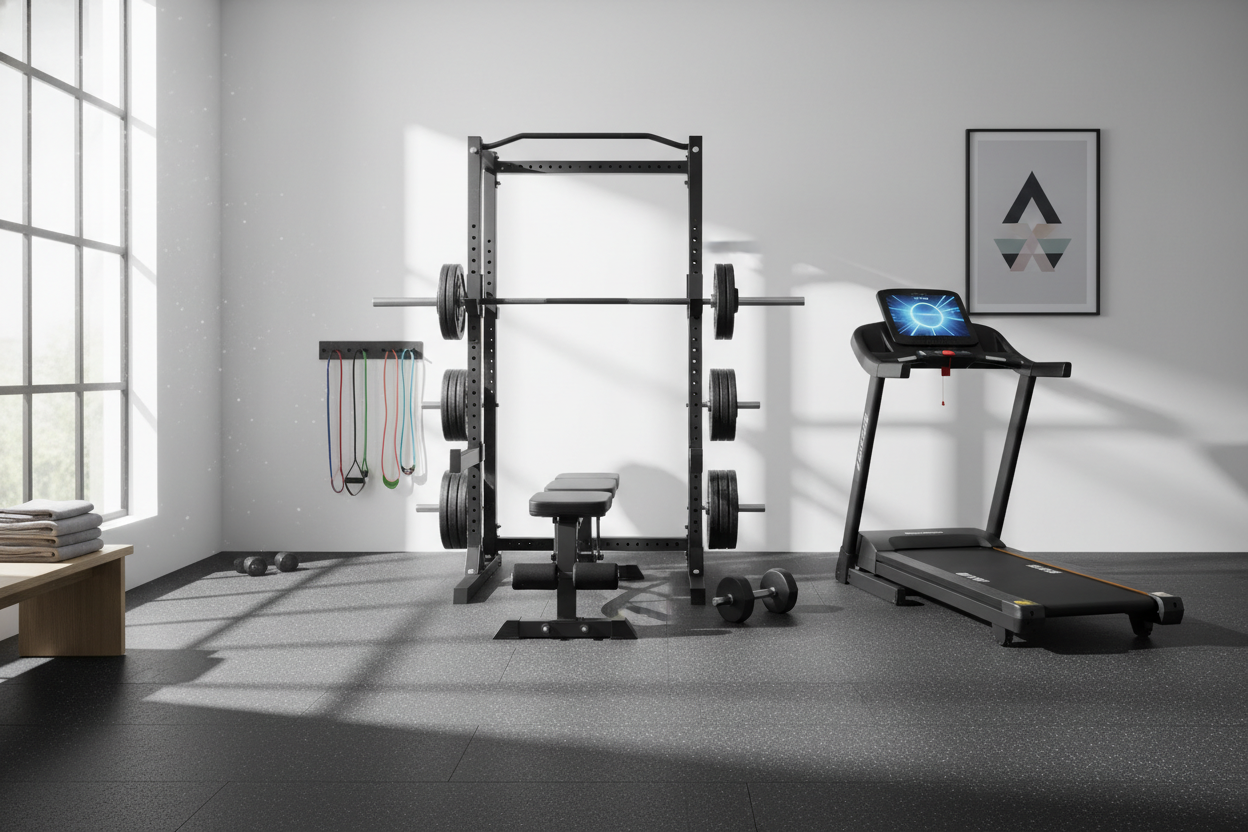
If you're serious about long-term progress and joint longevity, stop looking for gadgets that hide under the bed. Invest in a heavy-duty home gym setup that uses standard plates and steel frames. Real iron doesn't hide in a closet, but it also doesn't break after six months of use. Look for equipment with a small footprint but a heavy 'operating weight'—the heavier the machine itself, the more stable your lifts will be.
My Personal Fail
I once bought a 'portable' cable tower that used heavy-duty suction cups to stick to a doorway. I thought I was being clever and space-efficient. On the third rep of a heavy face pull, the top suction cup gave way. The whole unit ripped off the wall and clocked me right in the forehead. I learned a valuable lesson that day: if it's light enough to be 'portable,' it's probably too light to be effective or safe. Now, I only buy gear that I have to bolt down or that weighs at least twice as much as the weight I'm lifting.
FAQ
Is all compact equipment bad?
Not all, but most 'all-in-one' gadgets are. Look for specialized compact gear like adjustable dumbbells or short-rack power cages instead of multi-function plastic boards.
How much space do I really need for a home gym?
A 6x8 foot area is the bare minimum for a safe workout. You need room to fail a lift without hitting a wall or a piece of furniture.
Why do my shoulders hurt on my home machine?
It's likely the fixed grip width. If the machine forces your hands too close together or at an awkward angle, it creates subacromial impingement. Switch to free weights or a machine with independent arms.
Share:
Why Every Weight Bench With Barbell and Weights Feels Microscopic
Is There a Single Dumbbell Set Best for Every Lifter?