
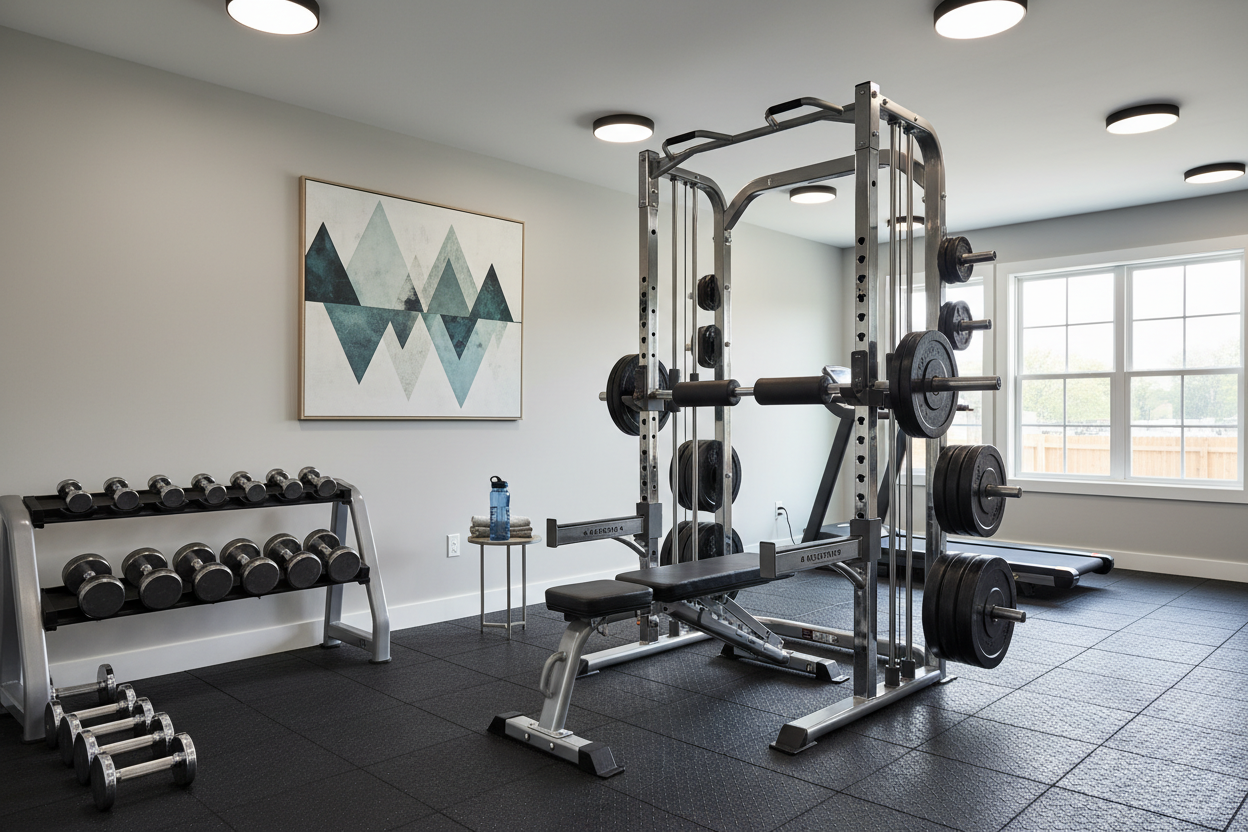
I remember the first time I tried to hip thrust on smith machine in a commercial gym. I felt like a total amateur, trying to shimmy under a fixed bar while my bench kept sliding backward on the hardwood floor. It was a mess, and I almost went back to the barbell. But after a decade of testing gear, I’ve realized that for pure glute hypertrophy, the Smith machine isn't just a backup—it is actually the superior tool if you know how to set it up.
The biggest hurdle is that the Smith machine is unforgiving. With a barbell, your body can micro-adjust to the weight. With a fixed track, your body has to adapt to the machine. If your bench is two inches off or your feet are too wide, the movement feels mechanical and clunky. We are going to fix that today so you can stop worrying about balance and start moving some real weight.
Quick Takeaways
- Stability is king: Removing the balance requirement lets you push closer to true muscular failure.
- Bench height matters: Aim for about 16-17 inches to ensure your shoulder blades can pivot.
- Track direction: On angled machines, always face the direction that allows the bar to move toward your head on the way up.
- Foot placement: Keep your shins vertical at the top of the rep to maximize glute recruitment.
Why I Actually Prefer the Smith Machine for Heavy Glute Work
Purists will tell you that the barbell is the only way to build strength. They are wrong. When it comes to the hip thrust, stability is your best friend. In a standard barbell thrust, a significant amount of your mental and physical energy is spent making sure the bar doesn't roll down your thighs or tilt to the left because your right glute is firing harder. That is wasted energy.
By using a barbell hip thrust smith machine setup, you eliminate the 'balancing act.' This allows for a much higher level of mechanical tension. I’ve found that I can typically load 10-15% more weight on a Smith machine than I can with a free barbell simply because the stabilization muscles aren't the bottleneck. When you're trying to grow your glutes, you want the target muscle to be the reason you fail the set, not because the bar felt wobbly.
Furthermore, the Smith machine allows for safer drop sets and rest-pause training. If you hit failure, you just flick your wrists and the bar is locked. No awkward dumping of plates or getting pinned under a heavy bar. It’s a more efficient way to train if you’re a solo garage gym athlete who doesn't have a spotter to help you navigate a 400-pound barbell.
The Exact Smith Machine Hip Thrust Setup (Don't Wing This)
The number one reason people hate the smith machine hip thrust setup is that they treat it like a barbell movement. You cannot just 'eyeball' where the bench goes. First, let’s talk bench height. Most standard gym benches are 17 inches tall. If you are shorter than 5'4', you might find this too high, forcing you to 'climb' the bench. In that case, use a stack of bumper plates or a specialized aerobics step.
Placement is everything. You want the bar to be aligned directly over the crease of your hips when you are sitting on the floor with your back against the bench. If the bench is too far back, the bar will scrape your ribs. If it’s too far forward, you won't be able to achieve a full range of motion. You have to account for different smith machine setups because some racks have floor stabilizers that prevent you from getting the bench close enough. If that’s the case, you’ll need to angle the bench slightly or use a smaller utility bench.
Pro tip: Wedge your bench against something heavy. If you’re in a garage, push the bench against the frame of the Smith machine itself or place a pair of 100-lb dumbbells behind it. Nothing kills a set faster than the bench sliding six inches backward during your third rep.
Finding the Perfect Foot Placement
Your feet are the steering wheel of this exercise. If you place them too far away from your body, you’ll feel a massive stretch in your hamstrings, but your glutes won't reach full contraction. If you tuck them too close to your butt, your quads will take over, and you might even experience some knee discomfort. It’s a common mistake that turns a smith machine glute thrust into a weird leg press variation.
The 'sweet spot' is simple: at the very top of the movement, your shins should be perfectly vertical. This creates a 90-degree angle at the knee. This position ensures that the force is driven directly through your heels into the floor, which is the most efficient way to engage the gluteus maximus. I usually tell people to start with their feet shoulder-width apart and slightly flared—about 15 to 30 degrees. This flare helps most lifters find a better 'squeeze' at the top of the rep.
Step-by-Step: How to Do a Hip Thrust on Smith Machine
Now that you’re set up, let’s talk execution. Sit on the floor and slide yourself under the bar. Make sure you have a pad on the bar (we’ll get to that in a second). Position the bar right in your hip crease. Lean back so your shoulder blades are resting against the edge of the bench. If you are using an all-in-one smith machine, the counterbalanced system will make the initial unrack feel incredibly light, which is great for getting into position without straining your lower back.
To start the rep, drive through your heels and rotate the bar to unlock it. Keep your chin tucked firmly against your chest. This is the part most people get wrong—they look at the ceiling. When you look up, you’re more likely to arch your lower back (lumbar hyperextension). By keeping your chin tucked and eyes forward, you keep your spine in a neutral, safer position. Drive your hips up until your torso is parallel to the floor. At the top, give your glutes a hard one-second squeeze. Do not just bounce the weight off the floor; control the descent until your butt just grazes the mat, then drive back up.
Angled vs. Vertical Tracks: Which Way Should You Face?
This is the most debated topic in the hip thrust en smith world. Most Smith machines have a 7-degree angle. This isn't just for looks; it’s designed to mimic the natural bar path of a squat or press. For a hip thrust, you want to face the direction that allows the bar to move *toward* your head as you move from the floor to the top of the rep.
If you face the wrong way, the bar will move away from you as you rise, which creates a shearing force on your back and makes it feel like the bar is trying to slide down your legs. This is why a hip thrust on angled smith machine feels 'off' to so many people—they are literally fighting the machine's physics. If your machine is vertical (0-degree angle), it doesn't matter which way you face, but for angled tracks, always test a light set first to ensure the arc feels natural.
The Essential Accessory (Please Don't Skip This)
I’ve seen guys who think they’re too tough for a bar pad. Then I see them a week later with massive, dark bruises across their pelvic bones. A smith machine thrust allows you to move a lot of weight, and that thin steel bar is going to dig into your hips with zero mercy.
You need a high-density foam pad. If your gym doesn't have one, or if the one they have is flattened out like a pancake, bring your own. A rolled-up yoga mat works in a pinch, but a dedicated squat pad is better. It spreads the load across a wider surface area, allowing you to focus on the contraction rather than the sharp pain of 300 pounds of steel crushing your hip bones.
When Does a Dedicated Glute Machine Make More Sense?
As much as I love the versatility of the Smith machine, it does have its limits. If you are a competitive powerlifter or a bikini athlete who is doing hip thrusts on smith machine three times a week, you might get tired of the 'gym math' involved in the setup. Dragging a bench over, finding the pad, and shimming into place takes time.
A dedicated hip thrust machine is the logical next step for a serious home gym. These machines usually feature a built-in back pad that pivots with you and a footplate that is already at the correct angle. It eliminates 90% of the setup errors we’ve discussed. However, if you’re working with limited space, the Smith machine remains the most versatile 'all-rounder' for your lower body days.
Personal Experience: My Biggest Mistake
The biggest mistake I ever made was trying to how to do hip thrust smith machine style without checking the safety stoppers. I was doing a heavy set of 10, and on the last rep, I lost my grip slightly while trying to re-rack. Because I hadn't set the safety pins at the bottom, the bar dropped lower than expected, and I ended up in a very deep, very uncomfortable stretch that tweaked my SI joint. Now, I always set the safety stoppers just an inch below my lowest working point. It takes five seconds and prevents a world of hurt.
FAQ
Can you do hip thrusts on a smith machine if you are tall?
Yes, but you may need to play with your bench distance. Taller lifters often need the bench a bit further back to accommodate longer femurs. Just ensure your shins remain vertical at the top.
Is a smith machine hip raise the same thing?
Technically, a hip raise (or glute bridge) is done with your back on the floor, while a hip thrust is done with your back elevated on a bench. The thrust offers a greater range of motion and is generally better for muscle growth.
Why do I feel this in my lower back?
You are likely hyperextending at the top. Focus on 'tucking your tailbone' (posterior pelvic tilt) and keeping your chin tucked. The movement should come from your hips, not your spine.
Share:
Why That Cheap Weights Machine for Sale Is Probably a Trap
I Tested 12 Setups to Find the Best Fitness Machines (Most Are Junk)