
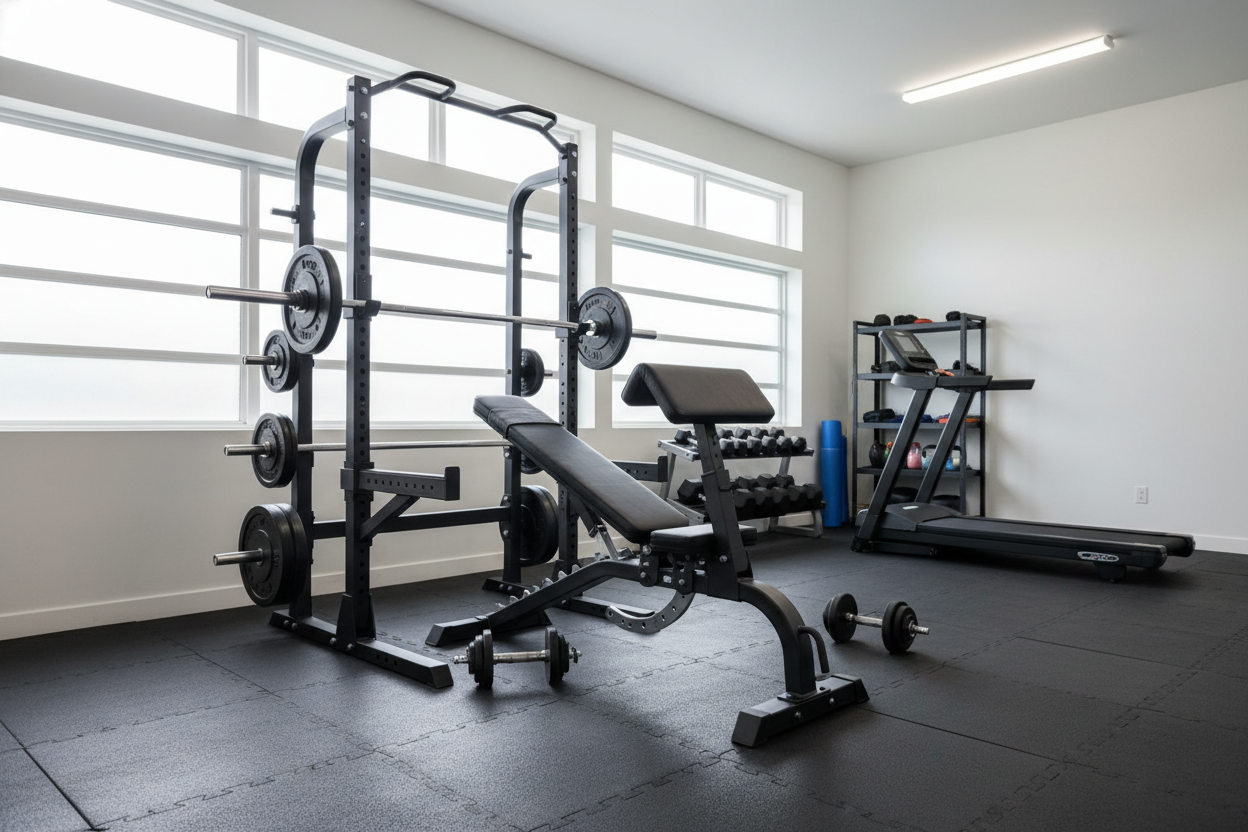
I remember the first time I tried to hit a heavy incline press on a ninety-dollar big-box special. I sat down, kicked the dumbbells up, and realized my head was completely unsupported, dangling in space like a ripe melon. It wasn't just uncomfortable; it was distracting and, frankly, a bit dangerous. If you have ever felt that neck strain while trying to target your upper chest, you know exactly what I am talking about.
Choosing the right incline workout bench isn't just about checking the weight capacity; it is about whether the thing actually fits a human skeleton. Most budget gear is built to fit in a shipping box, not to support your spine. If you are tired of feeling like your equipment is a toy, it is time to look at the specs that actually matter.
- Standard budget benches are often too short for anyone over 5'10.
- A 'tripod' or 3-post design allows for much better foot placement.
- Seat gaps over two inches can lead to serious lumbar discomfort.
- 11-gauge steel is the gold standard for stability under heavy loads.
The 'One Size Fits Nobody' Problem
Most entry-level weight benches are engineered for logistics, not lifters. Manufacturers shave inches off the back pad to keep the packaging small and the shipping costs low. This results in a tall weight bench being a rare find in the budget category. When you transition from a flat position to a 45-degree incline, your torso effectively becomes 'longer' relative to the pad.
If that back pad isn't at least 38 to 40 inches long, your head is going for a ride. I have seen guys at the local gym trying to balance their neck on the very edge of a frame, which is a recipe for a cervical spine injury. A professional fitness bench should provide a continuous surface from your tailbone to the crown of your head, regardless of the angle.
The Dreaded Seat Gap (And Why It Ruins Your Press)
There is nothing worse than a two-inch canyon opening up right where your lower back needs support. I spent weeks testing the Day 1 Fitness bench and similar budget models, and the gap is the recurring villain. When the hinge is poorly designed, the seat and back pad drift apart as the incline increases.
Professional weight benches use high-quality hinges or sliding carriage systems to keep that gap under an inch. If you are constantly sliding into the crack, you lose your tightness. You cannot drive through your legs and maintain a solid arch if your butt is falling into a mechanical hole. It is a fundamental flaw that separates real gear from the stuff sold in the toy aisle.
What Separates a Pro Fitness Bench from a Toy?
A real pro weight bench feels like a tank because it is built like one. You want to look for 11-gauge steel, which is roughly 1/8th of an inch thick. Anything thinner and the bench will wobble or flex when you are trying to rack a heavy set of dumbbells. When comparing a professional fitness bench to the Fitness Gear Pro Utility bench, the difference in frame rigidity is night and day.
The tripod design is another hallmark of a pro fitness bench. Having a single post at the front means your feet can actually stay tucked under you for proper leg drive, rather than tripping over a wide T-shaped base. You also want high-density foam. Cheap pads feel soft at first but bottom out the second you pick up something heavy. You want a pad that fights back.
Stop Sliding Down: The Importance of Seat Angles
If your pro fitness weight bench has a flat seat but an angled back, physics is going to win every time. You will slide right off the vinyl mid-set. To stay locked in, you need a seat that adjusts upward to 'cup' your glutes. I personally prefer an adjustable weight bench that offers at least three seat positions.
This tilt keeps your hips pinned against the back pad, allowing you to focus on the press rather than your friction against the seat. It is a small detail that makes a massive difference when you are pushing for a PR. Without that seat tilt, you are basically doing a sliding leg press with your upper body.
How to Pick Your Next Upgrade
Don't just look at the price tag and the 'max weight' rating—which is often exaggerated on cheap benches anyway. Check the pad length, the steel gauge, and the front-post footprint. If you are building a serious home gym, browsing a solid weight bench collection will show you that a quality home gym equipment bench is an investment in your safety.
I once bought a 'pro' bench from a big-box store because it was on sale for $120. It was a total mistake. The first time I tried to do 90-pound dumbbell inclines, the frame flexed so hard I thought a weld was going to snap. I ended up selling it for a fraction of the price and buying a piece of commercial-grade gear. Save yourself the hassle: buy once, cry once.
FAQ
How long should a bench pad be for tall lifters?
If you are 6 feet or taller, look for a back pad that is at least 38 inches long. This ensures your head stays supported even at steep incline angles.
Why does my bench wobble?
Wobble usually comes from thin-gauge steel (14-gauge or higher) or a bolt-together frame that has loosened over time. A fully welded or heavy-duty 11-gauge frame is much more stable.
Is a tripod bench stable?
Yes. As long as the rear base is wide enough (usually 20 inches or more), the three-point contact design is incredibly stable and much better for foot placement during the press.
Share:
Can Simple Equipment for Home Exercise Actually Build Muscle?
Can a Portable Weight Lifting Bench Handle Heavy Dumbbells?