
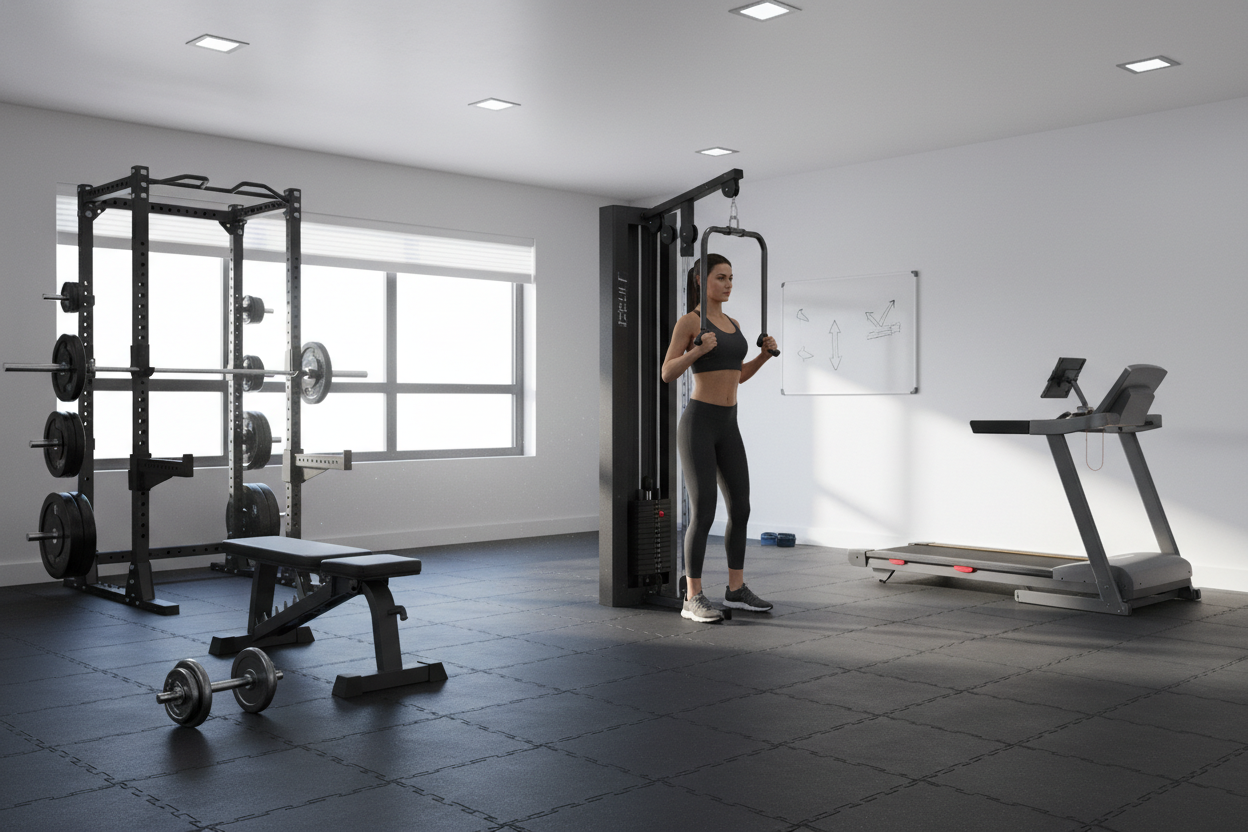
I remember the first time I hopped on a cable row after a month of heavy deadlifts. I slapped three plates on the stack, thinking I would fly through it. Instead, the first rep nearly pulled my shoulders out of their sockets. Using weight machines isn't as straightforward as just matching the numbers on the plates to your barbell max.
- Machine weights are relative, not absolute, due to pulley ratios.
- Friction in the cables can add up to 10% more resistance than the stack suggests.
- Lever arms and cams change the weight profile throughout the movement.
- Mechanical advantage often makes machine 'pounds' feel lighter or heavier than 'iron' pounds.
The Gravity Problem: Why Machine Pounds Lie to You
Pulley ratios are the biggest lie in the gym. If you see a machine with a 2:1 ratio, that 200-lb stack only puts 100 lbs of actual tension on your hands. You feel like a god until you go back to a 1:1 ratio machine and realize you've been ego-lifting against a mechanical advantage. It is physics, not your strength failing you.
Then there is the friction factor. Old gym machines with dusty guide rods add a 'drag' that makes the eccentric (the lowering phase) feel heavier than it should. You are not just fighting gravity; you are fighting the grime on the cables. This is why you cannot compare your PR on a commercial stack to your PR on a home gym functional trainer. The drag coefficient changes everything.
Lastly, the direction of force matters. On a barbell bench, gravity is always pulling straight down. On a machine, the weight is often moving on a fixed arc. This removes the need for stabilizer muscles, which is why you can often 'lift' more on a machine, even if the pulleys are working against you.
How Much Weight to Use on Gym Machines (Without Guessing)
Stop trying to do 'barbell math.' If you are wondering how much weight to use on gym machines, the answer is usually: start at 60% of what you think you can handle for your first set. Use RPE (Rate of Perceived Exertion) rather than a calculator. If you are aiming for a set of 10, the weight should feel like a 7 or 8 out of 10 in terms of difficulty.
Stability is the secret to high output. If you are sliding around, you are losing power. Planting yourself on a solid weight bench allows you to drive through the floor and keep your torso rigid. When your body feels supported, your nervous system allows your prime movers to actually fire at 100% capacity.
I usually recommend a 'probe set' of 5 reps. If the speed is high and the tension feels light, jump up by two plates. Machines allow for much faster weight increments than fumbling with 2.5-lb iron change plates, so use that to your advantage during your warm-up.
The Secret Weapon: Weight Machines That Change the Load During the Exercise
The best machines are not linear. I am talking about weight machines that change the load during the exercise by using cams or lever arms. In a standard squat, the hardest part is the bottom. A good machine uses a cam to make the weight lighter at the bottom and heavier at the top, matching your natural strength curve.
I have spent a lot of time testing the Weight Bench Chest Press Machine Independent Arms Z1 Pro, and the converging path is a perfect example of this. As you push, the handles move closer together, which mimics the way your chest muscles actually contract. You get more tension at the peak of the movement where a barbell would normally feel 'easy.'
This is called accommodating resistance. It’s why bodybuilders love machines. You can keep a muscle under high tension for the entire range of motion, rather than just the 'sticking point.' If you want hypertrophy, you want a machine that fights you exactly where you are strongest.
The Reality of Using Weight Machines at Gym Facilities vs Home
There is a massive difference when using weight machines at gym facilities compared to a home setup. Commercial gear is built for 24/7 abuse, which often means heavy steel frames but also neglected maintenance. If those guide rods aren't lubed, the movement feels 'crunchy.' That crunchiness ruins your mind-muscle connection.
I actually reached a point where I Missed the Weight Machines at the Gym (So I Built My Own) because I wanted that smooth, friction-free feel every single day. In a home gym, you can keep your cables pristine. You notice the difference immediately—the weight feels 'alive' rather than stuck.
Commercial machines also tend to be huge single-use monsters. In a garage, we have to be smarter. We look for versatility. But the trade-off is worth it when you realize your home cables are smoother than the ones at the local big-box gym that haven't seen a drop of silicone spray since 2019.
How to Build Your Own Machine-Heavy Setup
You do not need a 5,000-square-foot facility to get high-end machine tension. A solid pulley system paired with an Adjustable Weight Bench Owb01 can replicate about 90% of what you need. The bench acts as your anchor for seated rows, chest presses, and even supported lateral raises.
Focus on high-quality attachments. A cheap, thin handle will make the weight feel 'off' because your grip will fail before your back does. Invest in some beefy D-handles and a long lat bar. If the connection point is solid, the machine will feel like an extension of your body rather than a clunky piece of scrap metal.
FAQ
Why does 100 lbs on a machine feel lighter than 100 lbs on a barbell?
It is usually the pulley ratio. A 2:1 ratio means you are only moving 50 lbs of actual resistance. Also, machines eliminate the need to balance the weight, which saves a lot of energy.
Are weight machines better for building muscle?
They are excellent for isolation. Because you don't have to worry about falling over or dropping a bar on your face, you can push your muscles much closer to absolute failure safely.
How often should I lube my home gym machine?
Every three to six months. Use a dry silicone spray on the guide rods. Avoid WD-40, as it can actually attract more dust and gunk over time, making the machine slower.
Share:
How to Decode Exercise Equipment Price Without Getting Ripped Off
At Home Gym Equipment Ideas That Won't End Up on Craigslist