
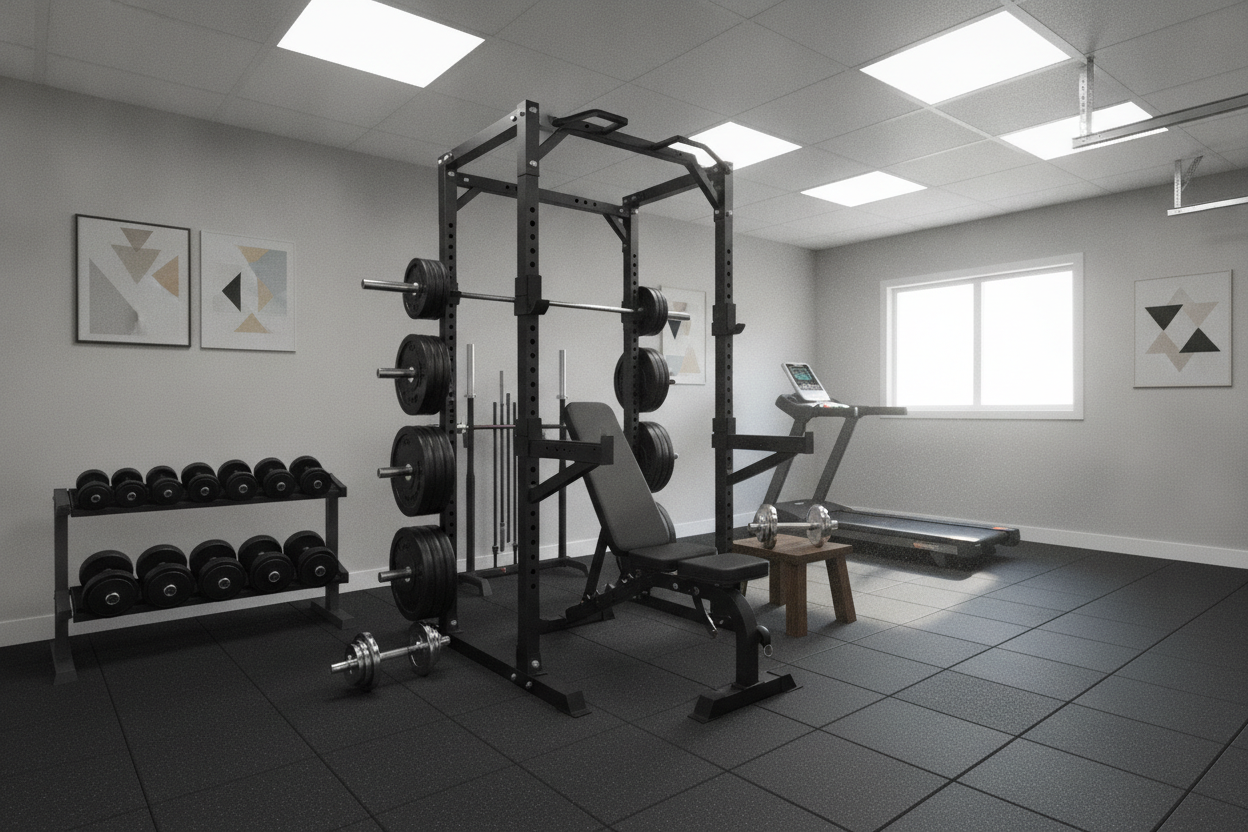
I spent years training in a drafty garage where the floor was slanted and the gear was budget-grade. I remember buying my first combo unit thinking I had won the space-saving lottery. Then I tried to do a set of weighted pull-ups on a weight bench with pull up bar and nearly ended up in the ER when the whole rig tipped toward my shins.
The dream of a single station that handles your heavy triples and your back volume is tempting. But most manufacturers prioritize shipping weight over structural integrity. If you are tired of the 'death wobble' every time you grab the bar, you need to understand the physics of what you are actually buying.
Quick Takeaways
- Base depth is more important than total weight capacity.
- 11-gauge steel is the minimum for a stable pull-up bench.
- Clearance issues often ruin the bench press path on narrow combo units.
- Always look for flared feet or bolt-down tabs.
The Physics of Combining Push and Pull Days
The problem with a bench pull-up bar combo is a simple matter of the center of gravity. You have a seven-foot tower bolted to a lightweight horizontal frame. When you hang 200 pounds of human off a bar at that height, any slight movement creates a massive lever arm effect. If the base isn't heavy enough to counter that force, the unit will sway side-to-side or, worse, tip forward.
Most cheap pull up bar with bench setups use thin 14-gauge steel. This makes the unit light enough for a delivery driver to carry, but it’s a disaster for stability. Without mass at the bottom, the vertical uprights act like a pendulum. You want a frame that stays planted even when your form isn't perfectly strict.
Why Your Bench Press With Pull Up Bar Setup Feels Cramped
Standard Olympic benches give you plenty of room to flare your elbows and set your feet. However, a pull up bar bench press combo often forces the uprights closer together to maintain the tower's balance. This creates a claustrophobic lifting environment. I have lost count of how many times I have barked my knuckles on a pull-up support while trying to re-rack a heavy set of chest presses.
Clearance isn't just about comfort; it's about safety. If the pull-up bar is positioned directly over the bench, you might find yourself hitting your head on the descent or having to take an awkward, shallow grip on the barbell. A workout bench with pull up bar needs to have enough offset so that your vertical pulling doesn't interfere with your horizontal pressing.
The 3 Specs to Check Before Buying a Pull Up Bench
First, check the steel gauge. If the listing doesn't explicitly say 11-gauge steel, it's probably 14-gauge junk that will flex under a stiff breeze. Understanding Why Your Next Olympic Bar And Bench Set Should Be Your Last starts with realizing that thin steel eventually warps at the bolt holes, leading to permanent instability.
Second, look for gusset plates. These are the triangular steel reinforcements at the joints where the uprights meet the base. If a bench and pull up bar station is just held together by two bolts and a prayer, it will rattle. Third, measure the base depth. You want at least 45 to 50 inches of contact with the floor to prevent forward tipping during chin-ups.
When to Ditch the Combo and Buy Standalone Gear
If you have the luxury of a 4x6 foot rubber mat's worth of space, I will always tell you to buy separate pieces. A dedicated, standalone Weight Bench is almost always going to have a better pad, higher weight capacity, and zero interference from overhead bars. You can move a standalone bench out of the way to do floor work or lunges, which you can't do when it's bolted to a tower.
Standalone gear also allows you to upgrade pieces individually. If you outgrow a basic pull-up bar, you can swap it for a power rack without having to sell your entire bench setup on Craigslist. Structurally, separate units allow for a lower center of gravity and much better long-term durability.
The Only Time a Pull Up Bar Bench Press Combo Makes Sense
There is one scenario where the combo wins: the 'micro-gym.' If you are training in a 500-square-foot apartment or a shared bedroom, you literally don't have the floor real estate for two footprints. In these cases, look for a unit like the Weight Bench With Barbell Rack And Biceps And Leg Extension Curl Station Z3. This type of integrated system uses the weight of the bench and the rack to anchor the pull-up station, providing a much more stable experience than a standalone power tower.
The key for these small-space units is a flared base. Look for legs that extend wider than the bench itself. This extra width provides the lateral stability needed to keep the frame from walking across the floor during high-rep sets. It’s the only way to get a safe workout in a cramped corner.
Personal Experience: My First 'Death Tower'
I once bought a budget pull-up bench from a big-box store because it was on sale for $150. Every time I did leg raises, the back legs lifted two inches off the ground. I eventually had to stack four 45-pound plates on the base just to keep it from flipping over. It was ugly, it took up more space because of the plate stacks, and I never felt truly safe. Don't make that mistake—buy for stability first, features second.
FAQ
Can I bolt a combo bench to the floor?
Usually no. Most of these units use hollow, thin-walled tubing that will crush if you try to torque a floor anchor through them. Unless it has specific bolt-down tabs, don't try it.
What is a good weight capacity for these units?
Look for a combined rating of at least 600 pounds. This usually accounts for a 200-pound lifter and 400 pounds of bar weight. Anything less suggests the steel is too thin for serious training.
Is a pull-up bench better than a power rack?
No. A power rack is the gold standard for safety and versatility. A combo bench is a compromise for people with limited space or a very tight budget.
Share:
What to Do When You Hit Your Exercise Machine Max
Can Your Garage Floor Handle a 500 lb Dumbbell Rack?