
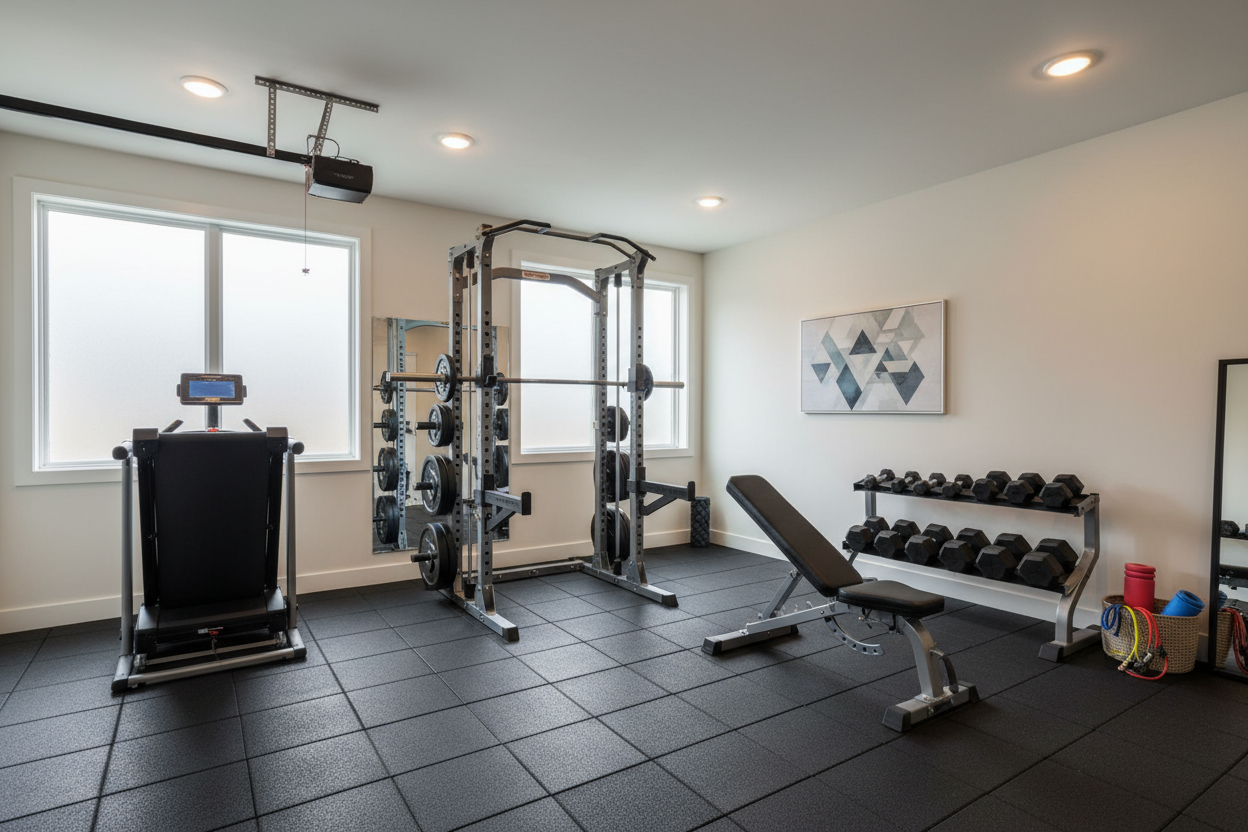
I remember measuring my first spare bedroom for a rack. I had exactly 48 inches of width between the wall and my dresser, and the spec sheet said the rack was 46 inches. Perfect, right? Wrong. I forgot that a standard Olympic barbell is 84 inches long. The second I tried to load a 45-lb plate, I smashed a hole in the drywall. If you are looking for a compact home gym, you have to stop looking at the storage dimensions and start looking at the reality of moving weight.
Quick Takeaways
- The 'storage footprint' is a marketing lie; you need at least 2 feet of clearance on all sides to load plates.
- Avoid ultra-light folding racks; if it weighs less than you do, it will wobble during a heavy re-rack.
- Vertical storage is your best friend for dumbbells and plates.
- Selectorized machines save space but cost more; modular racks are more versatile if you have the height.
The 'Working Footprint' vs. The 'Storage Footprint'
When you are shopping for a home gym, the dimensions on the product page usually tell you how much floor the machine touches. They don't tell you how much room you need to actually use it. This is the 'working footprint' trap. For a rack, you need an 8-foot wide path just to slide plates onto the sleeves without cursing at the walls.
The best small space home gym isn't necessarily the one with the smallest base. It is the one that allows for natural biomechanics. If you have to shorten your stride on a lung or shimmy sideways to get under the bar because the rack is tucked into a corner, you are going to get hurt. Always add at least 24 inches to the width and depth of any machine's listed specs to find the real space you need.
Stop Buying Flimsy Fold-Away Junk
I have tested dozens of 'fold-flat' racks that claim to disappear against the wall. Most of them are garbage. They use thin 14-gauge steel and cheap pins that rattle the moment you rack more than 135 pounds. When compact gym for home setups snap under heavy weight, it is usually because the hinges or the locking mechanisms were prioritized over structural integrity.
If you want the best foldable home gym, look for 11-gauge steel and a wall-mount system that hits at least four studs. If it doesn't feel solid when you do pull-ups, don't trust it with a heavy squat. Stability is a safety requirement, not a luxury. I would rather have a fixed half-rack that takes up 6 extra inches than a folding rack that makes me feel like I am lifting on a cruise ship during a storm.
The Core Components of a Heavy-Duty Small Space Setup
Building the best small home gyms requires a 'Swiss Army Knife' approach. You want gear that does three things at once. A wall-mounted half rack with a built-in pull-up bar is the gold standard. It keeps the center of the room open while providing a rock-solid station for the big three lifts.
If you are truly cramped, a Smith machine home gym station can be a lifesaver. Because the bar moves on a fixed vertical path, you don't need the extra 'buffer zone' required for a free-weight barbell. It is an all-in-one home gym for small spaces that combines a rack, a cable system, and a pull-up station into a single 4x5 foot area.
How to Handle Heavy Leg Days in a Tight Corner
Leg day is usually where space-saving setups fail. You can only do so many goblet squats before you need real load. Most people think they need a massive commercial leg press, but that is a floor-space killer. I have found that a compact 30 degree leg press hack squat combo machine is the only way to get true heavy volume in a closet-sized gym.
By using a 30-degree angle instead of the standard 45, the machine's length is cut down significantly without sacrificing the depth of the movement. It is the best space-saving home gym solution for people who refuse to skip legs just because they live in a condo. Pair this with a set of adjustable dumbbells, and you have a pro-level leg circuit in under 30 square feet.
My Exact Blueprint for a 50-Square-Foot Setup
I recently built a home gym small enough for a bedroom, and the secret was the 'L-Layout.' I put the rack in the corner and used the adjacent wall for vertical plate storage and a wall-mounted cable pulley. This left the entire center of the 7x7 foot space open for bench work and deadlifts.
Finding the best space saving home gym is about smart geometry. Use your walls for everything—hang your jump ropes, your belts, and even your folding bench. If it is on the floor, it is in your way. My setup proves that you don't need a three-car garage to pull 500 pounds; you just need to stop buying gear that doesn't earn its keep.
Personal Experience: The 2-AM Tip-Over
Early in my lifting career, I bought a cheap, 'ultra-compact' independent squat stand set. I was trying to save money and space in a studio apartment. During a late-night session, I re-racked 225 pounds slightly unevenly. One stand tipped, the bar slid, and I nearly took out my kitchen table. I learned the hard way: if the equipment doesn't have a connected base or a wall mount, it isn't a gym—it's a hazard. I sold those stands the next day and bought a real rack.
FAQ
What is the minimum height needed for a home gym?
Most standard power racks are 82 to 90 inches tall. If you have low ceilings (under 7 feet), look for 'shorty' racks that sit around 72 inches, but remember you won't be able to do standard overhead presses inside them.
Are adjustable dumbbells better than a full rack for small spaces?
Yes, for space saving. One pair of high-quality adjustables replaces 15+ pairs of traditional dumbbells. It's the single best compact weight machine alternative for accessory work.
Can I put a home gym on a second floor?
You can, but you need to worry about 'point loading.' A rack, plates, and a lifter can easily exceed 800 pounds in a 4x4 area. Use thick horse stall mats to distribute the weight and dampen the vibration so you don't annoy the neighbors.
Share:
How to Buy the Best Equipment for Home Exercise Only Once
Why Finding the Best Home Gym for Tall Person Is a Total Nightmare