
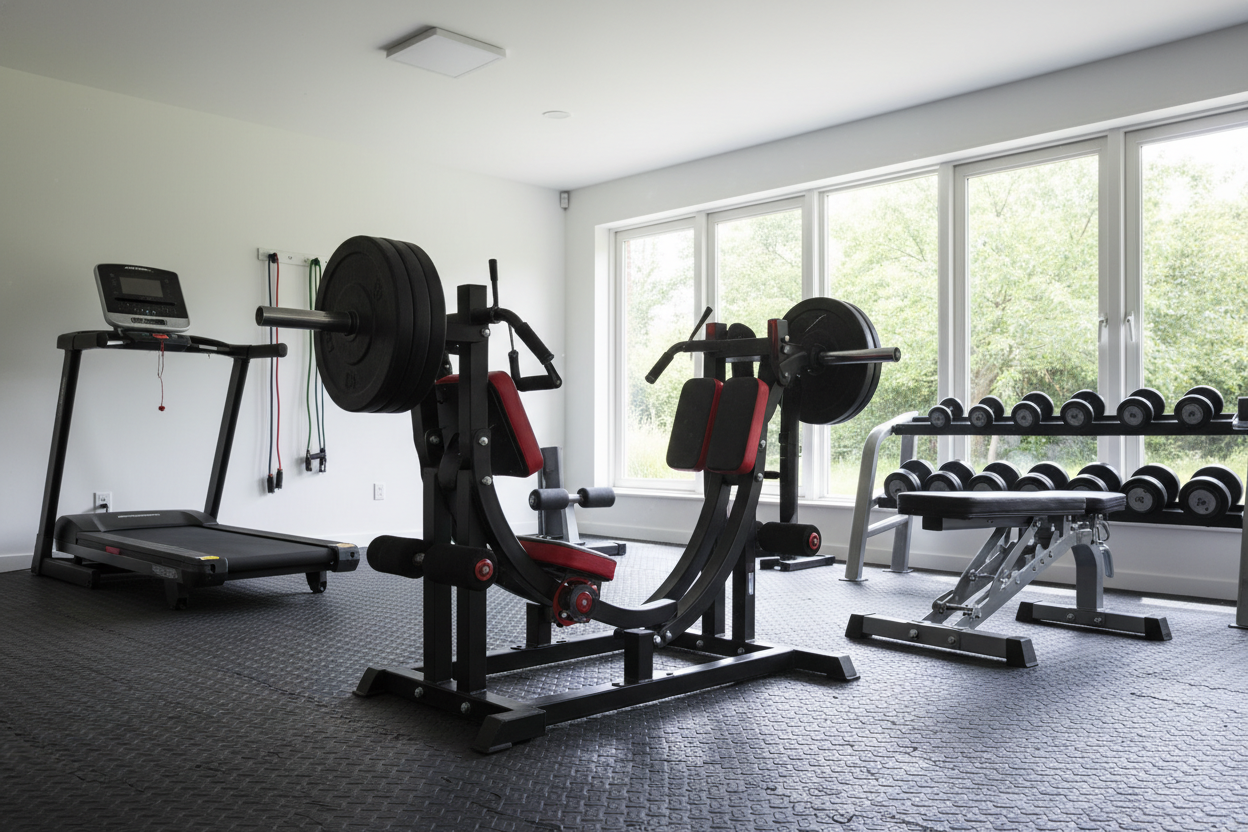
My left knee sounds like a bowl of Rice Krispies every time I hit parallel. It's been like this since a heavy set of triples went sideways three years ago. I tried to push through, but eventually, the pain wins. That’s when I started looking at the resistance squat machine as a way to stay in the game without the ibuprofen chaser.
I’ve spent a decade chasing heavy numbers, and the idea of using something that looks like it belongs in a late-night infomercial felt like a betrayal. But when you can’t walk down stairs without wincing, your ego starts to take a backseat to actual functionality. I needed a way to load my quads without crushing my joints under a barbell.
- Zero spinal loading makes it a dream for lower back issues.
- The resistance curve is hardest at the top, protecting your knees at the bottom.
- It is a light, foldable unit that won't eat up your entire garage floor.
- Best used for high-rep finishers rather than max-effort strength work.
Why My Cranky Knees Forced Me Outside the Power Rack
I’m a stubborn lifter. I spent years believing that if you weren't under a barbell, you weren't really training legs. But after three knee surgeries and a lower back that flares up if I sneeze too hard, I had to get honest. The traditional back squat was no longer my friend. I tried every variation—front squats, box squats, even a hack squat on a Smith machine—but the sheer compression was still too much.
I needed a safe squat machine. Something that could give me the stimulus I wanted without the risk of getting pinned or shearing my patellar tendons. I didn't want to stop training; I just wanted to stop hurting. That's when I decided to see if these band-loaded devices were actually worth the floor space or if they were just expensive paperweights.
Wait, What Exactly Is a Resistance Squat Machine?
Think of this as a bodyweight squat machine on steroids. Instead of loading up iron plates that fight gravity in a straight line, these machines use heavy-duty elastic bands or leverage arms with springs. The resistance is dynamic. When you’re at the bottom of the squat—where your knees are most vulnerable—the tension is at its lowest. As you drive up, the tension ramps up.
Most of these units consist of a small platform, a handlebar system, and a series of resistance bands. You aren't balancing a bar on your traps. Instead, you're often pulling against the base, which creates a squat pull machine effect. It’s compact, usually weighing under 30 pounds, and tucks away into a corner. It’s a far cry from a 400-pound leg press, but the mechanics are surprisingly sound for targeted quad work.
Ignoring the Terrible Marketing
If you’ve seen the ads, you’ve probably seen this marketed as a squat machine for women or a 'glute sculptor' for people who don't want to sweat. Ignore that garbage. The fitness industry loves to gender equipment to sell more units, but a muscle doesn't know who a machine is 'for.' It only knows tension. When you strip away the silly branding, you’re left with a legitimate biomechanical tool that provides continuous tension through the entire range of motion.
Can You Actually Grow Quads on a Physical Therapy Tool?
I'll be honest: my first workout on this squat device felt easy. Then I hit rep fifteen. By rep thirty, my quads were screaming in a way that heavy triples never managed. Because there’s no 'rest' at the top—the bands are always pulling—your muscles never get a break. This is the secret to why a physical therapy squat machine can actually build size. It’s all about metabolic stress.
I started using it as a finisher. After my main movements, I’d hop on and do three sets of 'as many reps as possible.' The pump was ridiculous. It’s not going to turn you into a pro bodybuilder overnight, but for maintaining muscle mass while rehabbing an injury, it’s remarkably effective. It keeps the blood in the muscle without grinding the cartilage in your joints to dust.
When You Eventually Outgrow the Bands
The downside to any band-based system is the ceiling. Eventually, you’re going to max out the heaviest bands provided. You can double them up, sure, but there comes a point where the stability of a lightweight machine becomes the limiting factor. If you're a 250-pound powerlifter, you’re going to find the limits of a resistance squat machine pretty quickly.
When your knees feel solid again and you're ready for more than just high-rep burns, you’ll want to graduate. For some, that means moving to a multipower machine to get that guided, heavy feel. For others who want to stay away from the rack but need serious weight, a compact leg press combo is the logical next step. These allow you to load up real plates without the stability demands of a free-standing barbell.
The Final Verdict: Should You Give It Garage Space?
If you have healthy knees and a 500-pound squat, you probably don't need this. But if you’re a home gym owner dealing with nagging injuries, or if you’re just starting out and find the barbell intimidating, it’s a solid investment. It’s a specialized tool for a specific job: high-tension, low-impact leg training. It won't replace your rack, but it might just save your training longevity.
FAQ
Does it actually help with knee pain?
Yes, because it reduces the load at the bottom of the squat. You get the most resistance when your legs are nearly straight, which is the strongest and safest position for the joint.
How much space does it take up?
Most of these have a footprint of about 3x2 feet. Many models fold flat, so you can slide them under a bed or lean them against a wall when you aren't using them.
Can men use this effectively?
Absolutely. Your quads don't care about the color of the machine. If you use enough resistance and push the reps, you'll get a massive stimulus regardless of your gender.
Share:
Is a USA Pro Weight Set Tough Enough for a Real Garage Gym?
How to Spot Bulletproof Used Gym Gear by the Life Fitness Logo