
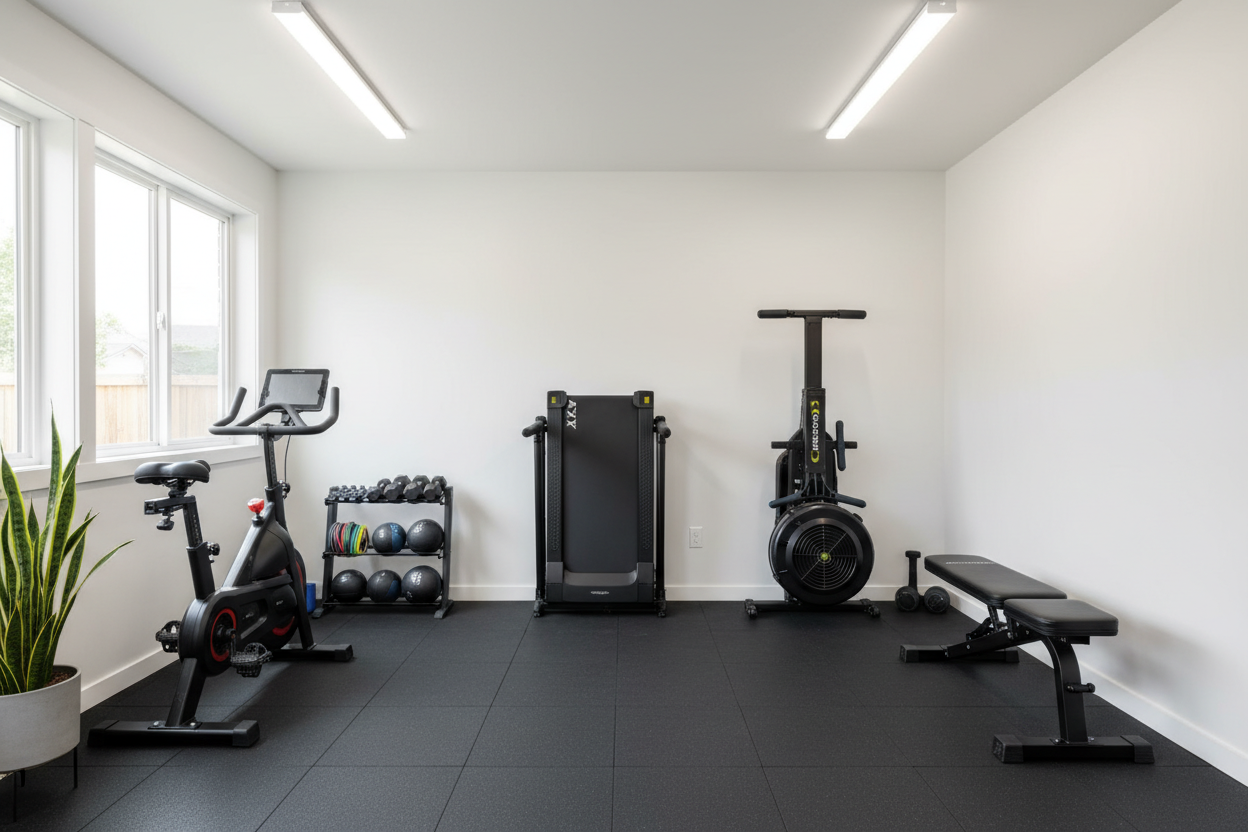
I spent three years living on the second floor of a wood-frame walk-up with floors so thin I could hear my neighbor’s phone vibrate on his nightstand. Every time I thought about doing a burpee, I felt like a criminal. Finding quiet exercise equipment for apartment living isn't just about saving your security deposit; it's about not being 'that guy' in the building who ruins everyone's Sunday morning with a thumping treadmill.
Quick Takeaways
- Magnetic resistance is the only cardio option that won't trigger a noise complaint.
- Rubber-coated weights are mandatory; iron plates are too loud for shared walls.
- Placement matters: always put your heaviest gear against load-bearing walls.
- Skip the air bikes—they are literal jet engines in a small room.
The Reality of Working Out Above Someone Else
Let's be real: shared-wall living and heavy lifting are natural enemies. If you're planning on running a 5/3/1 program with 400-pound deadlifts in a third-floor studio, you're going to get evicted. The vibration from a dropped barbell travels through floor joists like a lightning bolt. It’s not just the sound; it’s the structural shock.
Standard motorized treadmills are just as bad. Even if the motor is 'whisper-quiet,' your feet hitting the deck creates a rhythmic thud that can drive a downstairs neighbor to madness. When you're restricted by space and noise, your training philosophy has to shift. You need to move away from explosive, high-impact movements and toward controlled tension and high-intensity steady-state work.
Why 'Low Impact' Doesn't Always Mean Quiet
Marketing teams love the phrase 'low impact.' Usually, they mean it’s easy on your knees. That doesn't mean it’s easy on your neighbor's ears. Take the classic air bike. It’s a phenomenal workout, but the fan blades create a massive amount of wind noise and vibration. If you’re looking for apartment friendly cardio equipment, you have to ignore the joint-impact ratings and look at the drive system.
Magnetic resistance is the gold standard for stealth. Because the magnets never actually touch the flywheel, there is zero friction noise. No chains rattling, no air whooshing. You want a machine that allows you to crush a HIIT session while someone is sleeping in the next room. If the product description doesn't explicitly mention 'magnetic,' assume it's going to be too loud for a 6 a.m. session.
The Holy Grail of Silent Conditioning
If you have limited square footage, you need a machine that does two things: stays silent and disappears when you're done. A foldable upright exercise bike hits the sweet spot. These machines use a heavy magnetic flywheel that provides enough resistance to soak your shirt in sweat without making more noise than a desk fan.
I’ve tested plenty of 'compact' bikes that felt like toys, but a solid magnetic drive feels smooth and consistent. The folding mechanism is the kicker. Most of these have a footprint of about 18 by 18 inches when tucked away. You can literally pull it out of a closet, finish a 30-minute ride, and hide the evidence before your coffee is even cold.
Lifting Heavy Without the Clanking
You don't need a 7-foot Olympic bar to get strong. In an apartment, iron plates are a liability. One slipped grip and you're paying for a floor repair. Switch to rubber-coated adjustable dumbbells or sandbags. They deaden the sound and are much more forgiving on laminate flooring.
If you absolutely need the feel of a heavy leg day, look for machines that use guided rods. A compact leg press hack squat combo is a massive upgrade over a barbell rack for apartment dwellers. Because the weight is on a controlled track, you don't have the 'clank' of a bar hitting safety pins or the floor. It’s a way to move serious weight with a much lower acoustic profile.
Clever Ways to Deaden the Sound of Your Setup
Even the quietest machine can benefit from some acoustic help. Don't rely on those cheap foam puzzle mats from the grocery store; they compress to nothing under real weight. Buy 3/4-inch thick horse stall mats. They are dense, heavy, and do a better job of absorbing vibration than anything else on the market.
Position your equipment in a corner, preferably against an exterior wall or a wall that shares a hallway rather than a bedroom. If you're worried about your home looking like a commercial gym, there are plenty of ways to hide heavy-duty compact exercise equipment using screens or strategic furniture placement. A gym that you don't have to look at 24/7 is a gym you'll actually enjoy using.
My Personal Experience
I once bought a water-resistance rower because I liked the 'soothing' sound. Three days later, my downstairs neighbor told me it sounded like a washing machine was about to explode through her ceiling. I realized then that what sounds 'natural' to me sounds like a mechanical failure to someone else. I swapped it for a magnetic bike and never heard a peep from her again. The lesson? If you can hear the machine, your neighbor can definitely feel it.
FAQ
Is a yoga mat enough to muffle noise?
No. A yoga mat is for grip and comfort, not sound dampening. You need high-density rubber mats at least 1/2-inch thick to actually stop vibrations from traveling through the floor.
What is the quietest cardio machine?
A high-quality magnetic resistance exercise bike. Since there is no impact and no friction, the only noise is your own breathing.
Can I use kettlebells in an apartment?
Yes, but stick to grinds (presses, squats) rather than explosive movements like snatches if you aren't 100% confident in your grip. Always use a rubber-coated bell to save your floors.
Share:
My Go-To Marcy Smith Machine Exercises for a True Full Body Split
Why You Lift Way More on Machine Weights (And It Isn't Cheating)