
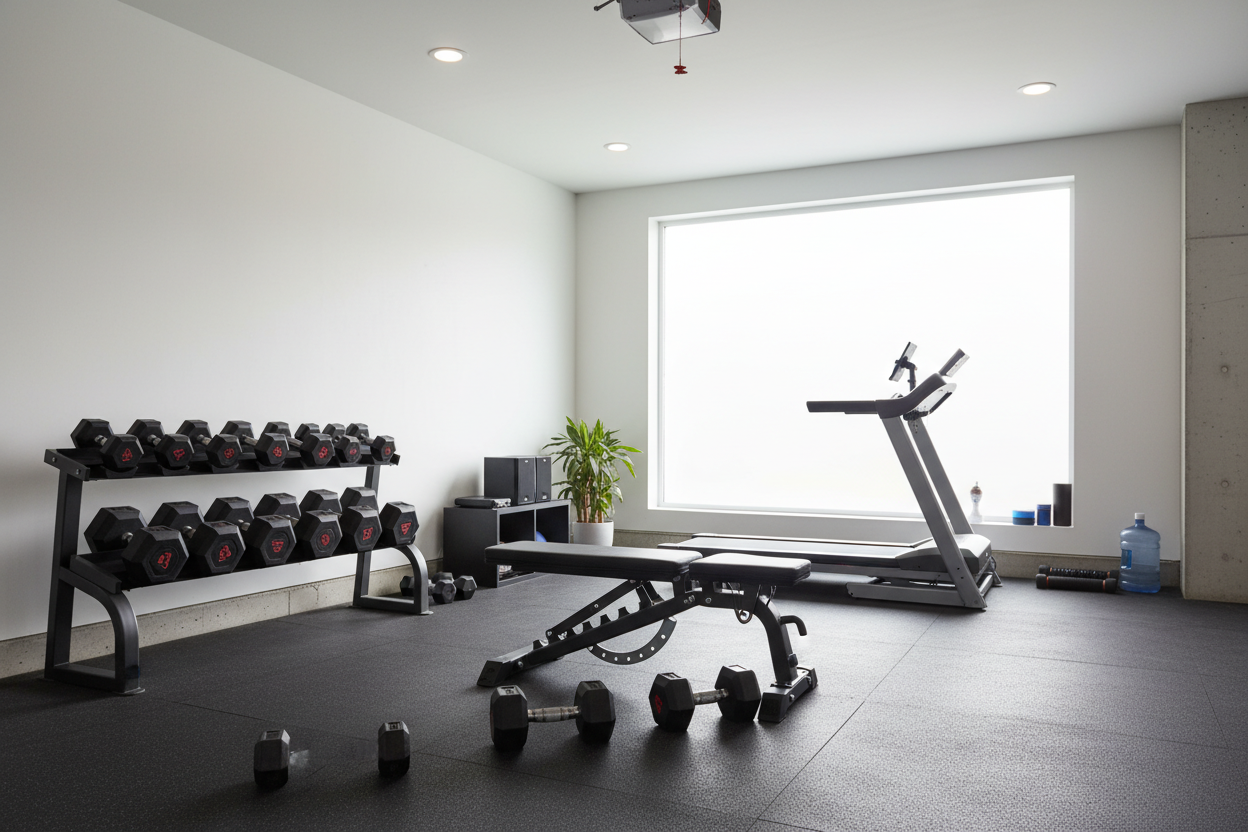
I was halfway through a grocery run, looking for coffee pods and paper towels, when I found myself in Aisle 14. There they were: rows of bright, neoprene-coated weights. If you have ever thought about starting a home gym, a target dumbbell set is usually the first thing that catches your eye. They are cheap, they are right there next to the vitamins, and they do not require a freight delivery. But as someone who has snapped cheap bars and seen rubber coatings peel like a bad sunburn, I had to know if these were actually worth the trunk space.
The Aisle 14 Temptation: Why I Bought Big-Box Weights
The allure of the big-box weight set is simple: convenience. Most people walk into a retail store for a toaster and walk out with a pair of 10-pounders. I get it. When you are just starting out, the barrier to entry for high-end gear feels massive. You look at a professional rack of iron and your wallet starts sweating. You might realize you only need three pairs of weights to get a decent workout in, so why bother with the shipping costs of a specialty fitness brand?
I picked up a set of 15-pounders and a light pair for my wife. The price point is hard to argue with. For the cost of a few pizzas, you have a permanent addition to your garage. Or so I thought. I threw them in the cart, right next to the kale, and headed home to see if these retail 'toys' could actually handle a high-intensity circuit in a humid garage environment. I did not expect them to outperform my pro-grade gear, but I wanted to see if they would fail immediately.
What Actually Happens When You Lift With a Target Dumbbell Set
First impressions: the handles are thick. Like, unusually thick. Most professional dumbbells have a handle diameter around 28mm to 32mm. The dumbbell sets target stocks often use a uniform cast that makes the grip feel like you are holding a fat bar. If you are doing heavy goblet squats, it is fine. If you are doing high-rep lateral raises, your forearms are going to give out long before your shoulders do. This is a classic design flaw in weights made for the masses rather than for lifters.
The ergonomics are just... off. The balance feels top-heavy because the heads of the dumbbells are often larger than they need to be to accommodate the thick neoprene skin. When I started a set of overhead presses, I noticed the weight shifted weirdly in my palm. It is a stark reminder that heavily discounted weight sets are usually a trap when it comes to long-term progress. You want gear that disappears in your hand so you can focus on the muscle, not gear that you have to fight against just to keep a stable grip.
The Neoprene Problem: Sweat and Slippage
Let's talk about that coating. Neoprene feels great in an air-conditioned showroom. It is soft, it is colorful, and it does not feel cold to the touch. But ten minutes into a garage session in July? It is a nightmare. Once your palms start sweating, the neoprene turns into a slip-and-slide. Unlike traditional knurled steel which bites into your skin to provide grip, this stuff just gets greasy. I had to stop my set of rows twice just to wipe my hands on a towel. If you are planning on doing any explosive movements like snatches or cleans, you are basically playing a dangerous game of 'where will the weight fly?'
The Drop Test: Will They Shatter on Concrete?
I am a realist. In a garage gym, you are going to drop things. Maybe not on purpose, but at the end of a set of Bulgarian split squats, those weights are hitting the floor. I took the 15lb bells out to the concrete driveway for a stress test. I dropped them from knee height first. They bounced—which is a bit terrifying—and stayed intact. Then I went for the waist-high drop. The 'thud' was hollow and unsatisfying. While the neoprene didn't split immediately, I could feel the internal cast iron core vibrating.
Compare this to a Rubber Hex Dumbbell Set Ds01 which is built with a solid steel handle pinned into the heads and encased in heavy-duty rubber. When you drop a real hex bell, it deadens the impact. The retail set, however, feels like it is one bad drop away from the internal iron snapping. Cheap cast iron is often porous and brittle. If you drop these on their edge, there is a high chance the head will eventually shear off the handle. For a light apartment workout on a yoga mat, they will survive. On a raw garage floor? They are on borrowed time.
The Final Verdict on Dumbbell Sets Target Sells
So, should you buy them? If you are in physical therapy and need to do very specific, low-impact movements, or if you just want something to hold while you do some lunges in the living room, sure. They are accessible. But if you have any intention of actually building strength, these are a temporary fix. The weight limit on these retail sets usually tops out at 20 or 25 pounds, which most people will outgrow in about a month of consistent training. You end up with a collection of colorful paperweights that you can't even sell for half of what you paid for them.
When You Need to Graduate to Serious Iron
There comes a point in every lifter's life where the 'beginner' gear starts holding you back. For me, it was the moment I realized I was avoiding certain exercises because I didn't trust the grip on the neoprene. When you start moving toward compound movements and heavier loads, you need equipment that is built to a higher standard. It is time to explore dedicated home gym dumbbells that offer proper knurling and durable rubber heads. Your garage gym should be a place of progress, not a graveyard for cheap plastic. Invest in iron that will last longer than your car.
FAQ
Do neoprene dumbbells smell?
Initially, they have a slight chemical 'new car' smell, but it fades. Unlike cheap recycled rubber, they won't make your whole garage smell like a tire fire.
Can I use chalk with these?
You can, but it is a mess. Chalk doesn't stick to neoprene the way it sticks to steel knurling. It just creates a pasty gunk that makes the grip even worse.
Are the weights accurate?
In my testing, they were within about 0.5 lbs of the stated weight. For 15lb bells, that is acceptable, but don't expect calibrated precision from a big-box store.
Share:
Ignore the Influencers: 5 Real-World Tips for Home Gym Setups
Are Dedicated Upper Body Workout Machines for Home Worth the Space?