
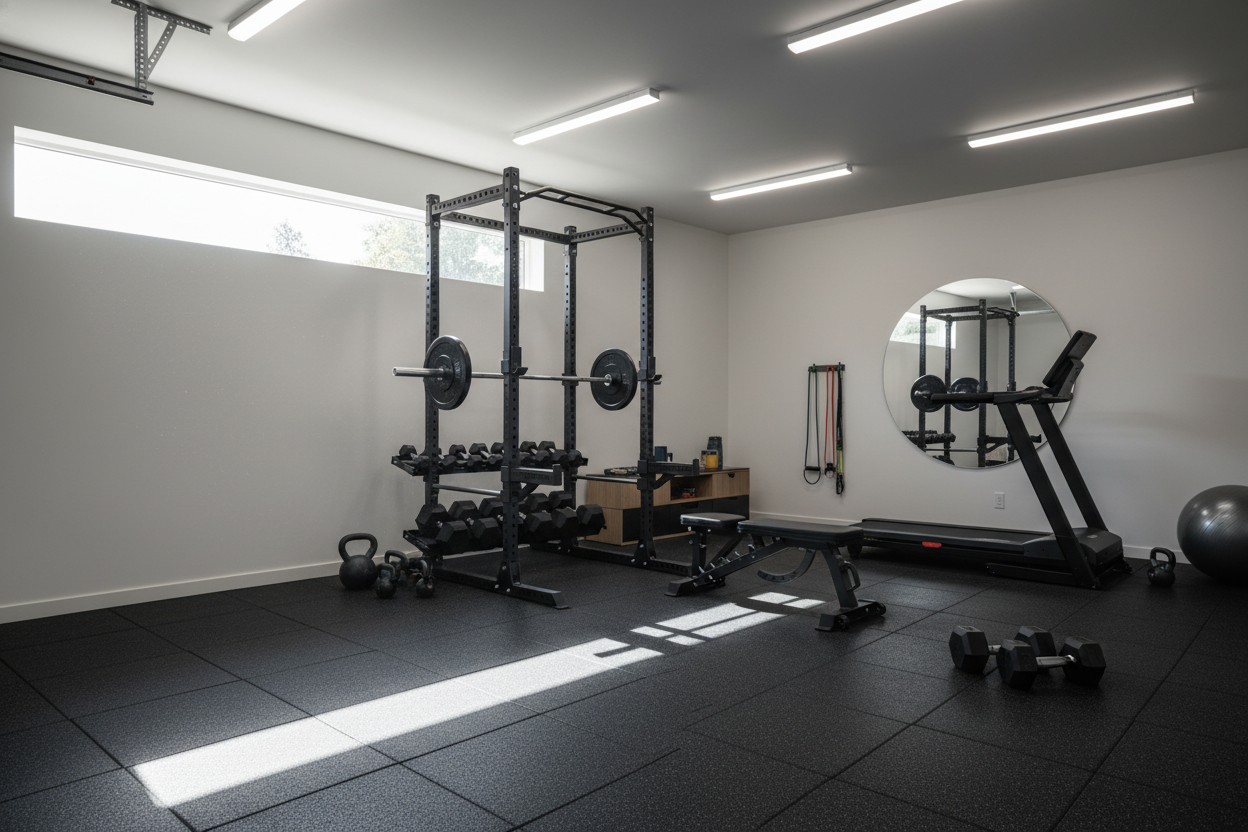
I remember the day my local commercial gym hiked its monthly fee to eighty bucks while half the cable machines were still held together by duct tape and hope. I spent that night scrolling through online marketplaces, convinced I could build a palace in my garage for the cost of a few months' membership. I was wrong. If you want tips for home gym success, you need to stop listening to influencers who get free gear sent to them in crates and start listening to people who have actually stripped a bolt or two.
- Flooring is non-negotiable; don't lift on bare concrete.
- Buy iron first, gadgets later.
- Measure your ceiling height twice before ordering a rack.
- A 4x8 footprint is the minimum viable space for a serious lifter.
Stop Buying Dumb Accessories Before You Have a Base
Most people start their journey by hoarding a twelve-piece resistance band set, a plastic ab roller, and those tiny neoprene dumbbells. That stuff ends up in a corner gathering dust within a month. You need a barbell and plates. My best home gym advice is to ignore the 'as seen on TV' junk and invest in a bar that won't bend the first time you load two plates on each side.
Focus on the big compound movements: squat, bench, deadlift, and press. These moves build the most muscle and require the least amount of specialized clutter. You don't need a dedicated tricep kickback machine when you have a heavy bar and a rack. Secure your heavy essentials first, then worry about the 'finishing' tools once you have a 300-lb total you can actually be proud of.
Your Floor Is Your Foundation (Don't Cheap Out)
I’ve seen guys crack their garage slab dropping a 315-lb deadlift on cheap foam puzzle tiles. Those tiles are for yoga and toddlers, not iron. Bare concrete is even worse; it’s unforgiving on your bars and even worse on your joints. If you’re serious about home gym tips, you start with the floor.
You need 3/4-inch thick rubber. I recommend a heavy-duty 4x8 gym mat because it provides enough real estate for a full rack and a deadlift area. It absorbs the shock that would otherwise travel straight into your ankles and knees. Plus, it keeps the noise down so your neighbors don't call the cops every time you finish a heavy set of rows.
The Rack Dilemma: Choosing Your Iron Anchor
The rack is the heart of your training space. If you are training alone in a basement at 5 AM, safety isn't a luxury—it's a requirement. When choosing a power rack or smith machine, you have to be honest about your lifting style. A free-weight power cage offers total freedom, but it requires a learning curve for form.
A guided barbell system, like a Smith machine, can be a literal lifter-saver for solo athletes. It allows you to push to failure without the fear of getting pinned under a heavy bar. I’ve spent years under both, and for most home lifters, the peace of mind that comes with built-in safety catches is worth every penny of the investment.
When an All-in-One Setup Actually Makes Sense
If you are working with a cramped 10x10 spare bedroom or a single-car garage shared with a lawnmower, you can't fit a standalone rack, a functional trainer, and a plate tree. This is where a smith machine home gym station makes total sense. It consolidates your footprint so you aren't constantly tripping over iron while trying to do lunges.
Modern all-in-one units often include pulleys and pull-up bars in the same 4x6 foot area. It’s logistically smarter to have one high-quality, multi-functional piece than five cheap, flimsy ones that make your gym feel like a cluttered closet. You want a space that invites you to train, not one that makes you feel claustrophobic.
My Final Home Gym Advice: Expand Slowly
Don't buy the whole catalog on day one. I once spent two grand on a full set of dumbbells only to realize I mostly used the 35s and 50s for 90% of my accessory work. When building out your home gym, buy the essentials first. Earn your next equipment purchase by hitting your sessions consistently for three months straight.
I once bought a 'budget' adjustable bench that claimed a 500-lb capacity. The first time I tried to incline press 80-lb dumbbells, the adjustment pin sheared and I nearly ended up in the ER. Cheap gear isn't just a waste of money; it's a liability. Buy once, cry once. Start with the basics, master them, and add specialized tools as your strength demands them.
How much space do I really need?
A standard 7-foot barbell is 84 inches wide. You need at least 10 feet of width to load plates without punching a hole in your drywall. For height, 8 feet is the sweet spot for overhead presses.
Is used gear worth it?
Yes, for iron plates. Iron is iron. However, avoid used bars or cable machines unless you can inspect the bearings and cables personally. Rust and frayed wires are dealbreakers.
How do I stop my equipment from rusting?
If you're in a garage, buy a dehumidifier. I lost a high-end barbell to surface rust in six weeks because I lived in a humid climate and didn't wipe it down after sweaty sessions.
Share:
How to Size a Beginner Weight Set So You Actually Use It
Can a Cheap Target Dumbbell Set Survive a Real Garage Gym?