
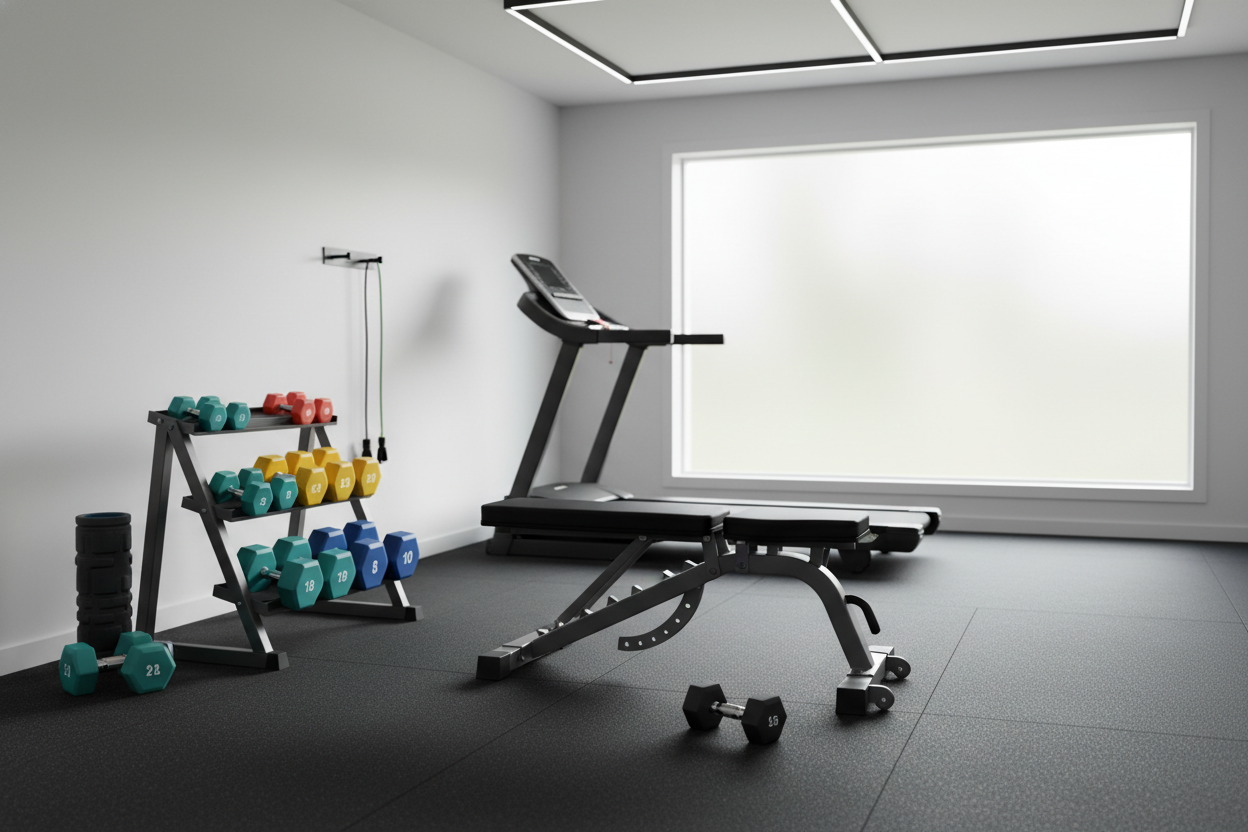
I remember staring at a wall of dumbbells at a big-box store, trying to figure out if I needed the 10s or the 25s. I ended up buying a cheap, plastic-coated beginner weight set that leaked sand on my carpet within a month. Total waste of forty bucks. If you're tired of the $60 monthly membership or waiting for the guy on his phone to finish his 'sets' on the only bench, you're ready for a home setup. But please, don't just buy the first thing you see on a clearance rack.
- Skip the full 5-50lb rack; it costs $1,000+ and takes up 4 feet of wall space you don't have.
- Start with three specific pairs: a light, medium, and heavy set based on your current strength.
- Adjustable dumbbells save space but can feel clunky for fast movements like snatches.
- A solid bench is non-negotiable for chest and back development.
The 'Complete Rack' Illusion
Most people think weightlifting sets for beginners need to look like a commercial gym. They see those beautiful tiered racks and think they'll use every one of those handles. You won't. At least not for a long time. Buying a full run from 5 to 50 lbs is a classic rookie move. You'll use the 15s and 25s every day, while the 5s, 10s, and 35s just collect dust and cat hair.
When looking at weight sets for beginners, focus on the gaps you'll actually fill. You’re better off spending that cash on a few high-quality pairs and a better barbell later. A rack of 10 pairs of weights is mostly an expensive furniture piece for a novice. Keep it lean and mean.
Fixed vs. Adjustable: The Starter Dilemma
This is the big one. If you live in a 700-square-foot apartment, a best beginner dumbbell set usually means adjustables. They're compact—usually about 16 inches long—and can replace 15 pairs of weights. But they have a 'clink' to them, and dropping them is often a death sentence for the internal gears. I've seen more than one dial-system break after a single waist-high drop.
I personally prefer a few pairs of a rubber hex dumbbell set. They don't roll away, the rubber saves your floor from chips, and they feel 'real' in your hand. No clicking, no shifting plates. If you have the floor space for a small A-frame rack, fixed iron is the way to go for the best dumbbells set for beginners.
How to Pick Your First Three Pairs of Weights
If you're building a starter dumbbell set from scratch, follow the Rule of Three. You need a 'Light' pair for lateral raises and curls (maybe 10-15 lbs), a 'Medium' pair for overhead presses (20-30 lbs), and a 'Heavy' pair for goblet squats and rows (35-50 lbs). This covers your entire body without the fluff.
Don't guess. Go to a store, pick up a weight, and see if you can press it over your head 10 times with good form. If the 10th rep is easy, go heavier. If you can't hit 5, it's too heavy for a starter. You want to pick a weight set for home that challenges you but doesn't sit idle because it's too intimidating to lift. This best beginner weight set logic ensures you actually progress.
You're Going to Need a Bench Eventually
You can do a lot on the floor, but floor presses have a limited range of motion. To really hit your chest and shoulders, you need a weight bench. It opens up dozens of movements like incline presses, seated rows, and step-ups that a flat floor just can't accommodate. It is the anchor of any home gym.
I always recommend an adjustable weight bench over a flat one. Being able to hit a 30-degree or 45-degree incline is the difference between an okay workout and a session where you actually feel your muscles working. Look for one with at least a 600-lb capacity. Even if you're light now, once you start lifting 50-lb dumbbells, a cheap bench will start to wobble dangerously.
When Is It Time to Buy Heavier Iron?
You'll know it's time to upgrade your beginner weights set when your 'heavy' pair becomes your 'warm-up' pair. If you're banging out 15+ reps of goblet squats with your 40s and not breaking a sweat, you've outgrown the novice phase. This is a good problem to have.
Instead of buying another full set, just buy the next jump up—usually 10 lbs heavier. Most people find that 5-lb jumps are great for curls, but for legs and back, you can handle 10-lb leaps. Keep your what is a good weight set for beginners philosophy: only buy what you can't currently lift for 12 reps. It keeps the clutter down and the intensity up.
Personal Experience: The Sand-Filled Mistake
When I started, I bought those vinyl-coated weights filled with sand. They were cheap, and I thought I was being smart. Six months later, the vinyl cracked during a set of rows, and I had a literal sandbox in my spare bedroom. I eventually spent more money replacing them with cast iron than if I’d just bought the iron to begin with. Buy once, cry once.
FAQ
Are 5-lb dumbbells worth it for beginners?
Usually, no. Unless you're doing specific physical therapy or very high-rep shoulder prehab, most adults will outgrow 5s in a week. Start with 10s or 15s to see real tension.
Should I get hex or round dumbbells?
Hex. Always hex. They don't roll away when you put them down, and you can use them as handles for push-ups without breaking your wrists or having the weights slide out from under you.
How much space do I need for a beginner weight set?
About 4x6 feet is plenty. That gives you enough room to lay down a mat, stand for presses, and store a small rack or a bench without hitting the drywall.
Share:
Does a Weight Bench With Cables Actually Replace a Functional Trainer?
Ignore the Influencers: 5 Real-World Tips for Home Gym Setups