
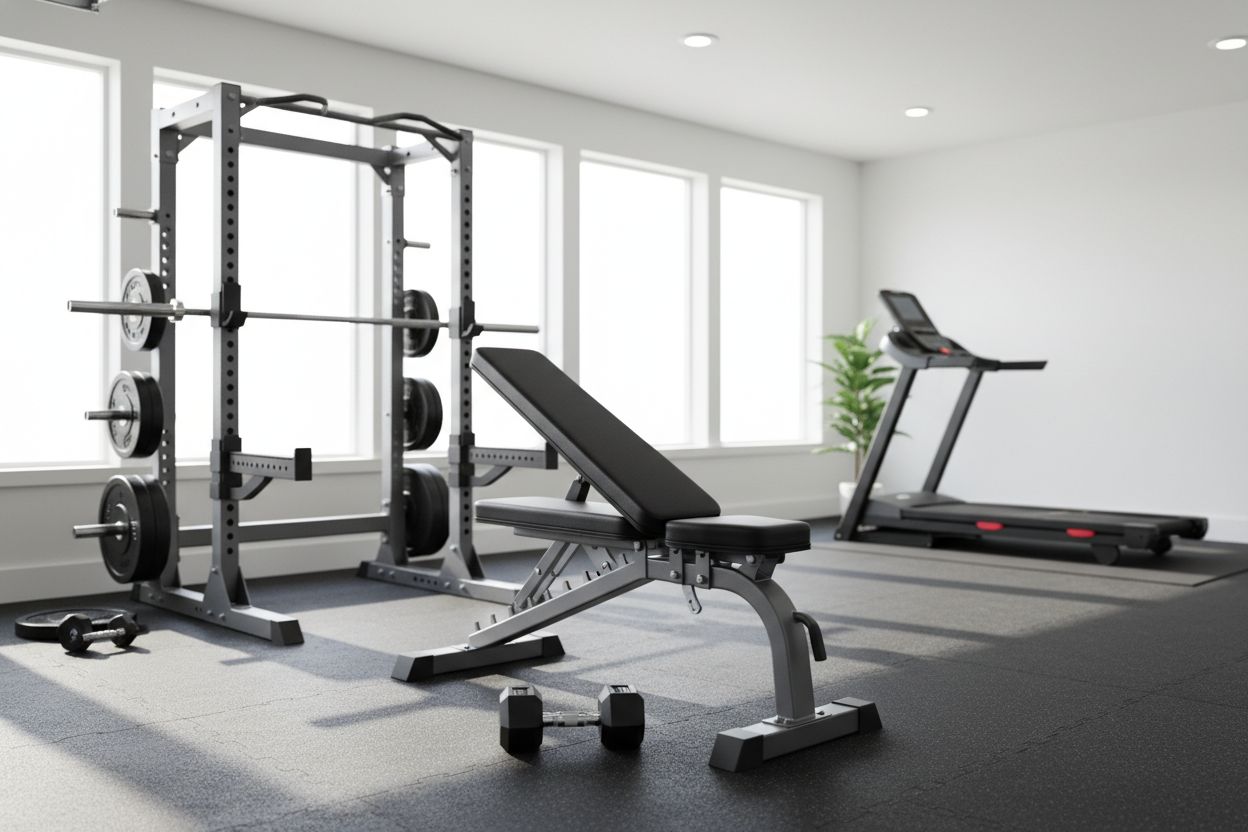
I remember the first time I tried to max out on a $100 'pro' bench I bought from a big-box store. As soon as I hit 225, the frame started creaking like an old wooden ship, and the pad felt like it was made of cheap yoga mats. That is the moment I realized that commercial weight benches aren't just for people with too much money—they are for people who don't want a trip to the ER because their seat collapsed during a PR attempt.
- Commercial benches use 11-gauge steel, while home versions use flimsy 14-gauge.
- Expect a genuine gym bench to weigh between 80 and 150 pounds.
- High-density foam prevents your shoulders from sinking into the wood.
- The footprint is usually much larger, which can be a dealbreaker for small garages.
The Illusion of the 'Commercial Grade' Label
Walk into any big-box fitness store and you will see dozens of products labeled as 'commercial.' Most of it is garbage. Brands love to slap that word on anything with a black powder coat and a slightly thicker pad. But a real commercial exercise bench is built to survive 24/7 abuse from 300-pound guys who drop dumbbells without thinking. If you can pick the bench up with one hand and toss it across the room, it is not commercial grade.
When I first unboxed a legitimate commercial workout bench, the difference was immediate. The welds were thick and clean, not those spot-welds that look like bird droppings. The steel felt cold and heavy. There was no 'play' in the hinges. Most home-grade benches have a noticeable wobble when you sit on them. A real commercial unit feels like it is bolted to the center of the earth, even when it is just sitting on your rubber mats.
The price tag usually reflects this. You are paying for the peace of mind that the steel won't shear under a heavy load. It is the difference between a tool you buy once and a tool you replace every three years because the vinyl is cracking and the frame is bending. If you are serious about your commercial flat bench press sessions, you cannot afford to settle for marketing fluff.
What Actually Makes a Bench Belong in a Real Gym?
A gym bench commercial owners buy isn't just about weight; it is about engineering. These units are designed with a wider tripod or four-point base to ensure zero tipping. They also feature industrial-grade hardware—think 1/2-inch bolts instead of the tiny screws you find on budget gear. When you are looking at a weights bench commercial manufacturers produce, you are looking at something designed for a 1,000-lb weight capacity, even if you only plan on lifting half of that.
Steel Gauge and Immovable Footing
The backbone of any heavy-duty commercial bench press is 11-gauge steel. For those who don't spend their weekends in a metal shop, 11-gauge is roughly 1/8-inch thick. It doesn't sound like much until you compare it to the 14-gauge stuff found on Amazon specials. The 11-gauge frame provides the structural rigidity needed to prevent the bench from twisting under an uneven load.
Then there is the footing. A heavy commercial bench usually weighs over 100 lbs. When you are setting up for a heavy press and driving your heels into the ground, you need that bench to stay put. Cheaper, lighter benches will slide backward on your horse stall mats. A commercial-grade frame stays exactly where you put it, allowing you to focus on the bar path rather than whether your seat is migrating toward the wall.
Pad Density and Shoulder Grip
Let’s talk about the 'mush factor.' Cheap benches use soft, open-cell foam that bottoms out the second you sit down. On a commercial flat weight bench, the foam is high-density and firm. It feels stiff at first, but it provides a stable platform for your scapula to dig into. If your shoulders are sinking into the pad, you lose the stable base needed to transfer power from your legs to the bar.
The vinyl matters just as much. I have used benches that felt like they were covered in slick plastic. As soon as you sweat, you start sliding around like a fish. A real commercial incline bench uses 'grippy' vinyl with a slight texture. This 'tackiness' keeps your upper back locked in place during heavy sets. It is a small detail that makes a massive difference when you are trying to stay tight under a heavy load.
The Hidden Downsides to Putting Commercial Gear in a Garage
Before you go out and buy a 150-lb commercial incline bench press, we need to talk about the reality of garage gym life. Space is your most valuable currency. A full-sized commercial bench has a massive footprint. Unlike home-specific gear, these things aren't always designed to stand up on end or tuck away in a corner. They are designed to sit in one spot for a decade.
I once owned a massive commercial flat bench that took up nearly a quarter of my lifting platform. Every time I wanted to do deadlifts, I had to wrestle this heavy beast out of the way. It was a workout in itself. If you have a small space, a bulky weight bench chest press machine or an oversized commercial frame can make your gym feel cramped and unusable. You have to ask yourself if the extra 5% of stability is worth the 20% loss in floor space.
Maneuverability is the other issue. Most commercial units have wheels, but they are often small and not designed for uneven garage floors. If your floor has a slope for drainage, moving a heavy bench can be a pain. I have seen guys buy these massive tanks and then realize they can't even fit them inside their power rack because the base is too wide. Measure your rack's internal width before you pull the trigger.
Finding the Middle Ground for Home Lifters
You don't necessarily need to spend $1,000 at a club-supply warehouse to get a great lift. There is a sweet spot in the market often called 'prosumer' gear. These are commercial adjustable weight benches designed specifically for people who train at home but lift heavy. They give you the 11-gauge steel and the high-density pads without the massive, unnecessary footprint of a bench meant for a Gold's Gym.
When browsing a sturdy weight bench collection, look for features like a handle for easy moving and a bolt-together design that allows for easier shipping. A good commercial adjustable bench should have a ladder-style adjustment system rather than a pop-pin. Ladder systems are faster to change and generally more secure because they rely on gravity and a solid steel notch rather than a tiny spring-loaded pin that could potentially shear or slip.
The middle ground is where most of us live. You want a bench that can handle 600+ lbs without shaking, but you also want to be able to move it to the side when it is time to do burpees (not that anyone actually wants to do burpees). Look for a bench that weighs between 70 and 90 lbs—that is the 'Goldilocks' zone for most garage gym owners.
My Final Verdict on the Heavy-Duty Upgrade
If you are benching over 300 lbs or you just appreciate gear that feels like it was built for a war zone, buy the commercial bench. The stability and pad quality are worth the extra couple hundred bucks. However, if you are tight on space or just starting out, a high-end 'home' bench will serve you just fine for years. I eventually traded my flat pad for an adjustable utility bench because the versatility of having incline and decline options outweighed the absolute rigidity of a dedicated flat bench.
Stop buying the cheapest thing you can find on the internet. Your bench is the foundation of your upper body training. If that foundation is shaky, your progress will be too. Buy the most steel you can afford, and make sure the pad doesn't feel like a marshmallow.
FAQ
Is 11-gauge steel really necessary for a home gym?
If you are lifting heavy or you want the bench to last forever, yes. 11-gauge steel provides the weight and rigidity that prevents the bench from wobbling. For casual fitness, 14-gauge is fine, but it will never feel as 'locked in' as the heavy stuff.
What is the difference between a flat and an adjustable commercial bench?
A flat bench is usually more stable and cheaper because it has no moving parts. An adjustable bench gives you more exercise variety but usually has a 'pad gap' where the seat and backrest meet, which some lifters find annoying during flat presses.
Why are commercial benches so much heavier?
They use thicker steel and denser padding. The weight is actually a feature—it keeps the bench from sliding around when you are using a heavy leg drive. If it's light, it's likely not real commercial grade.
Share:
I Abused a CAP 50 lb Dumbbell Set for a Month (Here's the Verdict)
I Bench Tested a Cheap Fitness Gear Dumbbell So You Don't Have To