
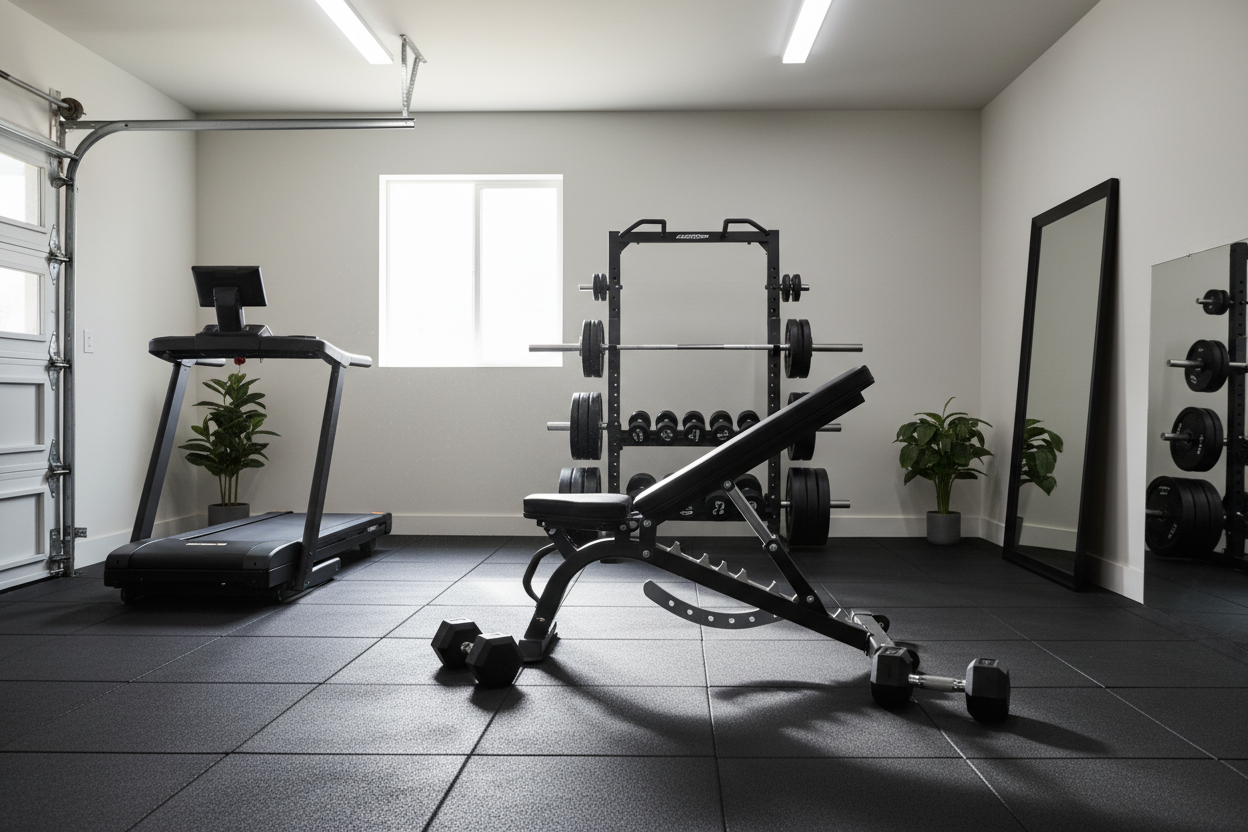
I remember staring at my old flat bench after a chest workout, feeling completely stuck. It was a sturdy block of wood and foam, but it was essentially a one-trick pony. I was scrolling through equipment forums at 2 AM, comparing steel gauges and pad densities, realizing that my 'minimalist' setup was actually just a 'limited' setup. The moment I decided to swap that slab for a heavy-duty adjustable utility weight bench, my training options tripled overnight.
Quick Takeaways
- Versatility is king: Inclines and declines target muscle fibers that a flat bench simply cannot reach.
- Stability beats portability: If the bench wobbles with 50-lb dumbbells, it’s a hazard, not a tool.
- Avoid 'all-in-one' combos: Standalone benches are almost always safer and more durable than those with attached racks.
- Pad gap matters: A massive gap between the seat and backrest can ruin your positioning during heavy flat presses.
The Day I Realized My Flat Bench Was Holding Me Back
For two years, I convinced myself that a flat bench was all I needed. I told myself that 'old school' lifters did everything on flat ground. But then my progress stalled. My upper chest looked like a deflated balloon, and my shoulder health was starting to tank because I couldn't find a comfortable pressing angle. I was locked into a single horizontal plane, and it was killing my motivation.
I tried the 'plate under the bench' trick to create a makeshift incline, which is a great way to end up in an ER waiting room. When you're pushing your limits, you shouldn't be worrying about whether your equipment is going to slide out from under you. I needed a utility weight bench adjustable enough to handle 30-degree, 45-degree, and 85-degree angles without feeling like a folding lawn chair.
The shift wasn't just about the chest press, either. Suddenly, I could do supported rows, seated curls, and seated overhead presses with back support. I stopped fighting the equipment and started fighting the weight. If you've ever felt like your home gym is missing a 'centerpiece' that actually helps you grow, this is the swap you need to make. It’s the single highest-ROI upgrade I’ve ever done for my garage.
What Actually Makes a Utility Bench 'Adjustable'?
Not all adjustment mechanisms are created equal. In my experience, you usually see two types: ladder-catch systems and pop-pin systems. Ladder systems are lightning-fast—you just lift the pad and drop it into a notch. They are great for circuit training where you’re moving fast. However, if the steel isn't thick, those notches can bend or wear down over time.
Pop-pins are the gold standard for security. You pull a spring-loaded pin, slide the tube, and it locks into a hole. It takes three seconds longer, but it’s not going anywhere. Before you even look at the fancy stuff, you need to ensure you're starting with a solid weight bench that uses at least 12-gauge steel. If the frame is flimsy, the adjustment points will eventually become points of failure.
A true utility weight bench adjustable setup should offer more than just three positions. You want something that hits the 'sweet spot' angles—30 degrees for upper pec focus and 85 degrees for shoulder work. Why 85? Because 90 degrees often forces your lower back to arch awkwardly. That slight 5-degree tilt makes a world of difference for your spine. If a bench only offers 'flat, 45, and 90,' keep looking. You're paying for versatility, so make sure you're actually getting it.
The 3 Non-Negotiable Specs for Heavy Lifters
If you're moving heavy iron, you need to look past the shiny paint job. First: Steel gauge. If the manufacturer doesn't list it, it's probably thin 14-gauge junk. You want 11 or 12-gauge steel. This is what prevents the 'lateral wobble.' I’ve been on benches that felt like they were swaying in a breeze when I had 90-lb dumbbells over my face. It’s terrifying and it kills your force production. Your brain won't let your muscles fire at 100% if it feels like the ground is moving.
Second: The pad gap. This is the space between the seat and the backrest when the bench is flat. Some cheap benches have a 3-inch gap that feels like a canyon. If your lower back or tailbone falls into that gap during a heavy press, you're looking at a potential injury. I look for benches with a gap of 2 inches or less, or those with a sliding seat mechanism that closes the gap as you adjust the angle.
Third: Footprint and tripod design. A lot of guys think a wider base is always better, but if the front feet are too wide, they’ll get in the way of your feet when you’re trying to set your 'drive' for a bench press. I prefer a tripod-style front foot (a single post) because it stays out of the way. You want the rear base to be wide for stability, but the front should be streamlined. Also, check the height. A bench that is too tall (over 18 inches) will make it hard for shorter lifters to get their feet flat on the floor, which ruins your stability.
Is the Owb01 the Sweet Spot for Garage Gyms?
When you start looking at commercial benches, prices jump into the $600+ range quickly. Most of us don't need a bench rated for 1,500 lbs, but we do need something better than the $80 department store specials. I’ve spent some time with the Adjustable Weight Bench Owb01, and it really hits that middle ground that most home lifters are looking for.
It uses 11-gauge steel, which is the same stuff they use in commercial racks. The foam is high-density, meaning you don't sink straight through to the plywood the second you pick up a weight. One of my biggest pet peeves is 'mushy' padding. If the pad is too soft, your shoulders won't have a stable platform to press against. The Owb01 keeps you on top of the pad, not in it. It also handles the pad gap better than most in this price bracket.
The footprint is also manageable. In a garage gym, every square inch is a premium. The wheels on the back make it easy to tuck into a corner or roll into a power rack. I’ve found that many 'heavy-duty' benches are so heavy you need a forklift to move them, but this one strikes a balance. It’s heavy enough to be stable, but mobile enough that you won't skip your workout because you don't feel like wrestling with your equipment.
Warning: Don't Buy Those Flimsy All-in-One Combos
I see these all the time on Amazon: a bench that has a leg extension attachment, a preacher curl pad, and built-in uprights for a barbell, all for $149. Stay away. These are the 'Swiss Army Knives' of the fitness world—they do five things, and they do all of them poorly. Usually, the 'uprights' are too narrow for a standard Olympic bar, and the leg extension is designed for someone who is 5'2" max.
More importantly, these combos are notoriously unstable. When you try to combine a rack and a bench into one lightweight unit, you lose the structural integrity of both. I’ve written before about why that $150 adjustable bench with weights is a terrible idea, and it usually comes down to safety. If you’re serious about lifting, buy a standalone bench and a separate squat rack. It might cost more upfront, but it’s a setup that will actually grow with you as you get stronger.
A standalone utility bench is a dedicated tool. It’s built to support your body weight plus whatever you’re holding. When you start adding hinges for leg curls and plastic knobs for preacher pads, you're just adding more points that can snap under load. Keep it simple. Buy a bench that is meant to be a bench.
Final Verdict: Make the Swap
If you’re still rocking a flat pad because you think an adjustable bench is 'too much' for your space, rethink it. An adjustable utility bench takes up the exact same amount of floor space but opens up 70% more exercise variations. You can do incline presses, seated curls, chest-supported rows, and even Bulgarian split squats with much better ergonomics.
The investment in a high-quality frame and dense padding pays off every single time you lie down to lift. You stop worrying about the equipment and start focusing on the muscle. If you’re tired of a boring chest day and want a piece of gear that actually feels like it belongs in a real gym, ditch the flat pad. Your upper pecs (and your peace of mind) will thank you.
FAQ
How much weight capacity do I really need?
Don't just look at the '600-lb capacity' and think you're fine because you only bench 200. That rating includes your body weight. If you weigh 200 lbs and are pressing 200 lbs, you're already at 400 lbs of load. Always aim for a bench rated for at least 800-1,000 lbs to ensure it doesn't flex under moderate loads.
Is a decline setting necessary?
It's not strictly necessary for everyone, but it's great for targeting the lower pecs and doing decline sit-ups. If you have the choice, get a bench that does decline, but don't sacrifice overall stability just to get that one extra angle.
How do I maintain an adjustable bench?
Check the bolts every few months. The vibrations from dropping weights nearby can loosen them over time. Also, wipe down the vinyl after every session—sweat is acidic and will crack even high-quality pads if left to sit.
Share:
I Tested a $200 Muscle Tone Machine So You Don't Have To
I Used to Guess the Names of Machines in the Gym (Until I Built My Own)