
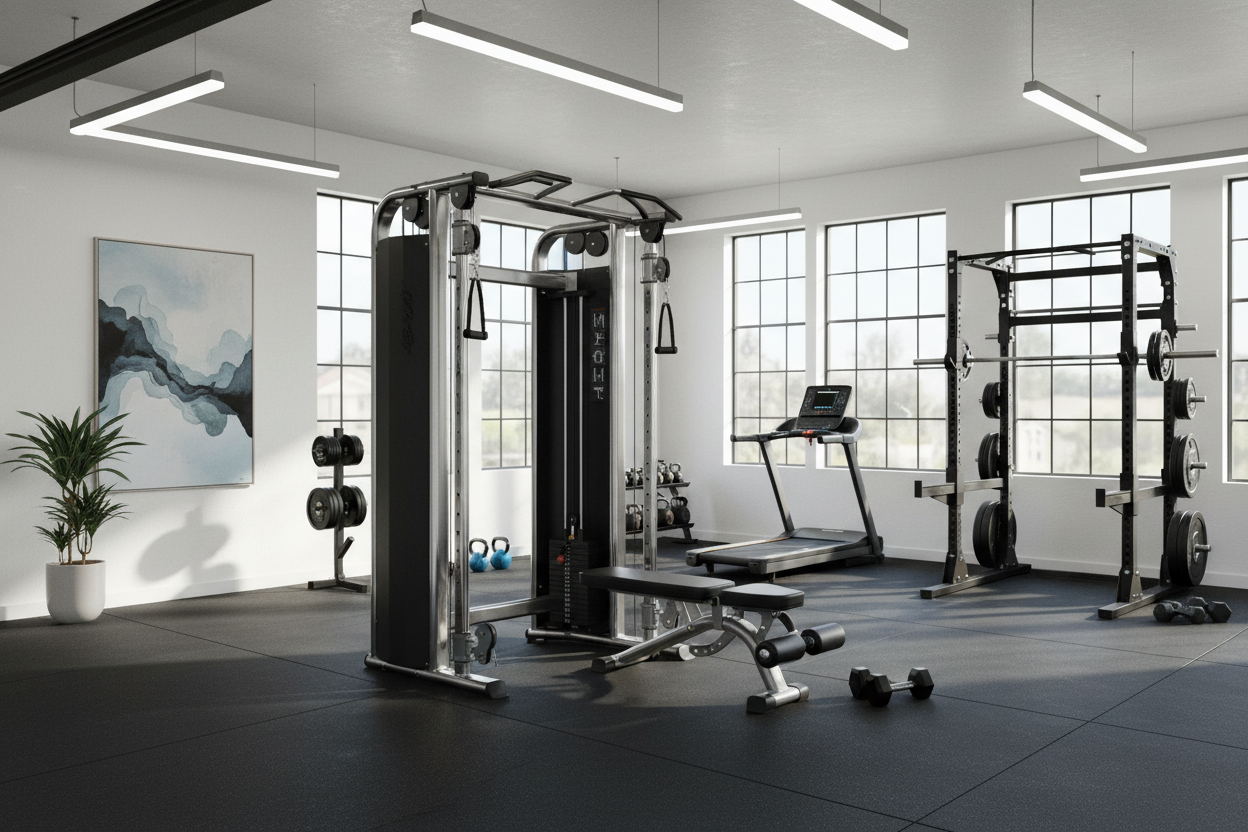
I remember the first time I tried a real hypertrophy program. I spent half my workout time squinting at the faded stickers on the side of cable towers because I didn't know the names of machines in the gym. It’s a special kind of ego-bruising when you’re standing there with your phone in one hand and a 45-lb plate in the other, looking like a lost tourist in a land of iron.
Quick Takeaways
- Commercial gym names often differ from the generic terms used in training apps.
- Isolation machines are usually categorized by the joint they move—look for 'elbow extension' or 'flexion.'
- Cable attachments are accessories, not the machines themselves, but they define the exercise.
- Knowing the proper terminology allows you to find mechanical substitutes when the gym is packed.
The Awkward Reality of 'That One Cable Thing'
I used to walk into those big-box gyms and just look for the machines that looked like they targeted the right muscle. If I wanted bigger arms, I’d find the seat with the arm pads and hope for the best. But when my app told me to do a 'Spider Curl' or a 'Skullcrusher,' I was totally lost. Learning the proper names of machines in the gym isn't just about sounding smart; it's about not wasting 20 minutes of your lunch hour wandering around.
Most people feel like they need a degree in mechanical engineering to navigate a modern gym floor. You see a sea of black upholstery and silver steel, and everything looks like a 'pulling thing.' Once you realize that the names usually follow the function, the map starts to make sense. It stops being a guessing game and starts being a workout.
Translating Those Weird Arm Workout Machines Names
Let's talk about the big ones. That slanted bench where you sit and rest your armpits on a pad? That’s a Preacher Curl Bench. It’s not just a 'bicep thing.' If you’re tired of the confusion, identifying arm exercise machine names starts with recognizing the fixed-path isolation units. These are designed to lock your shoulders out of the movement so your biceps do 100% of the work.
Then you have the Tricep Pushdown Station—usually a high pulley with a rope or a straight bar. You might also see a 'Seated Dip Machine,' which mimics a bodyweight dip but uses a weight stack. These arm workout machines names are standard across brands like Hammer Strength, Life Fitness, and Rogue. If you can spot a 'Cable Column,' you can basically perform every arm exercise machine names variant just by switching the handle.
Why Knowing Gym Equipment Names for Arms Actually Matters
If you don't know the arm machines at the gym names, you can't track your progress accurately. Progressive overload requires consistency. If you use the 'Hammer Strength Bicep Curl' one week and a 'Cable Bicep Curl' the next, you aren't comparing apples to apples. The resistance curves are totally different.
Much like trying to decipher weird leg machine gym names, arm terminology keeps your training data clean. Plus, when the gym is crowded, knowing the names helps you pivot. If the 'Overhead Tricep Extension' machine is taken, you know a 'French Press' with a dumbbell or a high-cable rope extension is the mechanical equivalent. You stop being a slave to the machine and start understanding the movement.
How to Replicate Commercial Arm Machine Names at Home
When I finally ditched the commercial membership to build my own garage setup, I realized I couldn't fit twelve single-use machines. I had to prioritize. Most arm workout equipment names can be consolidated into a high-quality functional trainer or a smith machine home gym station. A Smith machine is a beast for JM presses and close-grip work, replacing three or four of those bulky gym equipment names for arms you see at the local club.
In a home setting, arm machine names matter less than the pulley ratio. A 2:1 ratio on a cable tower is great for arm work because it allows for finer weight increments. You don't need a dedicated machine for every angle if you have a solid cable system, a versatile bench, and a few key attachments like a revolving curl bar or a tricep rope.
Stop Overcomplicating Your Isolation Work
At the end of the day, don't get paralyzed by the gym arm machine names. Whether it's a 'Seated Dip Machine' or a 'Tricep Pressdown,' the goal is elbow extension under load. The biomechanics matter more than the brand name on the shroud. If you're tired of the confusion, the crowds, and the broken equipment, building out a home gym is the ultimate fix. You get to curate exactly what you need and skip the stuff you don't.
Personal Experience: The Space-Sucking Mistake
I once spent $400 on a dedicated bicep curl machine for my garage because I thought I needed that specific fixed-path feel. It was a massive waste of space. It took up a 4x4 foot footprint and I only used it once a week. I eventually sold it and realized my $50 EZ-bar and a set of plates did the exact same thing but took up zero floor space when stored. Always prioritize versatility over single-use machines unless you have a literal warehouse to fill.
FAQ
What is the bicep machine called?
Usually, it's called a Preacher Curl machine or a Seated Bicep Curl machine. If it uses cables, it's just a Low Cable Curl.
What is the rope machine for arms?
That is typically a Cable Column or Functional Trainer. The 'rope' is just an attachment used for tricep pushdowns or face pulls.
Is a Smith machine good for arms?
Yes, it's excellent for tricep-heavy pressing movements like the JM press or close-grip bench press because you don't have to worry about stabilizing the bar.
Share:
I Traded My Flat Pad for an Adjustable Utility Weight Bench (Here's Why)
Why I Actually Kept the Makerri Adjustable Weight Bench