
I spent yesterday morning with a tape measure and a roll of blue painter's tape, trying to figure out how to fit a functional trainer, a power rack, and a dedicated leg press into a standard two-car garage without losing my mind. It is the classic home gym owner's dilemma. You want the heavy-duty isolation of a commercial gym, but you also need to, you know, park a car occasionally. This leads most of us down the rabbit hole of the multi gym leg press.
- Space Efficiency: You save roughly 15-20 square feet compared to buying a standalone sled.
- Resistance Ratios: Most cable-based leg presses feel about 50% lighter than the weight on the stack due to pulley physics.
- Range of Motion: Shorter users usually fare better; taller lifters often hit the 'end' of the cable before reaching full extension.
- The Verdict: Great for hypertrophy and high-volume accessory work, but rarely a replacement for a heavy plate-loaded sled.
The All-in-One Dream vs. The Biomechanical Reality
The marketing photos always make these things look like a miracle of engineering. One footprint, twenty exercises. But when you actually sit in a multi gym leg press, the first thing you notice is the seat. Unlike a dedicated 45-degree leg press where you are locked into a reclined position, many multi-station units have you sitting upright or at a slight angle. This changes the hip hinge entirely.
The biomechanics of multi gyms with leg press attachments are often compromised to make the cables work. Because the same weight stack that runs your lat pulldowns has to power your leg press, the cable routing gets complex. Every 90-degree turn a cable takes adds friction, but it also usually involves a pulley ratio. If you have a 200-lb stack and a 2:1 ratio, you are only pushing 100 lbs. For anyone who has ever loaded six plates on a gym sled, that is a warm-up, not a work set.
Why Most Multi Gyms With Leg Press Top Out Too Early
Let's talk about the weight stack. Most home-grade multi-stations ship with a 150-lb or 210-lb stack. On a chest press, that is plenty. On a leg press, you will max that out within three months of consistent training. Manufacturers do this because shipping 400 lbs of iron is expensive, and most casual users won't notice. But you will. You'll find yourself doing sets of 30 reps just to feel a burn.
There are also hidden flaws in every leg press multi gym that involve the cable tension. If the cable isn't perfectly tuned, there is a 'dead spot' at the start of the movement where there is no resistance. It makes the movement feel jerky and keeps the tension off the quads where you actually want it. If you are a serious lifter, you need a stack that offers at least a 1:1 ratio or a plate-loaded option that doesn't cap your progress.
How to Tell if the Footplate Actually Fits Your Frame
I have used machines where the footplate was the size of a dinner plate. If you can't adjust your stance width or play with high/low foot placement, you are stuck in a fixed track that might not play nice with your knees. A good footplate should be at least 18 inches wide and have a non-slip texture. If it's smooth painted metal, your feet will slide the second you start sweating.
Check the pivot point too. Some multi gyms use a 'swing arm' design rather than a linear slide. As you push, the plate arcs upward. This can be fine for some, but if you have a history of ankle mobility issues, that shifting angle can put a lot of pressure on your Achilles. You want a machine that allows you to keep your heels planted and your spine neutral against the backpad throughout the entire stroke.
Dedicated Combo Machines: A Smarter Alternative?
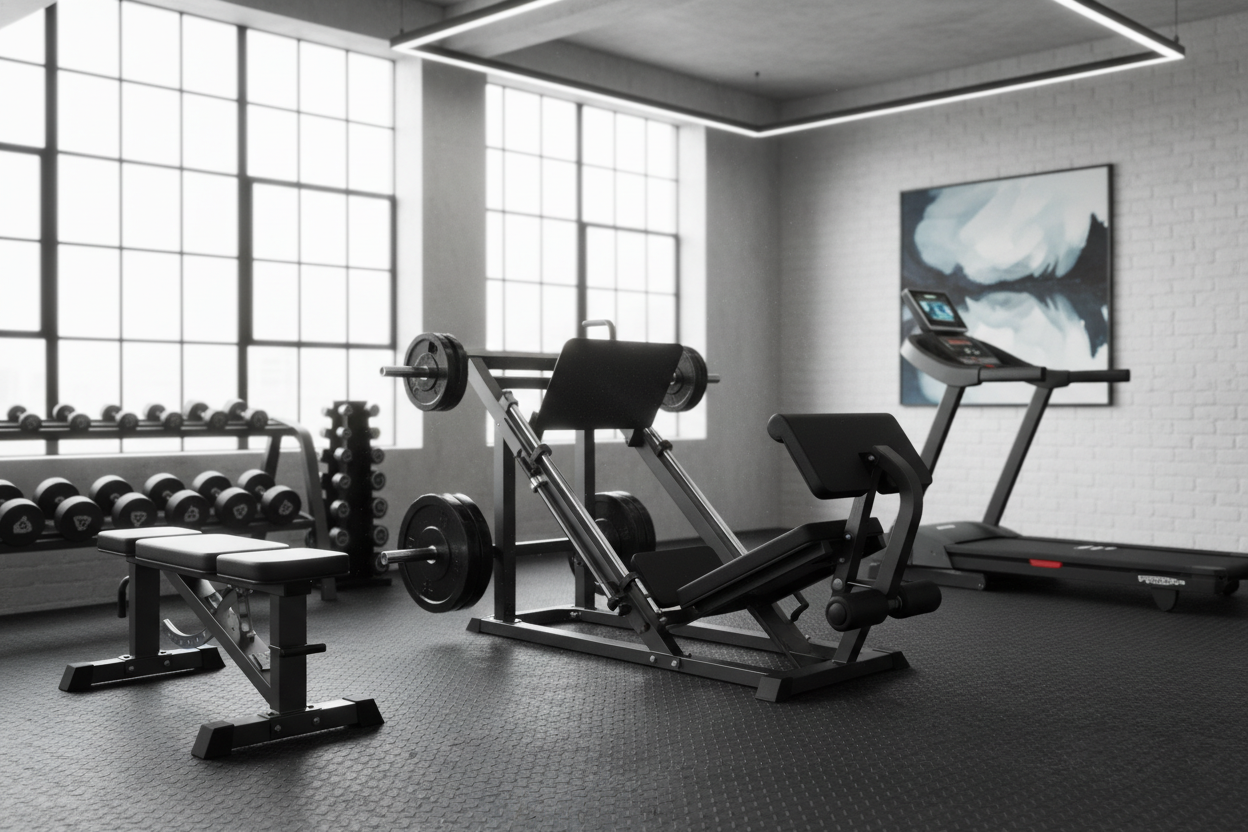
If your goal is strictly leg growth and you have a bit more room, I usually steer people away from the 'total body' stations and toward specialized lower body units. For example, a compact 30-degree leg press combo gives you the heavy-duty feel of a commercial sled without the 8-foot footprint of a standard 45-degree unit. It uses real Olympic plates, so your ceiling for growth is as high as your plate collection.
These combo machines focus on one thing: destroying your legs. They don't try to be a pec deck or a row machine. By sticking to a plate-loaded design, you eliminate the pulley friction and the weight stack cap. You get a raw, direct feel that cable machines just can't replicate. It is the difference between driving a sports car and a minivan that claims it can also tow a boat.
The Final Verdict on Consolidating Your Leg Day
So, should you buy one? If you are a beginner or someone looking for general fitness and 'toning,' a multi-station is a fantastic way to get a lot of variety in a small room. It beats the hell out of not training legs at all. However, if you're the type of person who tracks their PRs and lives for heavy sets, you'll likely outgrow the cable resistance within a year.
If you're still leaning toward the all-in-one route, make sure you pick an all-in-one home gym with leg press that uses high-grade bearings and a heavy stack upgrade option. Your future self—the one with bigger quads—will thank you for not buying the entry-level model with the plastic pulleys.
My Personal Take: The 200-lb Mistake
Years ago, I bought a budget-friendly multi gym thinking I'd finally 'solved' my garage space issue. Within two weeks, I was pinning 10-lb dumbbells to the top of the weight stack because the leg press was too light. The cable eventually snapped because I was overloading it past its rating. I ended up selling it for half what I paid and buying a dedicated rack. Don't underestimate how much weight your legs can actually move when you give them a stable platform.
FAQ
Can I use a multi gym leg press for calf raises?
Yes, usually. Just keep the balls of your feet on the bottom edge of the plate. However, since most multi gyms have a bit of 'play' in the cable, the stretch at the bottom won't feel as deep as a dedicated calf block.
Is a cable leg press safer than a barbell squat?
Safe is relative, but a machine is certainly easier to bail on. If you hit failure, you just let the weight stack down. You don't have to worry about balancing a bar on your back, which makes it great for high-rep burnout sets at the end of a workout.
How much ceiling height do I need?
Most multi gyms are around 82 to 84 inches tall to accommodate the lat pulldown bar. Always check your ceiling height before buying, especially if you have a low basement ceiling or a garage door opener in the way.
Share:
Outgrew Your 50s? The Reality of an 80lb Dumbbell Set Upgrade
Are the Weights on Leg Press Machine Setups Lying to You?