
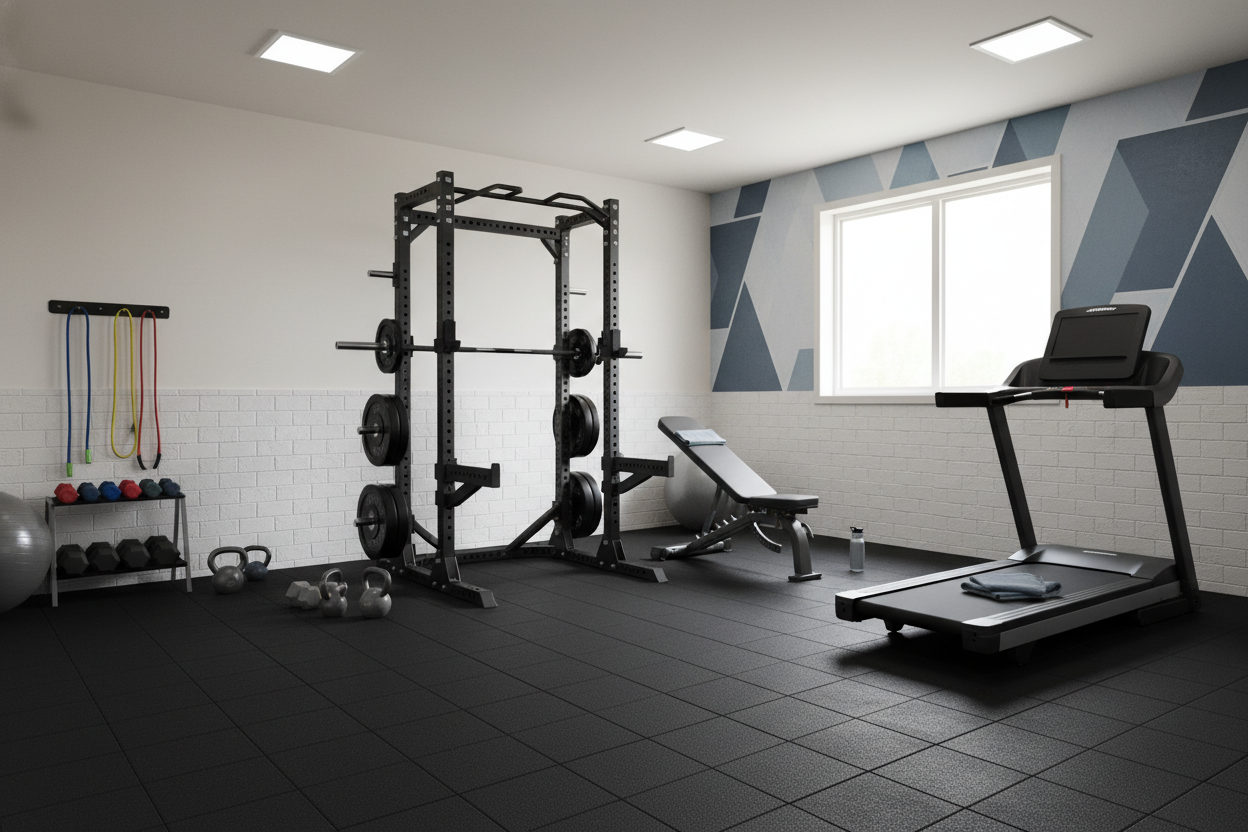
I spent three hours last night scrolling through massive retail sites looking for a lat pulldown station, and I felt my blood pressure rising. Half of the 'expert' advice out there is written by people who have never even touched a barbell, let alone assembled a 200-pound functional trainer in a cramped garage. If you are looking for honest exercise machines reviews, you are usually walking into a trap of affiliate links and manufacturer stock photos.
I have personally spent thousands on gear that looked great in a render but shook like a leaf the moment I tried to do a heavy set of rows. You deserve to know which pieces of equipment are built to survive a decade of abuse and which ones are just expensive clothes racks.
Quick Takeaways
- Stock photos are a massive red flag; if they haven't photographed it in a real gym, they haven't tested it.
- Weight capacity ratings on budget gear are often 'static' loads, which mean nothing when you're actually moving the weight.
- Prioritize steel gauge (11 or 14-gauge) over fancy digital consoles and touchscreens.
- The best equipment solves multiple problems without taking up half your floor space.
The Dirty Secret Behind Fitness Gear 'Top 10' Lists
Most of the 'best of' lists you see on the first page of Google are pure fiction. These sites are run by content farms that look at a spec sheet, rewrite the bullet points, and call it a review. They don't know if the cable travel is smooth or if the pop-pins stick every time you try to adjust the seat height. They are chasing commissions, not performance.
When I test gear, I'm looking for the stuff they don't put in the manual. Does the powder coating flake off after three months? Does the bench have that annoying 2-inch gap that kills your lower back during presses? Real testing involves loading the machine to its limit and seeing where the welds start to groan. If a reviewer isn't talking about the assembly headache or the specific feel of the knurling, they are just reading you a brochure.
How to Spot a Fake Equipment Review in 5 Seconds
The first thing I look for is original photography. If a site is using the same glossy, white-background images you see on Amazon, close the tab. They haven't used the product. You need to see the gear in a real environment—with sweat, chalk, and maybe a little dust. That's how you know someone actually lived with the machine for a few weeks.
Another red flag is a lack of criticism. No piece of equipment is perfect. Even the high-end stuff usually has a quirk, like a pulley that's slightly too loud or a footprint that's awkward for low ceilings. Genuine reviews aren't afraid to call out types of exercise equipment for the home that simply aren't worth the steel they're made of. If the review sounds like a love letter, it's probably a paid advertisement in disguise.
What is the Most Effective Home Exercise Equipment, Actually?
Marketing departments want you to believe you need a different machine for every muscle group. That is nonsense. When people ask me what is the most effective home exercise equipment, I always point them toward versatility. You want gear that allows for heavy compound movements—squats, presses, and pulls. A rock-solid power rack or a high-quality functional trainer will always beat a single-use leg extension machine.
Building a home gym is about maximizing utility. I look for 'anchor' pieces—the stuff you can build an entire program around. If a machine only does one thing, it better do it perfectly, or it has no business taking up your precious square footage. The goal is to find equipment that grows with you as you get stronger, not something you'll outgrow in six months because the weight stack is too light.
The Best Pieces of Exercise Equipment Don't Have Touchscreens
We are currently in an era of 'smart' fitness, which is mostly a scam to get you on a monthly subscription. The best piece of exercise equipment is usually the simplest one. Give me 11-gauge steel, oversized bolts, and aircraft-grade cables over a 22-inch iPad any day. Electronics fail; heavy-duty steel doesn't.
When you're shopping, look at the pulley ratios. A 2:1 ratio means 100 lbs feels like 50 lbs, which is great for functional movements but might be too light for heavy rows. Check the bearings—are they fluid, or do they feel 'crunchy' when you pull? These mechanical details matter infinitely more than whether the machine can connect to your Wi-Fi. You want a machine that is ready to work even if your internet is down.
My Personal 'Footprint-to-Gains' Test
Space is the ultimate currency in a garage gym. I use a 'Footprint-to-Gains' ratio to decide what is the best piece of exercise equipment for home gym setups. Basically, how many heavy, muscle-building exercises can I do in this specific 4x6 foot area? If a machine takes up a huge chunk of floor but only lets me do three movements, it's out.
This is why a Smith machine home gym station is often a sleeper hit for home users. People love to hate on the Smith machine, but a modern version that incorporates a cable system and a pull-up bar offers a massive amount of variety in a single footprint. It allows you to safely push to failure on squats or presses without a spotter, which is a massive win for the solo garage lifter.
Where to Start If You're Building from Scratch
If you're just starting out, don't get distracted by the shiny, complex machines. The best piece of workout equipment to buy first is something that provides a foundation. For most, that's a versatile bench and a set of adjustable dumbbells. You can do 80% of your work with just those two things. Don't be the person who buys a $4,000 all-in-one trainer only to realize they hate the cable feel.
Once you have the basics down, you can start looking at specialized pieces of basic exercise equipment for home that fill the gaps in your training. I made the mistake of buying a cheap power tower early on that wobbled so much I was afraid to do pull-ups. I ended up selling it for a loss three months later. Buy once, cry once. Invest in the heavy steel now, and you won't have to replace it in two years.
FAQ
What is the best piece of workout equipment for a small space?
Adjustable dumbbells or a wall-mounted folding rack are the kings of small spaces. They offer the most versatility per square inch without permanently eating up your floor.
How do I know if a weight capacity is real?
Look for the 'static' vs 'dynamic' rating. A bench might hold 1,000 lbs sitting still (static), but if it starts to wobble with a 300-lb lifter moving around (dynamic), the rating is misleading. Stick to brands that specify 11-gauge steel construction.
Are expensive machines worth it?
Only if the extra cost goes into the materials—like better bearings, thicker steel, or smoother cables. If the extra cost is just for a brand name or a fancy screen, it's usually not worth the premium.
Share:
Why the Best At Home Full Body Workout Equipment Looks Like a Cage
How to Pick a Coated Dumbbells Set That Won't Peel in 6 Months