
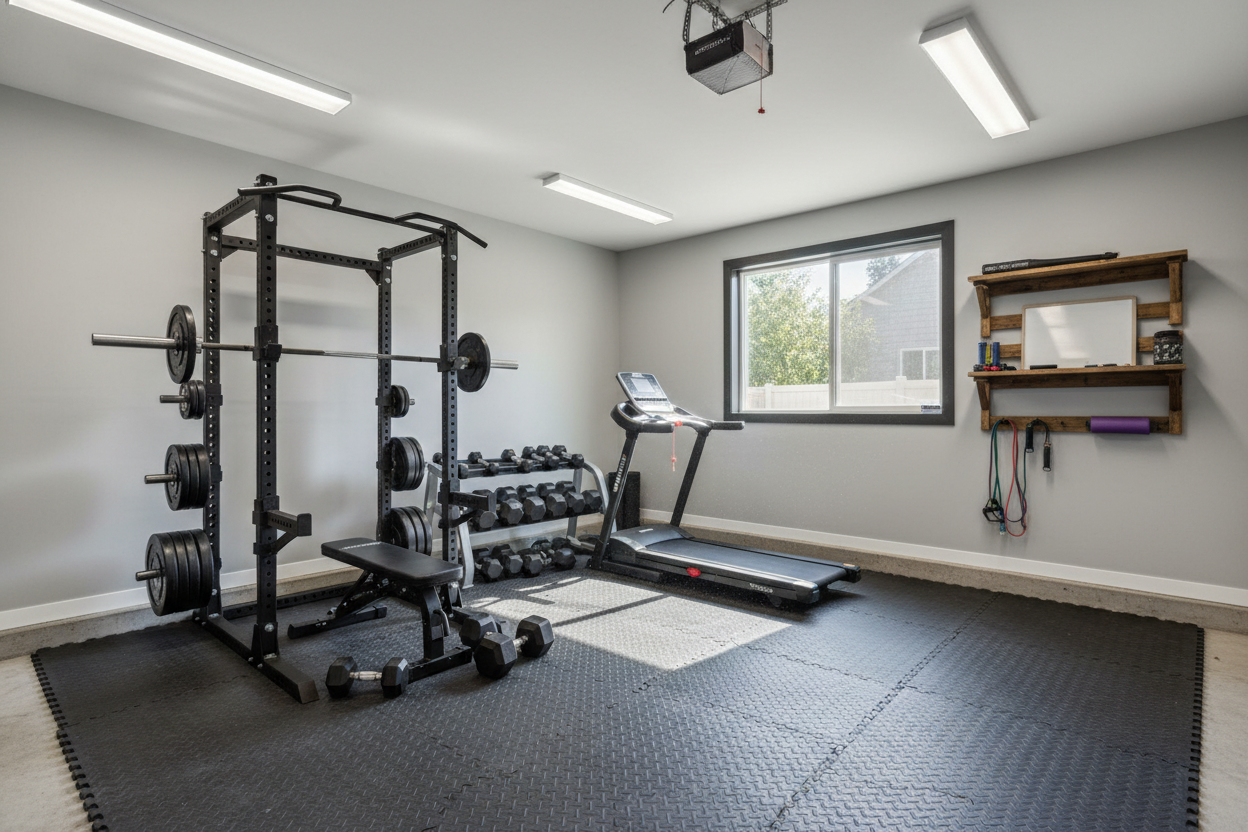
I have spent the last decade in dusty garages, scraping my shins on cheap barbells and watching gym membership fees climb while the equipment gets older and grubbier. People constantly email me asking what are the best home gyms, expecting a single link to a magic machine that does everything. I hate to break it to you, but that machine does not exist.
The search for what is the best home gym usually ends in one of two ways: you buy a massive piece of junk that becomes a clothes hanger, or you spend five grand on a competition-grade rack you only use for curls. I have done both. I have tested racks that wobbled with 135 pounds on the hooks and bars with knurling so dull it felt like holding a wet pool noodle. Here is how you actually find your gear without wasting your paycheck.
- Budget First: Be honest about what you can spend before you look at the shiny stuff.
- Space Matters: A 7-foot Olympic bar is 84 inches long. If your room is 90 inches wide, you are going to have a bad time.
- Training Style: Do not buy a power rack if you only do HIIT and yoga.
- Floor Prep: Horse stall mats are the gold standard for a reason. Do not skip them.
Why Chasing the 'Perfect' Setup is a Trap
We all want the 'best,' but the truth is that the best home gyms for a competitive powerlifter are a total disaster for someone just looking to stay lean and mobile. I once helped a friend set up a full Westside-style basement gym with bands, chains, and a monolift. Three months later, he realized he hated heavy lifting and just wanted to do pull-ups and kettlebell swings. He wasted four grand because he followed a 'top 10' list instead of his own habits.
When you ask what is the best home gym, you have to define your goal. Are you chasing a 500-pound squat, or are you trying to fit into your jeans from five years ago? A powerlifter needs 11-gauge steel uprights and a bar with aggressive knurling that bites into the skin. A casual lifter might be better off with a solid set of adjustable dumbbells and a sturdy bench. Stop looking for the universal 'best' and start looking for what you will actually use on a Tuesday morning at 6:00 AM.
I have made the mistake of buying for the lifter I wanted to be, rather than the lifter I actually was. I bought a specialized deadlift bar with extreme whip before I could even pull 315 pounds. It sat in the corner for two years. Buy for your current reality, then upgrade when your strength forces you to. The 'perfect' setup is the one that evolves with your PRs, not the one that arrives on a pallet fully formed.
The 3 Real Categories of Garage Gym Lifters
I have found that almost everyone fits into one of three buckets. Identifying yours will save you hundreds, if not thousands, of dollars in 'oops' purchases. If you try to be all three at once, you will end up with a cluttered mess of gear that does nothing well.
The Heavy Iron Purist
This is for the person who lives for the big three: squat, bench, and deadlift. You need a four-post power rack with 3x3-inch steel and 5/8-inch or 1-inch holes. Do not settle for a flimsy squat stand if you are pulling over 400 pounds. You also need a barbell with a high tensile strength—look for 190,000 PSI or higher. I personally use a bar with a 28.5mm diameter because it is the sweet spot for both pressing and pulling. If you are serious, get iron or urethane plates; skip the cheap cement-filled plastic ones that crack the first time you drop them. You need gear that can handle a dropped bar without the welds snapping.
The Machine and Hypertrophy Chaser
If your goal is aesthetics and a massive pump, you do not necessarily need a bare-bones rack. You need versatility and constant tension. A Smith machine home gym station is the move here because it gives you the stability to push your quads or chest to absolute failure without needing a human spotter. Look for a unit that includes a functional trainer component—dual cable pulleys are a must for flyes, lateral raises, and face pulls. The 'best' here means smooth cable travel and a high weight stack capacity. If the pulleys use cheap plastic bushings instead of sealed bearings, you will feel the friction on every rep.
The Space-Starved Minimalist
I have seen incredible physiques built in a 6x8 foot corner of a spare bedroom. If you are tight on space, look for a folding rack that mounts to the wall and sticks out less than 4 inches when closed. Combine that with a set of adjustable dumbbells—something that goes from 5 to 50 or 80 pounds in small increments. A high-quality adjustable bench that can handle 600 pounds is your final piece. You do not need a 2,000-square-foot warehouse to get elite results. Focus on high-density gear that maximizes every square inch of your floor plan.
Matching Your Ambition to Your Budget
Let us talk money. You do not need to be rich to train at home, but you do need to be smart. If you are just starting, what the best home gym under 300 actually looks like is usually a flat bench, a pair of heavy kettlebells, or a basic suspension trainer. It is not fancy, but it beats a monthly fee at a gym you never visit. At this level, you are paying for the habit, not the hardware.
Moving up a tier, what nobody tells you about the best home gyms under 500 is that you start seeing decent squat stands, but you have to be careful with the weight ratings. Often, these 'budget' racks use 14-gauge steel which can feel like a swing set when you rack a heavy bar. Spend your money on a bar that won't bend and a rack that won't tip. You can always buy fancy attachments later. I have spent way too much on 'cool' accessories I used twice, while my basic power rack has been used every single week for six years.
If you have $1,000 to $2,000, you are in the sweet spot for the best home gyms. This is where you get the 11-gauge steel, the high-quality cable systems, and the bumper plates that allow you to drop weights without waking the neighbors. At this price point, you are buying 'forever' gear. If you buy quality now, your kids will be using this gear in twenty years. Don't go cheap on the items that keep the weight off your chest.
Stop Asking the Internet. Ask Your Floor Plan.
Before you hit 'buy' on that massive functional trainer, get out a tape measure. Measure the height of your ceiling twice. I once bought a pull-up bar that I could not actually use because my head hit the rafters at the top of every rep. Check your floor for slope; most garages are slanted for drainage, which can make a rack feel unstable if you do not shim it properly with plywood or rubber.
Once you know your dimensions and your training style, you are finally ready to start piecing together your home gym based on your actual data. Do not feel like you have to buy everything at once. Start with the basics—a bar, some plates, and a way to rack them—see what you actually use, and expand from there. Your best setup is the one that is waiting for you in the next room, not the one on an influencer's feed.
FAQ
Do I need to bolt my rack to the floor?
If it is a thin squat stand or a light power rack, yes. If it is a heavy 3x3 rack with a flat foot base, you can usually get away without it, but bolting is always the safest bet for stability during heavy re-racks.
Are bumper plates better than iron?
Only if you are doing Olympic lifts or deadlifting and want to be quiet. Iron is thinner, so you can fit more weight on the bar, and it is usually cheaper. If you aren't dropping the bar from overhead, iron is fine.
What is the most important piece of gear to buy first?
The barbell. It is your primary point of contact with the weight. A cheap bar has bad knurling and poor spin, and it will eventually take a permanent bend. Spend the extra $100 here first.
Share:
Don't Overthink the Best Equipment for Home Workout Spaces
Stop Buying Fluff: The Bare Minimum Needed to Setup a Home Gym