
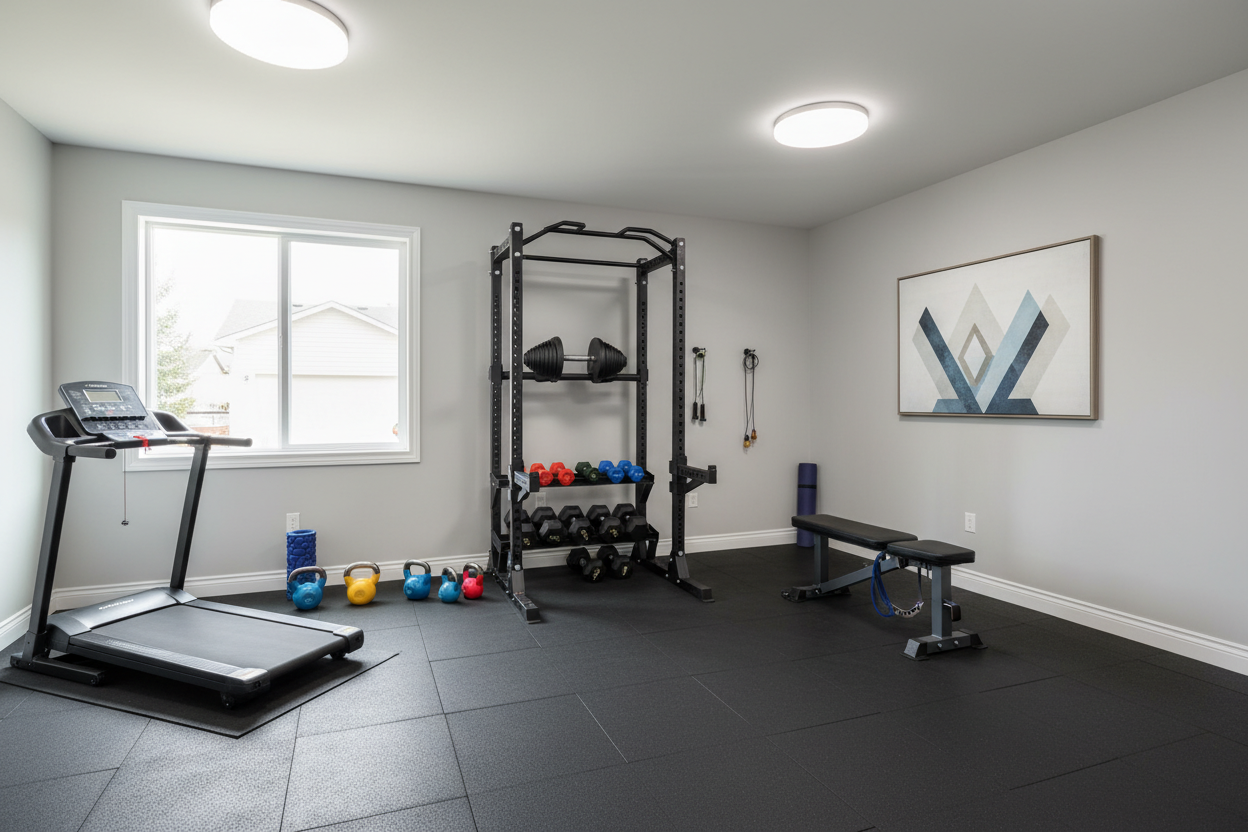
Your local commercial gym just hiked dues to $75 a month, and the squat rack always has a line four people deep. You have three hundred bucks and a dream of training in your garage, but you are worried about buying junk that will snap the first time you try a heavy set. I have been there, staring at Amazon listings at 2 AM, trying to figure out if a best home gym under $300 is even possible without it feeling like a toy store.
The truth is, you can build a space that produces real strength, but you have to be ruthless. You cannot afford a power rack yet, and you definitely cannot afford a set of calibrated plates. What you can afford is high-tension steel, heavy-duty nylon, and the kind of exercise equipment under $300 that survives a decade of abuse.
- Prioritize Versatility: If a piece of gear only does one thing, it does not belong in a budget gym.
- Steel Over Plastic: Always choose the basic metal version of a tool over the fancy 'as seen on TV' plastic alternative.
- Bodyweight is the Base: Use your budget to amplify bodyweight movements before trying to buy heavy iron.
- Used is Your Friend: Scour local listings for dumbbells and plates to stretch that final $100.
The Problem With Cheap 'All-in-One' Gadgets
The fitness industry loves to push those folding '10-in-1' push-up boards and wobbly, plastic-heavy exercise equipment under $300. They promise a total body workout but offer the stability of a wet noodle. I have seen these things crack under 200 lbs of pressure, and frankly, they are a safety hazard disguised as a bargain.
When you are on a budget, every dollar has to go toward structural integrity. A $40 plastic 'home gym' machine is a paperweight in three months. A $40 set of wood gymnastic rings is a lifetime investment. Stop looking for machines that mimic the gym and start looking for tools that build the athlete.
The Bare Minimum: Building a Home Gym Under 200
You can actually build a world-class foundation for a home gym under 200 by focusing on three things: a doorway pull-up bar, wood gymnastic rings, and a set of heavy-duty resistance bands. This setup fits in a closet but allows for dips, pull-ups, rows, and overhead presses.
A solid home gym does not need a footprint that takes over your entire garage. Wood rings offer better grip than plastic ones and can be hung from a tree branch or your pull-up bar. For less than two bills, you have a setup that can handle 300-lb athletes without breaking a sweat. This is the 'special forces' approach to fitness—minimalist, indestructible, and brutally effective.
Maxing the Budget: The Best Exercise Equipment Under $300
Once the basics are covered, you have about $100 to $120 left. This is where you unlock the best exercise equipment under $300 by adding external load. I recommend hunting for a pair of used 35-lb or 50-lb dumbbells. If you buy new, look for a basic, non-adjustable flat bench with at least a 600-lb weight capacity.
A flat bench allows you to perform proper chest presses, rows, and step-ups. If you find a deal on a pair of 52.5-lb adjustable dumbbells, grab them. Having the ability to go from 5 lbs to 50 lbs in one handle changes the game for isolation work. Just stay away from the off-brand adjustables that rattle; if the locking mechanism feels flimsy, it is a disaster waiting to drop on your face.
What About Getting Your Heart Rate Up?
Cardio does not have to cost five grand. A $15 speed rope and a driveway are all you really need for high-intensity intervals. If you are a high-volume lifter who needs active recovery without the impact of pavement pounding, you might want to look for deals on a foldable upright exercise bike.
These bikes are great because they tuck into a 2x3 ft corner when you are done. They are quiet enough to use while watching film or listening to a podcast, and they provide that steady-state blood flow that helps you recover from heavy leg days. It is a much better use of $150 than a treadmill that will just end up as a laundry rack.
When You Should Stop Buying and Start Saving
There comes a point where buying more small accessories is a waste of money. Once you have your rings, bands, a bench, and some weights, stop. Do not buy the 'ab roller Pro' or the 'thigh master 3000.' Take whatever cash you have left and put it in a jar labeled 'The Big Upgrade.'
Eventually, you will want to move toward building the best home gym under $1000. That is the level where you get a real power rack and an Olympic barbell. Until then, master the tools you have. You do not need to worry about adding a cable system or smith machine until you have maxed out your ability to move your own bodyweight and those dumbbells.
Personal Experience: My $300 Lesson
Years ago, I bought a 'budget' adjustable bench for $60. It looked fine in the photos, but the first time I tried to dumbbell press 80s, the backrest shifted two inches to the left. I almost blew out my shoulder trying to bail. I sold it for $20 and bought a used, heavy-duty flat bench that had zero moving parts. It was ugly, but it was safe. The lesson? If the budget is tight, buy the simplest, strongest version of a tool, not the one with the most features.
FAQ
Is a $300 home gym enough for muscle growth?
Absolutely. High-tension resistance bands and gymnastic rings provide more than enough stimulus for hypertrophy. You just have to be willing to work in higher rep ranges and focus on time under tension.
Should I buy a cheap barbell or dumbbells first?
Go with dumbbells or rings first. A 'cheap' barbell is often dangerous (low weight capacity and poor sleeve rotation). Wait until you can afford a bar that is rated for at least 700 lbs.
Where is the best place to find used gear?
Facebook Marketplace and local estate sales are gold mines. People often buy equipment in January and sell it by May. Look for 'iron' weights; they do not expire, even if they have a little surface rust.
Share:
It's Not Just You: Why Does Smith Machine Feel Heavier?
Do You Actually Need to Count the Smith Machine Bar Weight?