
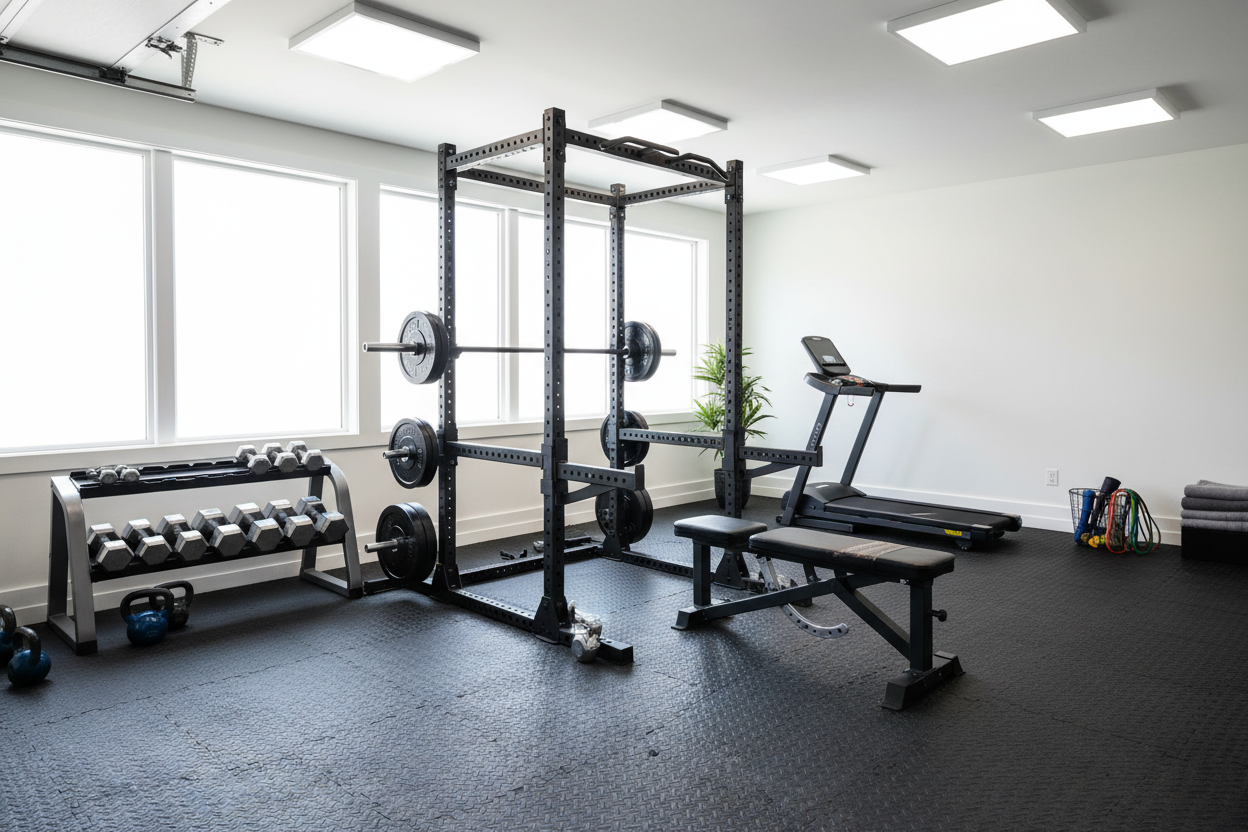
I remember scrolling through local listings at 11 PM, desperately trying to find a decent set of 45-lb plates that didn't look like they had been sitting at the bottom of a lake. My local commercial gym had just hiked their monthly dues again, and I was ready to build my own dungeon. I wanted to buy gym equipment cheap, but I quickly learned that 'cheap' often ends up costing you double in the long run if you don't know what to look for.
- Never pay more than $1 per pound for used cast iron plates.
- Avoid used cable machines with any signs of rust on the pulleys.
- Holiday sales are usually the best time to score a full warranty for less than used prices.
- Always check the footprint dimensions before buying; that 'steal' won't matter if it doesn't fit your garage.
The Used Market Isn't What It Used to Be
A few years ago, you could find a power rack for $50 and a case of beer. Those days are gone. Now, Marketplace is flooded with people trying to sell their five-year-old, rusted racks for 95% of the original retail price. It’s frustrating. When you are hunting for gym equipment at low price, you have to be ruthless with your negotiations.
If a piece of gear has been sitting in a damp garage for three winters, the structural integrity of the welds can actually be a concern. I’ve seen 'budget' racks with 2x2 tubing that looked like they were held together by hope and hobbyist-grade solder. If the seller isn't willing to drop the price significantly below what a brand-new, warranted version costs, just walk away. You aren't just buying metal; you're buying the previous owner's neglect.
How to Buy Gym Equipment Cheap from Modern Retailers
Timing the retail market is often smarter than chasing flakes on Craigslist. Most budget-friendly brands run deep discounts during Memorial Day, Labor Day, and the obvious Black Friday window. If you are planning to build a full Home Gym, waiting for a 15-20% off site-wide sale can save you hundreds of dollars—often bringing the price of brand-new gear lower than the 'firm' prices you see on the used market.
Retailers also offer 'Open Box' or 'Scratch and Dent' sections. These are gold mines. Usually, it’s just a shipping box that got mangled or a small cosmetic chip in the powder coat. You get the full manufacturer warranty and a gym equipment low price tag without the risk of buying a bent frame from a stranger. I’ve outfitted half my personal space using clearance sections, and once the plates are on the bar, you can't see the scratches anyway.
Scoring Gym Equipment Low Price Deals on the Basics
Some items are safe to buy as cheap as possible. Cast iron plates are literally just heavy lumps of metal. Unless they are cracked, a little surface rust doesn't affect the weight. If you can find old 'pancake' style plates for a gym equipment low price, grab them. You can always hit them with a wire brush and some spray paint if the aesthetics bother you.
Flat benches and weight trees are also safe budget bets. Look for a bench with a 1,000-lb capacity—even if you only bench 135, that high rating tells you the frame is overbuilt and won't wobble while you're under the bar. Avoid benches with thin, 1-inch padding; your back will thank you later. Simple storage trees are another place to save; as long as it holds the weight and doesn't tip over, there is no reason to pay a premium for a 'name brand' sticker.
When Buying Brand New Actually Saves You Money
Moving parts are where the 'buy cheap, buy twice' rule really hurts. I’ve seen too many people buy used cable setups only to have a cable snap three weeks later. Buying a 3 In 1 Lat Pulldown Low Row Station Ls01 brand new gives you smooth nylon-coated cables and pulleys that haven't been ground down by years of misuse. The cost of replacing high-tensile cables and specialty pulleys on a used machine often exceeds the price of just buying a new unit.
The same logic applies to guided systems. A Smith Machine Home Gym Station depends on perfectly aligned, straight guide rods to function safely. If a previous owner dropped a heavy load and slightly warped those rods, the bar will stick and stutter, making your workout dangerous. When you buy these brand new, you ensure the alignment is true and the bearings are fresh. It’s an investment in your safety, not just your gains.
Don't Let Shipping Costs Ruin a Good Deal
The biggest trap in the quest to buy gym equipment cheap is the checkout screen. Iron is heavy, and shipping heavy things is expensive. You might find a barbell for $80, but if the shipping is $60, you've just paid $140 for a sub-par bar. Many reputable budget retailers offer free shipping once you hit a certain price threshold.
Always calculate the 'landed cost'—the price of the item plus shipping and tax. Sometimes, a slightly more expensive item with free shipping is actually the better deal. I once thought I scored a massive deal on a 300-lb weight set until I realized it was being shipped via freight and required a $100 liftgate fee because I don't have a loading dock at my house. Read the fine print before you pull out the credit card.
Is used gym equipment safe?
Generally, yes for 'dumb' iron like plates and dumbbells. For racks and bars, inspect the welds and look for bends. If a barbell doesn't spin freely or has a visible curve, it's trash.
When is the best time to buy gym equipment?
November is the king of sales, but don't sleep on late May. Many companies clear out old inventory to make room for new models arriving in the summer, leading to massive clearance discounts.
Should I buy a cheap barbell?
Don't go for the absolute cheapest bar on the market. A $50 bar usually has a low weight capacity and no knurling. Look for a mid-range budget bar with at least a 700-lb rating and decent bushings in the sleeves.
Share:
The Biggest Layout Mistake People Make With Home Gyms Design
Exercise at Home or Gym: Which Setup Actually Gets Used?