
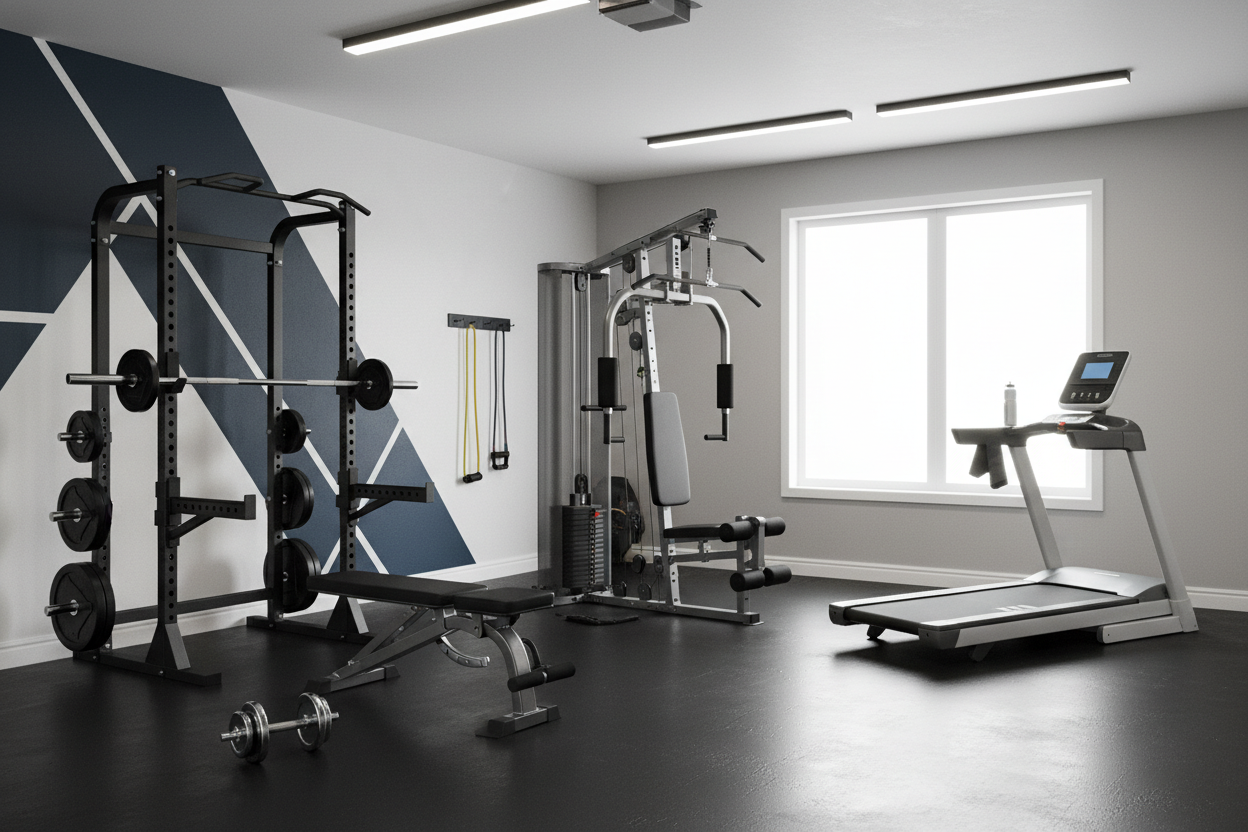
I remember the first time I bought a cheap multi-gym from a big-box retailer. It looked great in the glossy photos, but the second I tried to do a lat pulldown, the whole frame groaned like an old wooden ship. That is the reality for most people trying to build a fitness machine home setup without knowing what to look for.
You are likely tired of your local commercial gym raising dues while half the machines are out of order. But rushing into a purchase because a machine has fifteen different attachments is a trap. Most residential gear is designed to look good in a spare bedroom, not to survive a heavy training session.
Quick Takeaways
- Prioritize 11-gauge steel over 14-gauge for any structural frame.
- Aluminum pulleys provide a smooth, consistent drag, whereas nylon pulleys often flat-spot or melt under friction.
- Look for stainless steel or chrome-plated guide rods; painted rods will flake and catch.
- Verify the weight ratio; a 2:1 ratio means 100 lbs feels like 50 lbs, which might be too light for heavy hitters.
The Dirty Secret About Residential Cable Systems
The biggest difference between a high-end home gym fitness machine and the junk you see on sale for $300 is the pulley material. Most entry-level machines use cheap nylon pulleys with plastic bushings. After a few months of heavy use, the friction generates heat, the nylon deforms, and suddenly your smooth cable crossover feels like you are pulling a concrete block through sand.
Commercial-grade systems use machined aluminum pulleys with sealed ball bearings. This isn't just about 'feel'—it is about safety. I have seen cheap cables fray and snap because the pulley wasn't aligned properly. If you see plastic pulleys, that is one of the 5 red flags to look for in any exercise machine home gym that should make you walk away immediately.
High-quality cables should be aircraft-grade steel coated in a thin layer of nylon or urethane. If the cable feels stiff or 'memory-coiled' right out of the box, it is low-grade wire that will never pull smoothly, no matter how much silicone spray you douse it in.
Frame Gauge Matters Way More Than Weight Stacks
Manufacturers love to brag about a 200-lb weight stack, but they rarely mention the steel gauge of the gym home system. In the world of strength equipment, a lower number means thicker steel. 11-gauge steel is the gold standard. It is roughly 1/8th of an inch thick and provides the mass needed to keep the machine from walking across your floor during a set.
Many brands use 14-gauge steel to save on shipping costs. While it might hold the weight, an exercise home gym machine built with thin steel will flex and sway. If you are doing chest presses and the uprights are bowing inward, you are losing power and risking a structural failure. Always look for 2x3 or 3x3 inch tubing. If the specs don't list the steel gauge, assume it is thin and move on.
Do You Actually Need a Guided Track at Home?
I get asked this constantly: should I get a power rack or a machine with a guided track? If you are training solo in a garage, a guided track offers a level of safety that is hard to beat. You don't need a spotter when you can just twist your wrist to lock the bar. However, the quality of the bearings in that home gym machine equipment makes or breaks the experience.
Linear bearings are the premium choice—they use actual ball bearings to glide over the rod. Cheaper units use plastic slides that stick if the bar isn't perfectly level. I have written about the trade-offs before when deciding between a power rack or smith machine for home gym I tried both, and it usually comes down to your specific goals. If you want a dedicated Smith machine home gym station, make sure you have at least a 7x7 foot footprint to allow for plate loading and bench movement.
Beware the 'Does Everything' Attachments
Marketing teams love to tell you their machine can perform 75 different exercises. Usually, it does two things okay and 73 things terribly. Those flimsy leg developer attachments or the 'rowing' footplates that bolt onto the front of a rack are often afterthoughts. They are made of thin steel and use uncomfortable foam rollers that compress to nothing under load.
Instead of a gym home fitness equipment package that tries to be a Swiss Army knife, look for machines that do one or two things exceptionally well. For example, if you want to target your lower body, a dedicated hip thrust machine glute muscles building ht01 will always outperform a shaky 'all-in-one' attachment. Quality over quantity is the rule here. I would rather have a rock-solid functional trainer and a separate bench than a single machine that claims to replace an entire commercial gym but wobbles when I breathe on it.
The Only Spec Checklist You Actually Need
When you are shopping for a gym machine home setup, ignore the photos of the shredded model using it. Look at the hardware. Use this checklist to filter out the garbage:
- Steel: Minimum 11-gauge for the main frame.
- Hardware: Grade 8 bolts or better; look for nylon locking nuts so the machine doesn't vibrate apart.
- Finish: Powder coating is superior to paint. It resists scratches and sweat-induced rust much better.
- Guide Rods: Solid steel, not hollow tubes. They should be polished to a mirror finish.
- Footprint: Measure your ceiling height. Many 'functional trainers' are 80+ inches tall, which won't clear a low basement ceiling.
My Own Gear Mistake
Years ago, I bought a cable crossover because it was on clearance for $400. It had 14-gauge steel and plastic pulleys. I thought I could 'upgrade' it later. Within three weeks, the pulleys started squeaking so loudly my neighbors could hear it. I spent another $150 on aluminum pulleys and hours of labor only to realize the frame was still too light—the whole machine would tip toward me if I did heavy cable flyes. I ended up selling it for $100 and buying a real 11-gauge rack. Buy once, cry once.
FAQ
Is a 1:1 or 2:1 cable ratio better?
It depends on the exercise. A 2:1 ratio (where 100 lbs feels like 50 lbs) provides more cable travel and is smoother for functional movements. A 1:1 ratio is better for heavy movements like lat pulldowns or low rows where you need the full weight of the stack.
Can I put a heavy machine on a second-floor apartment?
You need to check your floor load capacity. A 500-lb machine plus a 200-lb user is a lot of concentrated weight. Usually, it is fine if placed against a load-bearing wall, but always use thick rubber stall mats to distribute the weight.
How often do I need to lubricate the guide rods?
Every 3 to 6 months depending on use. Use a dry silicone spray. Never use WD-40 or grease, as they attract dust and hair, which will eventually gum up the bearings and ruin the smooth feel of your machine.
Share:
I Weighed It: The Real Bar Weight in Smith Machine Racks
Stop Paying for Screens: The Best Treadmills for Home Gym Use