
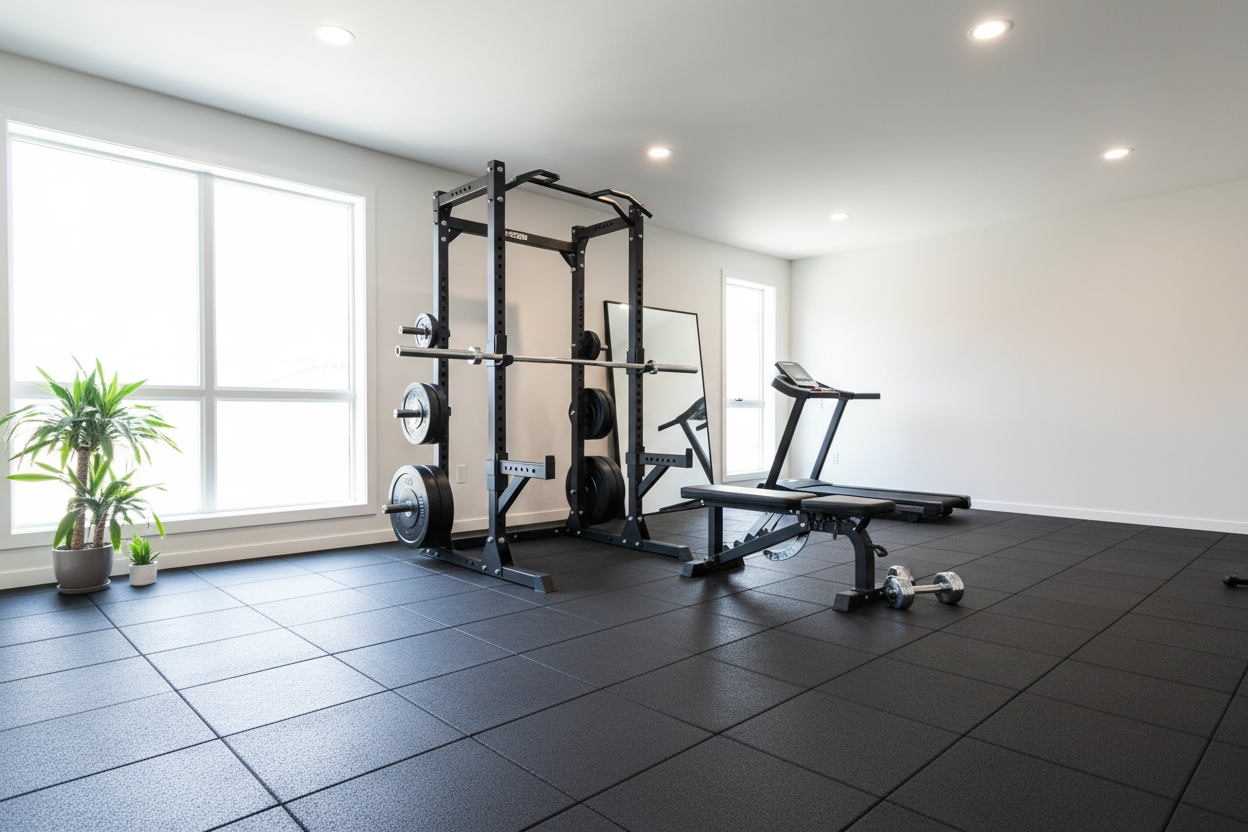
I remember the day I had to sell my 8-foot monster power rack. My new apartment had a living room that doubled as my office, and my heavy-duty setup just wasn't going to make the cut. I spent weeks scrolling through compact home fitness equipment, and honestly, most of it looked like it belonged in a toy store, not a gym. I've spent years testing the limits of steel, and I've seen exactly where 'space-saving' gear turns into a hospital bill.
Quick Takeaways
- Prioritize welded joints over hinges; every moving part is a potential failure point.
- Wall-mounted gear is the gold standard for small spaces if you have the studs for it.
- Vertical storage is the secret to keeping 50 square feet from feeling like a closet.
- If the weight capacity isn't listed, assume it's garbage.
The Dark Side of the 'Space-Saving' Fitness Industry
Marketing teams love the word 'compact.' They show a guy doing bicep curls with a 10lb weight on a machine that looks like a lawn chair. If you're planning to move real weight, that stuff is a liability. The industry is flooded with gear that looks great in a 30-second Instagram ad but feels like wet cardboard when you actually get under a bar.
The physics of cheap hinges and flimsy telescoping steel are unforgiving. Manufacturers often sacrifice lateral stability to ensure a product can fold flat under a bed. When you're benching or squatting, lateral stability is what keeps the rack from tipping when you have a slightly uneven walk-out. You need to understand why most compact gym for home setups snap under heavy weight. It usually comes down to the gauge of the steel and the quality of the bolts. If it's 14-gauge steel and uses plastic bushings, it's not meant for serious training.
Rule #1: If It Folds in Three Places, Walk Away
Structural integrity is a zero-sum game. The more points of articulation a piece of equipment has, the more places it can fail. I've seen 'folding' benches that have so many adjustment pins they feel like a Jenga tower once you're holding 80-pound dumbbells. It’s a distraction you don’t need when you’re pushing for a PR.
Instead of looking for maximum foldability, look for smart footprints. A solid, welded squat stand with a 24x24-inch base is infinitely safer than a rack that folds into a suitcase. I learned this the hard way when a 'portable' bench started creaking under a 275-pound press. I didn't get hurt, but I never trusted that brand again. You want 11-gauge steel and 3x3 or 2x3 uprights. Anything less is just a glorified clothes hanger.
The Only 3 Pieces You Actually Need for a Tiny Room
You don't need a 12-station cable machine to get a good workout. In fact, trying to cram too much gear into a small room is the fastest way to stop training altogether because you're tired of moving stuff around. You need a foundation of durable home gym essentials that maximize every square inch.
First, a wall-mounted folding rack. These use your home's framing for stability, allowing you to squat and press heavy without a massive footprint. Second, a heavy-duty adjustable bench with a handle and wheels. You need to be able to move it out of the way in three seconds. Third, a pair of high-quality selectorized dumbbells. I prefer the ones that feel like real iron, not the ones that rattle like a box of Legos. These three pieces allow for 90% of the movements you'd do in a commercial gym while leaving enough floor space to actually breathe.
Combo Machines That Actually Earn Their Footprint
Most combo machines are a compromise that leaves you unhappy with both functions. However, there are exceptions where the engineering actually holds up. If you're a leg day enthusiast trapped in a studio apartment, look for a compact 30 degree leg press hack squat combo machine. This is a rare example of getting two heavy-duty stations in the space of one. Because it uses a 30-degree angle, the footprint is significantly shorter than a traditional 45-degree press, but the build quality is still there to handle several hundred pounds of plates.
Stop Stepping Over Your Plates: The Art of Vertical Storage
The biggest mistake people make with home gym equipment compact setups isn't the rack—it's the plates. If you have 300 pounds of iron scattered on the floor, your gym is a mess and a tripping hazard. You have to go vertical. Use your wall studs for more than just the rack.
Wall-mounted weight horns are the cheapest way to reclaim your floor. I personally mounted three tiers of horns on a single stud, and it changed the entire vibe of my room. I also suggest a vertical barbell holder. Sticking your bar in a corner is fine until it falls and dents the drywall. If you want to see the extreme version of this, I've documented how I squeezed a real compact in-home gym into 50 square feet without sacrificing my ability to deadlift. It’s all about the walls.
FAQ
Can I really squat heavy in an apartment?
Yes, but you need to be smart about vibration. Use horse stall mats or specialized drop pads to protect the floor and keep the neighbors from calling the cops. Always check your floor load capacity if you're planning on moving 400+ pounds.
Is folding gear ever actually safe?
Wall-mounted folding racks are very safe because they are anchored to your home's structure. Free-standing folding gear is where you run into trouble. If the 'hinge' is just a thin bolt through a piece of hollow steel, stay away.
What is the best floor protection for small spaces?
Don't buy those interlocking foam puzzle mats. They compress under weight and offer zero protection for your subfloor. Get 3/4-inch rubber stall mats. They're heavy and smell like a tire shop for a week, but they are indestructible.
Share:
I Stashed 400 lbs of Iron in My Office: Small Home Gym Ideas
I Tried to Find a 1000 lb Dumbbell for My Garage Gym