
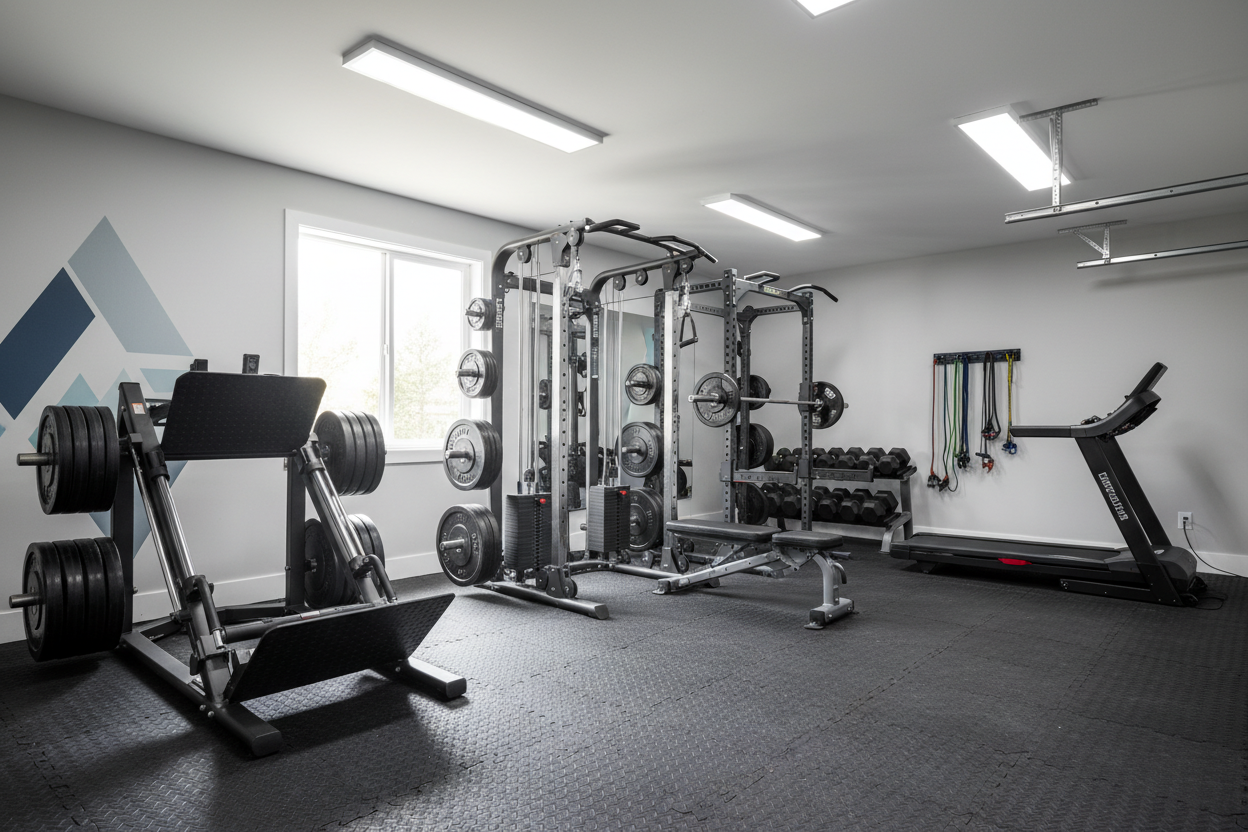
I remember the night I almost got pinned by a 275-lb barbell in my basement. No spotter, no safety arms, just me and my ego. I eventually had to roll it down my stomach—an experience I’d like to never repeat. That was the day I stopped being a free-weight snob and started embracing machine compound exercises.
- Stability allows you to exert 100% force on the target muscle.
- Built-in safeties mean you can train to absolute failure without a spotter.
- Fixed paths remove the 'balance bottleneck' that often limits heavy lifts.
- Perfect for home gym owners who train solo and value their ribcage.
The Free Weight Purity Trap (And Why I Escaped It)
There is this weird, toxic idea in gym culture that if you aren’t doing unsupported barbell squats or flat bench presses, you aren’t 'really' training. I fell for it for a decade. I thought machines were for the lazy or the injured. I was wrong.
The truth is, your muscles don't have eyes. They only know tension. When you use a compound exercises machine, you remove the need to balance a heavy iron bar. This allows you to push your quads or chest to the brink without your lower back or stabilizers giving out first. If your goal is getting big and strong, stop letting 'purity' hold you back.
Why Fixed-Path Gear Shines for Multi-Joint Lifts
Stability is the secret sauce of hypertrophy. When your nervous system feels unstable, it acts like a governor on an engine—it limits how much power your muscles can produce to prevent you from falling over. It’s a survival mechanism.
By using fixed-path gear, you eliminate that instability. You can direct every bit of energy into mechanical tension. I’ve found that I can get much deeper into a set and push closer to true failure when I know the weight isn't going to tip left or right. It’s about being efficient with your effort rather than fighting the equipment.
The Heavy Hitters: My Go-To Machine Compound Movements
If you want to grow legs that actually fill out your jeans, you need a hack squat. I personally swear by the 30 degree leg press hack squat combo. It allows for a massive range of motion without the lumbar shear you get from a traditional back squat. It’s the single best way to destroy your quads while keeping your spine intact.
For the upper body, don't sleep on the Smith machine. People love to hate it, but for chest and shoulder pressing, it’s a beast. Check out these top exercises on a Smith machine to see how to use guided rails for maximum depth. You can set the safeties just above your chest and press with zero fear of getting stuck.
How to Program a Brutal Guided-Motion Routine
Most people treat machines as an afterthought—something they do for high reps at the end of a workout. That’s a mistake. If you want the best results, treat these like your primary lifts. Hit them first when you have the most energy.
I suggest starting your session with a heavy press or squat on a machine. Since you don't have to worry about balance, you can safely use lower rep ranges (5-8 reps) with massive weight. If you're looking for a structured way to do this, this complete Smith machine workout guide provides a solid template for transitioning your main lifts to guided motion.
Building Your Garage Setup Around Guided Motion
If you’re building a home gym, you probably don't have room for twelve different leg machines. You need versatility. A heavy-duty Smith machine is often the smartest centerpiece you can buy. It covers your squats, presses, and even heavy rows in one footprint.
When shopping, look for smooth linear bearings. There is nothing worse than a 'sticky' machine when you’re trying to grind out a final rep. A quality unit should feel like it’s gliding on ice, even when you’ve got four plates a side loaded up.
Personal Experience: The Ego Check
I spent five years refusing to touch a leg press because I thought it was 'cheating.' My legs were okay, but my lower back was always fried from heavy squats. I finally caved and bought a hack squat for my garage. In six months, my quads grew more than they had in the previous three years combined. My only regret? Not doing it sooner and wasting years on 'pure' lifts that weren't actually helping my specific goals.
FAQ
Can you build as much muscle on machines?
Absolutely. Muscle growth is about mechanical tension and progressive overload. Machines often allow for more tension because you aren't limited by balance or stabilizer fatigue.
Are machine exercises safer for the joints?
Generally, yes. Because the path is fixed, you're less likely to have the weight shift into an awkward position that tweaks a shoulder or knee. Plus, built-in safeties are a literal life-saver for solo lifters.
Should I get rid of my barbell?
Not necessarily. Barbells are great for variety and specific strength goals. But if your main goal is hypertrophy and safety, making machines the core of your heavy work is a smart move.
Share:
I Tried to Find a 1000 lb Dumbbell for My Garage Gym
Your Balance Sucks (And Why the One Leg Squat Smith Machine Fixes It)