
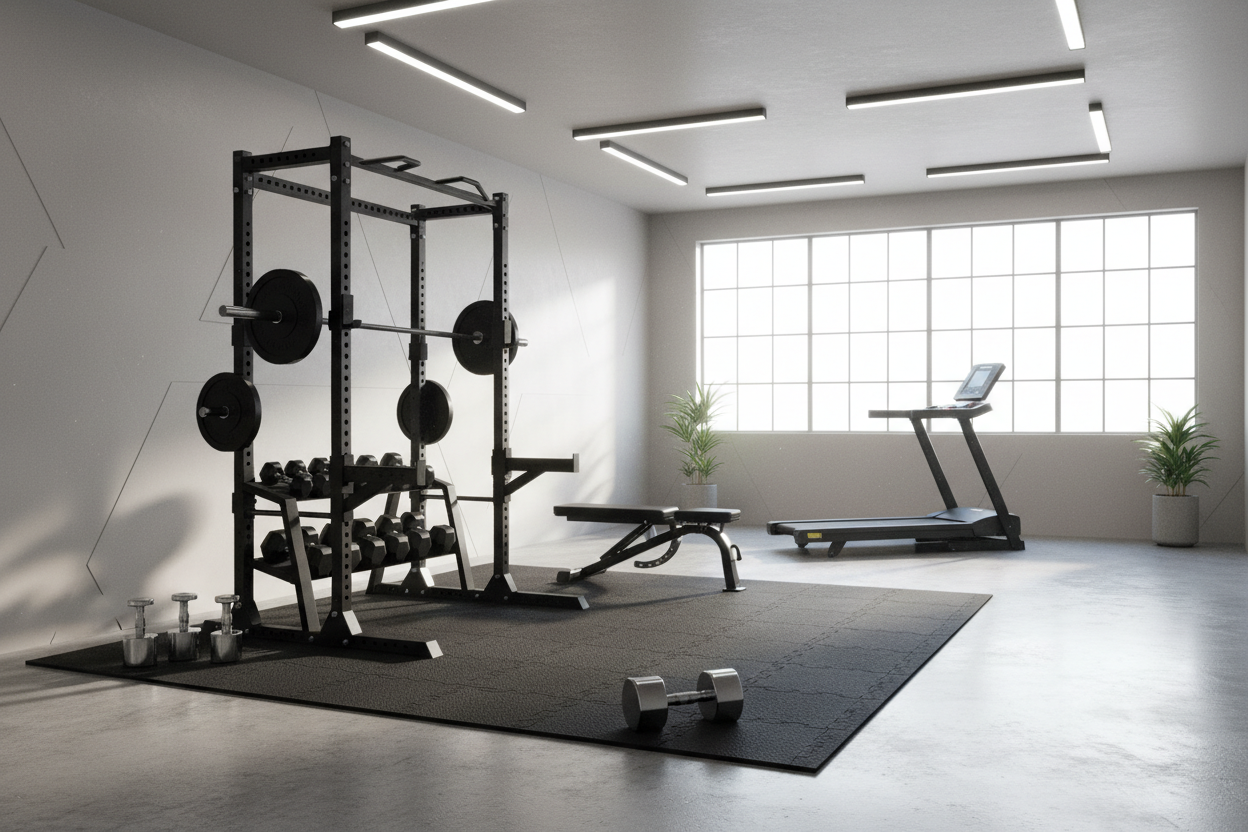
I remember staring at my garage floor, $4,000 deep into a 'dream setup,' realizing I hadn't touched the leg extension machine in three months. I'd spent weeks researching the best gym equipment based on influencer lists, but I built a showroom for an athlete I wasn't. My garage looked like a catalog, but my workouts were suffering because I was tripping over gear I didn't even like.
Quick Takeaways
- Ratings don't account for your specific limb lengths or injury history.
- A massive power rack is a waste of space if you prefer dumbbells and cables.
- Stability often beats 'functional' free weights for pure muscle growth.
- Audit your actual gym habits for two weeks before buying anything.
Just Because It's Highly Rated Doesn't Mean You'll Use It
The trap is real. You see a 'Top 10' list of the best gym products and assume that because a piece of gear is over-engineered and indestructible, it belongs in your house. I bought a competition-grade glute-ham developer because it was the highest-rated model on the market. It was a 70-pound beast of steel and high-density foam.
It sat there for eight months. I used it maybe ten times. Why? Because I hated the setup time and it took up six square feet of precious real estate. Buying the 'best' often leads to specialized gear that doesn't fit your daily flow. If it takes five minutes to adjust a machine, you'll eventually stop using it. Period.
The 'Big Three' Trap: Do You Actually Need a Power Rack?
The internet will tell you that a 3x3, 11-gauge steel power rack is the foundation of every home gym. They say if you aren't squatting, benching, and deadlifting with a barbell, you aren't training. That's fine if you're a powerlifter, but if you have a history of disc issues or just want to look good in a t-shirt, that rack is a massive metal cage taking up half your room.
I realized the best equipment for home gym gains doesn't plug into a wall, but it also doesn't have to be a monolithic cage. I swapped my oversized rack for a wall-mounted folding version and instantly felt less claustrophobic. You don't need to follow a dogma that doesn't serve your goals just because a reviewer said it's mandatory.
Matching the Best Gym Equipments to Your Actual Biomechanics
Your skeleton determines what gear you should buy. I have long femurs and a short torso. For years, I forced myself to do free-weight back squats because 'real lifters' use barbells. My lower back was always fried, and my quads were barely growing. I was trying to force my body to fit the equipment rather than the other way around.
I eventually sold my high-end barbell and moved toward a Smith machine home gym station. The added stability allowed me to place my feet forward, stay upright, and finally hammer my quads without my spine screaming for mercy. When looking for the best gym equipments, ignore the 'hardcore' labels and look for things that allow you to reach failure safely within your natural range of motion.
The Gear That Actually Survived My Garage Purge
After the great sell-off, only the essentials remained. I kept the stuff that was versatile, low-maintenance, and felt 'right' the second I grabbed it. This wasn't the most expensive gear, but it was the most used. I realized the best home gym fitness equipment is just 3 things: a heavy-duty adjustable bench, a set of quick-change dumbbells, and a solid pull-up station.
My 1.25-lb fractional plates also stayed. Why? because micro-loading is the only way to keep making progress on overhead presses once you hit a plateau. Everything else—the specialty bars, the weird grip attachments, the bulky cardio machines—went on Facebook Marketplace. If I don't use it at least twice a week, it doesn't deserve the floor space.
How to Audit Your Workouts Before Swiping Your Card
Stop buying gear based on the person you hope to become. Buy for the person you are right now. Before you commit to a full home gym, perform a two-week audit. Write down every single movement you do at a commercial gym. If you find yourself gravitating toward cables 80% of the time, don't spend $2,000 on a barbell and plates.
Step one: track your movements. Step two: measure your space twice, including the 'working area' around the machine. Step three: buy the highest quality version of the one thing you use most. It's better to have one $1,000 piece of gear you love than five $200 pieces of junk you'll sell at a loss in six months.
FAQ
Is a power rack necessary for a home gym?
Only if you plan on doing heavy barbell compounds like squats and rack pulls. If you prefer dumbbells or bodyweight training, a rack is just an expensive coat hanger. A good set of wall-mounted pulleys often provides more utility in less space.
What is the most overrated piece of gym equipment?
Cheap adjustable dumbbells that rattle or have plastic internal parts. They feel dangerous when you're pressing 50+ pounds over your face. If you're going adjustable, buy a reputable brand with a steel locking mechanism.
How do I know if a machine fits my biomechanics?
Pay attention to joint pain. If a movement feels 'crunchy' or forces you into an awkward position despite good form, the machine's pivot points probably don't align with your joints. This is common for shorter or taller-than-average lifters.
Share:
The Brutal Truth About Blending Home and Fitness Spaces
Are Vertical Leg Press Machines Actually a Death Trap?