
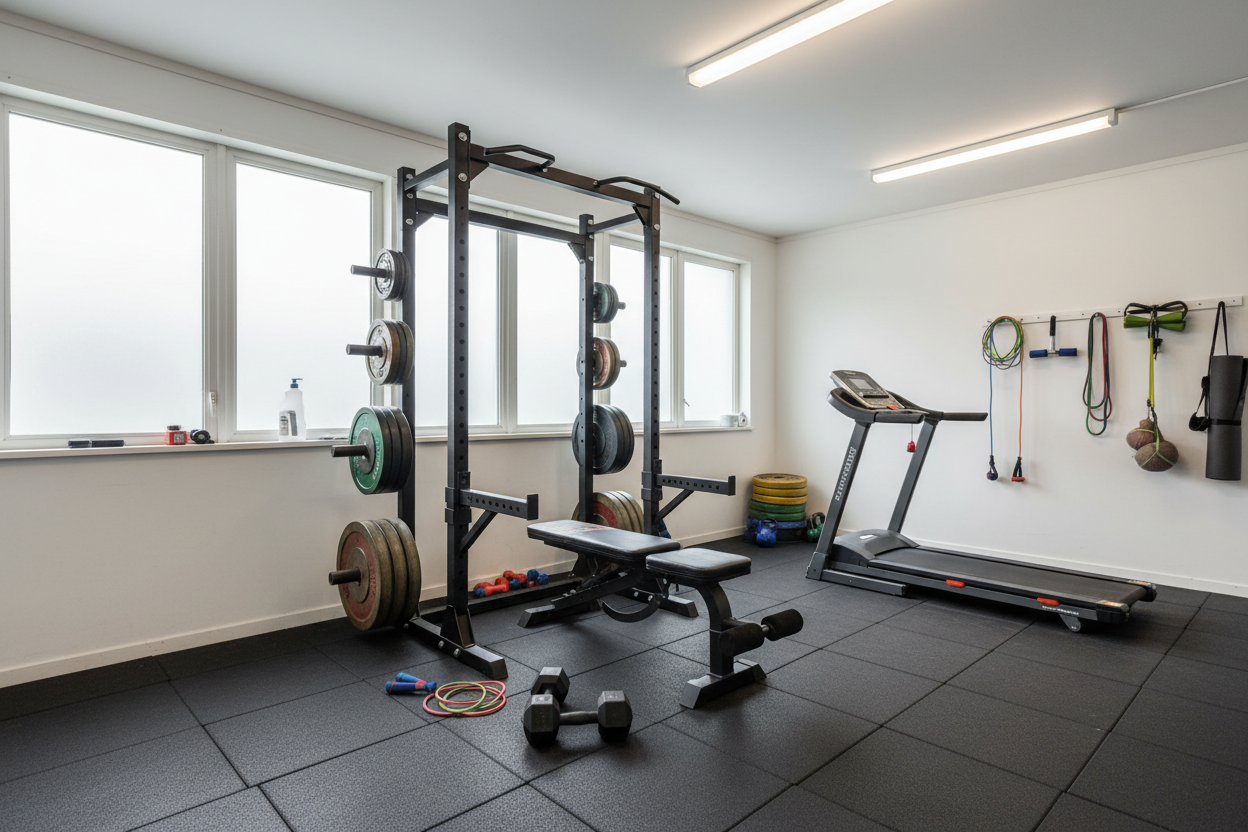
I was halfway through a heavy set of dumbbell presses when I heard a sound like a gunshot. It wasn't a gun; it was the adjustment pin on my $90 'pro' bench shearing clean off. I hit the floor with 85-pound bells in my hands, narrowly missing my skull. That was the day I realized that cheap home exercise equipment isn't just a bargain—it can be a hazard.
I have spent the last decade turning my garage into a sanctuary of iron. In that time, I have snapped cables, bent bars, and cracked welds on gear that looked great in Amazon photos but failed the first time I actually broke a sweat. I eventually learned to stop buying cheap home gym gym equipment that prioritizes aesthetics over structural integrity. If you are starting out, you do not need to spend ten grand, but you do need to know where to pinch pennies and where to open your wallet.
- Avoid thin steel: Anything under 14-gauge is basically a soda can.
- Simple is safe: Cast iron plates and pull-up bars are hard to screw up.
- Check the welds: Sloppy, 'popcorn' welds are a sign of a looming failure.
- Static vs. Dynamic: If it moves, it costs more to make it well.
The Deadliest Cheap Home Exercise Equipment on the Market
The most dangerous place to save money is on load-bearing gear. I am talking about squat racks and benches. I have seen budget racks made of 2x2-inch, 14-gauge steel that sway like a palm tree when you rack a measly 225 pounds. If the rack weighs less than you do, do not trust it with your life. A rack is the anchor of building a reliable home gym, and it is the one thing that should never, ever fail.
Wobbly J-hooks are another red flag. I once bought a pair of budget J-hooks where the plastic padding was held on by cheap glue. The first time I racked a bar, the plastic slipped, the bar rolled, and I nearly lost a finger. Look for J-hooks with UHMW plastic that is bolted on, not glued. The same goes for benches. If the pivot point is a single thin bolt with no reinforcement, it will eventually fail under load. You want a bench with a weight capacity of at least 600 pounds—not because you lift that much, but because you want that safety buffer when you drop into it with momentum.
The 'Safe to Be Cheap' Gear List
You can absolutely save money on things that are basically just heavy rocks. Standard cast iron plates are a prime example. A 45-pound plate from a premium brand weighs the same as one from a garage sale. Unless you are a competitive powerlifter who needs calibrated plates within a 10-gram tolerance, buy the cheapest iron you can find. Just make sure they actually fit on a 2-inch Olympic sleeve.
Pull-up bars and resistance bands are also safe bets for the budget-conscious. A basic doorway or wall-mounted bar is a static piece of steel; as long as your wall studs are solid, the bar isn't going to explode. For cardio, you don't need a $3,000 treadmill with a touchscreen. A simple foldable upright exercise bike provides plenty of resistance for Zone 2 work without the maintenance headaches of a motorized belt. These low-tech pieces are effective because they have fewer failure points.
My One Rule for Cheap Home Workout Equipment
If a piece of gear has a motor, a cable, or a pulley, do not buy the cheapest version. Period. High-tension cables and plastic pulleys are a recipe for a trip to the ER. I once tested a budget cable crossover machine where the pulley housing was made of cheap nylon. It melted from the friction of a high-rep set, snapped the cable, and whipped me across the chest. It was a painful reminder that using cheap at home workout equipment with moving parts is a gamble.
Complexity requires quality control. A $200 'all-in-one' functional trainer is cutting corners on the very things that keep the weight from falling on your head. If you cannot afford a high-end cable machine, stick to dumbbells or bands. They provide the same stimulus without the risk of a mechanical catastrophe mid-set. Keep your budget setup simple and your heavy lifts supported by solid steel.
How to Vet Budget Gear Before Handing Over Your Cash
Before you hit 'buy' on that cheap home workout equipment, you need to do some detective work. First, ignore the five-star reviews from people who just took the item out of the box. They haven't used it long enough to see the welds crack. Look for the three-star reviews—those are usually from people who actually train and can point out the specific flaws, like 'the knurling is passive' or 'the bolts strip easily.'
Check the actual shipping weight of the product. If a squat rack claims a 1,000-pound capacity but only weighs 60 pounds, the manufacturer is lying to you. Real strength comes from mass. Look for 11-gauge or 12-gauge steel for racks and benches. Finally, look at the warranty. A company that only offers a 90-day warranty on a piece of 'heavy-duty' gear knows exactly how long that gear is going to last. If they don't trust it to survive a year of use, neither should you.
FAQ
Is 14-gauge steel okay for a home gym?
Only for accessory items like plate trees or light-duty storage. For squat racks or benches, 14-gauge is too thin and prone to bowing or snapping under serious weight. Stick to 11 or 12-gauge for anything that holds a barbell.
Are used weights better than cheap new ones?
Almost always. Used iron plates are indestructible. You can often find high-quality vintage brands for pennies on the dollar on local marketplaces. Just check for cracks in the iron, though that is rare.
What is the first thing that breaks on cheap equipment?
Usually the welds or the plastic components. Manufacturers save money by using 'tack' welds instead of full beads, and by using plastic bushings instead of metal bearings. Once the plastic cracks, the movement becomes jerky and dangerous.
Share:
Is a Home Gym Under $1000 Actually Enough for Heavy Lifting?
Stop Wasting Money: The Essential Gym Equipment You Actually Need