
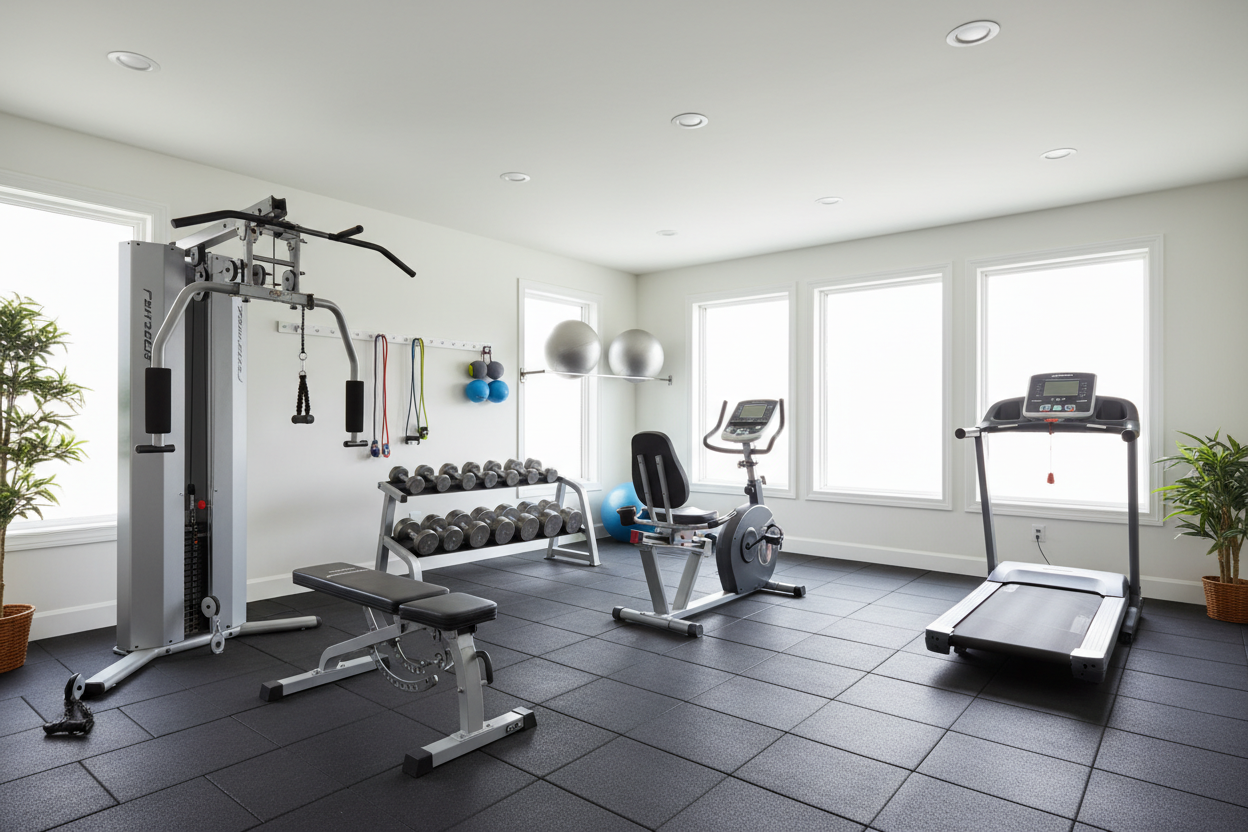
My dad’s idea of a workout used to be walking to the mailbox and back. When he finally admitted his balance was slipping and his knees were aching, I didn’t want to just buy him whatever was on sale at the local big-box store. I wanted to build him a fortress of stability. Finding the best exercise equipment for elderly lifters is a minefield of cheap plastic and 'as seen on TV' garbage that actually increases the risk of injury rather than preventing it.
Quick Takeaways
- Stability is king: If the machine weighs less than the person using it, don't buy it.
- Step-through designs are mandatory to prevent tripping hazards.
- Magnetic resistance provides a smoother, joint-friendly experience than friction pads.
- Selectorized weight stacks are safer than loose dumbbells for maintaining bone density.
The Infomercial Trap: Why Most 'Senior' Gear is Dangerous
If you flip on the TV at 2:00 PM, you’ll see dozens of gadgets marketed toward seniors that look like they belong in a toy aisle. They’re lightweight, they fold up into the size of a pizza box, and they’re made of thin-walled plastic. For a 25-year-old athlete, a flimsy piece of gear is an annoyance. For a 70-year-old, it’s a trip to the emergency room. These machines lack the 'mass' required to stay put when a user loses their balance.
I’ve seen 'pedal exercisers' that slide across the floor the moment you put any force into them. I’ve seen folding treadmills with handrails that flex like a pool noodle. When we talk about the best exercise equipment for seniors, we are looking for high-gauge steel and wide base stabilizers. You want equipment that feels anchored to the earth. If a machine wobbles when you grab the handle to steady yourself, it has failed its primary job.
The industry tries to sell 'lightweight' as a benefit for older adults, but it’s actually a liability. Heavy gear stays put. Heavy gear doesn't tip. My rule of thumb: if I can pick the whole machine up with one hand, I’m not letting my parents near it. We need to stop treating seniors like they’re fragile porcelain and start giving them the heavy-duty tools they need to stay strong.
Stability First: What Makes the Best Exercise Machine for Elderly Users?
When you’re outfitting a space for someone over 65, the checklist changes. You aren't looking for a 1,000-lb capacity power rack; you're looking for accessibility. The best exercise machine for elderly users must have a 'step-through' design. This means there is no center bar to climb over to get onto the seat. Lifting a leg six inches off the ground might seem easy now, but on a bad hip day, that center bar becomes a literal hurdle.
Interface clarity is the next big hurdle. I don't want a touchscreen that requires a software update or a 14-step login process. I want big, tactile buttons and a high-contrast display. If my dad has to squint to see his heart rate or resistance level, he’s going to get frustrated and stop using it. Simplicity is a feature, not a lack of technology.
Finally, look at the footprint. A wide, flared base provides a much higher 'tip-over' threshold. This is why I always tell people to buy the best equipment for home exercise only once by investing in commercial-grade stability. It’s cheaper to buy a heavy, stable machine today than it is to replace a broken hip and a broken plastic bike next year. Look for units with integrated transport wheels, though—just because it’s heavy doesn't mean it should be impossible to move if you need to clean the floors.
Low-Impact Cardio That Won't Wreck Your Knees
Cardio is non-negotiable for heart health, but pounding the pavement is rarely the answer for aging joints. I steer my parents toward stationary cycling every time. It’s a closed-kinetic-chain movement, meaning the feet never leave the pedals, which eliminates the jarring impact of walking or running. But not all bikes are created equal. You have to choose between friction resistance (a felt pad rubbing a wheel) and magnetic resistance.
For seniors, magnetic resistance is the only way to go. It’s silent, it’s incredibly smooth, and it doesn't 'catch' or jerk during the pedal stroke. Friction bikes can feel 'choppy' at high resistance, which puts unnecessary stress on the patellar tendon. If you’re looking for a reliable exercise bike, make sure it has a heavy flywheel to maintain momentum. This prevents that 'stop-start' feeling that can be hard on the ankles.
For those with limited space, a foldable upright exercise bike with 16 level magnetic resistance is a solid middle ground. It offers the smooth stroke of a magnetic system while still being manageable in a small apartment. Just ensure the seat is wide and over-padded. Most 'racing' seats are built for people who wear padded spandex shorts; my mom just wants to ride in her sweatpants without feeling like she’s sitting on a brick. A wide, 'tractor-style' seat is a must-have for comfort and long-term compliance.
Strength Training for Longevity (Without Heavy Barbells)
We lose muscle mass as we age—a process called sarcopenia—and the only way to fight it is resistance training. But I’m not going to put a 45-lb barbell on my mom’s back. The best exercise equipment for seniors looking to build strength usually involves selectorized weight stacks or cable systems. These allow the user to change weight by simply moving a pin, rather than lugging heavy plates around the room.
Cable machines are particularly effective because they allow for 'functional' movement. You can simulate opening a heavy door, reaching for a high shelf, or getting up from a chair. These movements translate directly to independent living. A simple functional trainer with two adjustable pulleys can replace a dozen different machines. It’s safe because if you lose your grip, the weights just drop back into the stack—they don't fall on your toes.
Resistance bands are another great addition, but stay away from the thin, 'rubber band' style ones that snap. Go for fabric-encased bands. They provide a more consistent resistance curve and won't pinch the skin. Plus, if they do break, the fabric sleeve prevents the band from snapping back and hitting the user. It’s all about layers of safety.
Building a Safe, Full-Body Routine at Home
Once the gear is in place, the goal is a routine that hits every major muscle group twice a week. I tell my parents to focus on 'The Big Three' for seniors: a push, a pull, and a leg movement. This ensures they maintain the strength needed for daily life. Using a best exercise equipment for whole body setup doesn't require a 2,000-square-foot facility; it just requires a smart selection of multi-use tools.
Start with 5 minutes on the bike to get the blood flowing. Follow that with some sit-to-stands (basically a box squat using a sturdy chair) to keep the glutes and quads strong. Then move to the cable machine for rows and chest presses. Finish with some balance work—standing on one leg while holding onto the sturdy frame of the bike. This simple 20-minute circuit, done three times a week, is the difference between staying mobile and needing a walker in ten years.
Personal Experience: The 'Portable' Disaster
I learned the stability lesson the hard way. A few years ago, I bought my mom one of those 'walking pads' that was advertised as being easy to slide under a couch. It weighed about 40 lbs. The first time she used it, the belt had a slight hitch, and because the machine was so light, the entire unit jerked forward about two inches on the hardwood floor. She didn't fall, but she was so spooked she didn't touch it again for six months. I ended up giving it away and buying a heavy, non-folding unit with long handrails. The lesson: if it feels like a toy, it’ll perform like one. Safety isn't portable.
FAQ
Is a treadmill or a bike better for seniors?
Usually a bike. Treadmills are great, but they are a significant fall risk if the user gets dizzy or loses their pace. A bike allows the user to sit down, making it much safer for those with balance issues.
How much weight resistance do seniors actually need?
More than you think, but less than a bodybuilder. The goal is to find a weight where the last few reps of a set of 10 are difficult. For most, this means a machine with at least a 100-lb weight stack.
Are resistance bands better than weights?
Bands are great for travel or rehab, but for building bone density, nothing beats the consistent, heavy load of a weight stack or dumbbells. Use both if you can, but don't rely solely on bands.
Share:
Are Life Fitness Planet Fitness Machines Actually Watered Down?
Are the Weight Benches Academy Sells Actually Worth Buying?